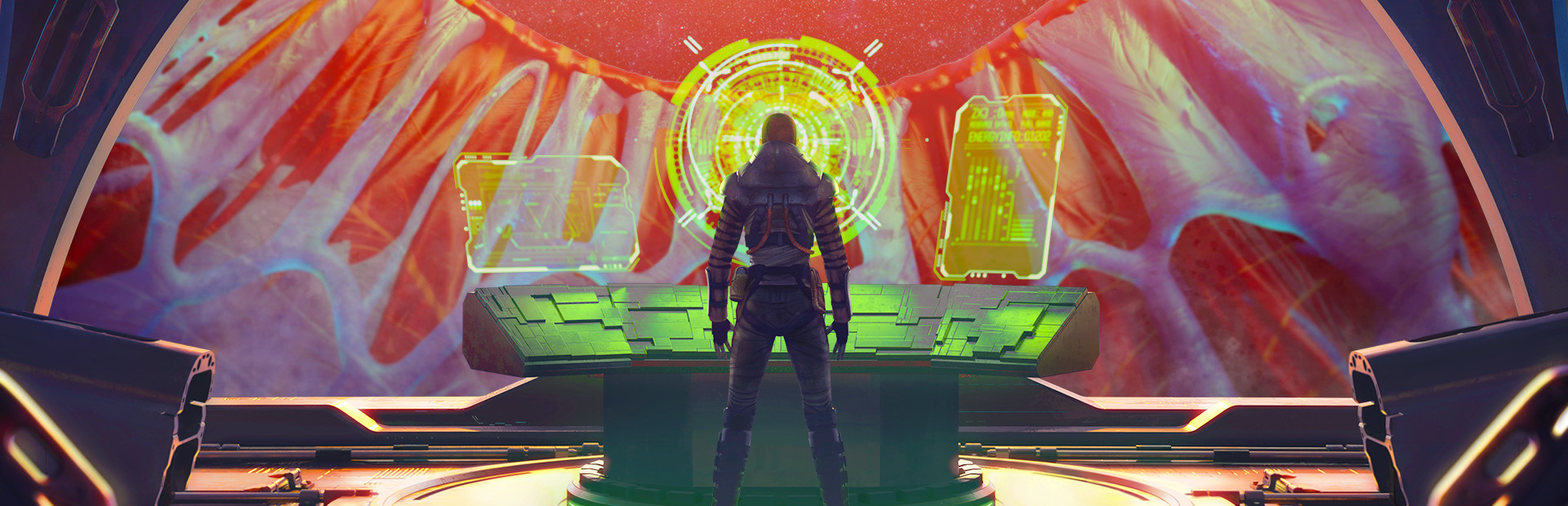
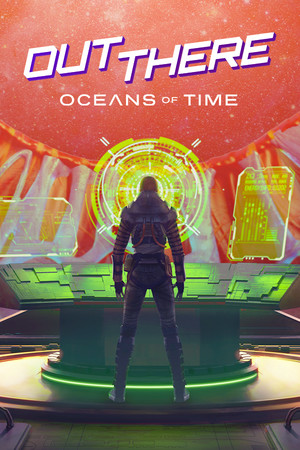
Out There: Oceans of Time
Gorgeous alien art and a branching space-opera story wrap around resource loops that critics and players alike found more punishing than purposeful. A niche pick, not a safe one.
GamerScout Verdict
Worth it only if weird alien writing and moody space atmosphere matter more to you than tight, rewarding mechanics.
Compare Prices(0 stores)
Loading prices...
We may earn a commission when you buy games through links on this page — at no extra cost to you. It never affects our rankings or verdicts.
Price History
Screenshots & Media
About Out There: Oceans of Time
I went into Out There: Oceans of Time hoping it had figured out something FTL never quite nailed: a proper story layered on top of survival resource management. The premise is genuinely compelling. You play Commander Nyx, whose ship is ambushed while transporting a cosmic villain called the Archon to prison, leaving her crew scattered across the galaxy in cryogenic escape pods. The goal is to reassemble a coalition of alien crew members, hunt down the Archon, and keep your ship's four core gauges, oxygen, fuel, hull integrity, and morale, from hitting zero before you get there. On paper that tension between narrative drive and resource anxiety is exactly the kind of decision pressure I enjoy. In practice, the resource loop undermines almost everything else. The core problem is circular: drilling rocky planets for hull metals consumes fuel, probing gas giants for fuel damages the hull, and landing on grass planets to top up oxygen burns more fuel still. Every stop costs something you just spent three stops acquiring. The mini-game governing how much you extract from each probe is also opaque enough that the tutorial's explanation turns out to be incomplete, with low-effort probes occasionally outperforming high-investment ones for reasons that feel random rather than systemic. For a strategy-inclined player who wants to optimise, that opacity is genuinely frustrating because there is no meaningful build to optimise toward. The ship upgrade system exists, but the same elemental materials needed for upgrades are the ones you are perpetually short of, so upgrades feel like a late-game luxury rather than a core progression axis. The identity crisis runs deeper than resource math. The game tries to be a roguelite with a fixed linear story, and those two ambitions fight constantly. Dying loses meaningful run progress without the consolation mechanics that make roguelites like Hades feel fair, while the procedurally generated galaxy makes following specific story markers feel like RNG-dependent luck rather than player skill. The branching narrative written by FibreTigre and dialogue by Christos Gage (credited on the Netflix Daredevil series) has genuine moments of moral weight: turn-based ground expeditions drop text-adventure dilemmas where you decide whether to loot a dying alien or burn resources trying to save it, and those choices can lock you into unexpected story directions with no preview. That unpredictability can feel either thrilling or punitive depending on your tolerance for consequence without information. Critics and Steam users landed near 50-50 on exactly that question, with the game sitting at a mixed consensus around the mid-50s across review aggregators. What saves it from being a clear pass is the art direction and audio. The alien designs skip the humanoid-rubber-forehead approach entirely, giving you crystalline rock entities, jelly-preserved spines, and banded spheres of light as potential crew members. The soundtrack, one of the most agreed-upon positives in the review pool, creates a chilled atmospheric backdrop that makes even the grindier stretches tolerable. A post-launch update called the Redshift Update addressed some of the difficulty balancing complaints and reworked the oxygen management system on rocky-planet expeditions, which suggests the developer was listening. Whether those patches closed the gap between the game's concept and its execution depends on which reviewer you trust, because opinions remain split. The audience for this one is narrow but real: players who prioritise sci-fi lore, weird alien encounter writing, and a low-aggression pace, and who can mentally file the resource friction under "atmosphere" rather than "bad design". Fans of the original 2014 Out There will find expanded scope, though new players do not need prior knowledge. If you need tight decision trees, mod support, or AI that learns from you, look elsewhere. This is a vibe game that occasionally forgets it is also supposed to be a game.

Strategy & simulation
Tags
System Requirements
Minimum
- OS
- Windows 10 or later
- Memory
- 4 GB RAM
- DirectX
- Version 11
- Storage
- 10 GB available space
- Graphics
- NIVIDA GeForce GTX 770
- Processor
- Intel Core i5 3570k @ 3.40GHz
Recommended
- OS
- Windows 10 or later
- Memory
- 8 GB RAM
- DirectX
- Version 11
- Storage
- 10 GB available space
- Graphics
- NIVIDA GeForce GTX 970
- Processor
- Intel Core i5 3570k @ 3.40GHz
Keep exploring
Community Discussion
Be the first to comment on Out There: Oceans of Time.
Reviews & Ratings
Game Info
- Developer
- Mi-Clos Studio
- Publisher
- Modern Wolf
- Release Date
- May 26, 2022