
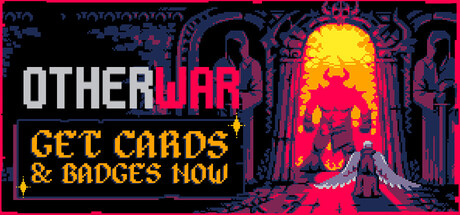
Otherwar
Tower defense meets twin-stick bullet hell in a hand-built nine-level campaign, and the hybrid actually clicks, until the balance curve goes sideways in the late game.
GamerScout Verdict
Worth a session for hybrid-genre curious players, but expect the balance to fall apart once your angel outgrows the tower defense half.
Compare Prices(5 stores)
Every store in this table quotes us in euros, so the EUR figure is the price the seller actually set, not our arithmetic — which is why EUR is also the currency we rank in. We only list an offer here when the store gives us its price in euros, so nothing in this table is a number we invented.
Pick USD, PLN, GBP, CAD or AUD in the header and we convert from EUR at the European Central Bank reference rate — converted amounts are prefixed with ~. Your bank or the store may apply a different rate at checkout. We never hide offers based on where you are: everyone sees this whole table.
We may earn a commission when you buy games through links on this page — at no extra cost to you. It never affects our rankings or verdicts.
Price History
Screenshots & Media
About Otherwar
I spent a couple of sessions with Otherwar fully prepared to write it off as a novelty, one of those genre mashups that sounds good in a pitch and falls apart the moment you press play. What kantal collective put together is messier and more interesting than that. The core premise hands you an armed angel above a lane-based battlefield: you place and upgrade towers the way genre convention expects, but you are also physically present in the fight, weaving through enemy projectiles in twin-stick fashion while managing your build. Every demon you down feeds resources back into your fortifications, so the two halves of the game are economically linked in a way that actually feels intentional. The tower roster gives you ten options, ranging from straightforward offensive emplacements to slowing fields and projectile-intercepting constructs. Before each of the nine handcrafted levels you select your loadout, which creates a light puzzle layer on top of the action. The three main zones shift tone meaningfully: enemy behavior changes between areas, and special units like necromancers who raise fallen skeletons demand you reprioritize mid-wave rather than let your layout run on autopilot. Boss encounters lean hard into bullet hell territory, with incoming patterns dense enough that survival becomes a genuine focus independent of your tower arrangement. The aesthetic is chunky, slightly rough-edged pixel art, the kind that reads as handmade rather than template-dropped. The soundtrack pushes ethereal melodies against pounding synths, giving battles a ritualistic cadence that fits the heaven-versus-hell framing better than the visuals alone would manage. Accessibility options, including visual intensity toggles, colorblind modes, and difficulty sliders, show care for a wider audience than the genre typically courts. Here is the honest friction. The difficulty curve has a well-documented cliff problem. Early runs can feel punishingly hard, but once your angel's upgrade path crosses a certain threshold, specifically the triple-shot ability stacked with damage and attack speed, you can shred waves before your towers do meaningful work. In a tower defense game, towers becoming optional is a structural failure, and it is real. The economy also struggles to scale late: the in-game currency loop does not expand fast enough to let you fill maps with meaningful infrastructure before your direct combat stats make the question irrelevant. For some players that mid-game window, where neither side of the hybrid has broken yet, will be the whole reason to buy. For others the imbalance will be the reason to stop. Otherwar is a sub-five-dollar, nine-level solo PC game from a small Polish studio. It does not pretend to be more than that. If you go in expecting a tightly balanced late game, you will be frustrated. If you go in curious whether the genre splice works at all, and for a session or two it genuinely does, you will find something worth the runtime.

Indie & narrative
Tags
System Requirements
Minimum
- OS
- Windows 7
- Memory
- 2 GB RAM
- Storage
- 200 MB available space
- Graphics
- GTX 660
- Processor
- i5 - 3470
Recommended
250 MB available space
Keep exploring
Community Discussion
Be the first to comment on Otherwar.
Reviews & Ratings
No ratings available
Game Info
- Developer
- kantal collective
- Publisher
- Untold Tales
- Release Date
- Feb 27, 2023