
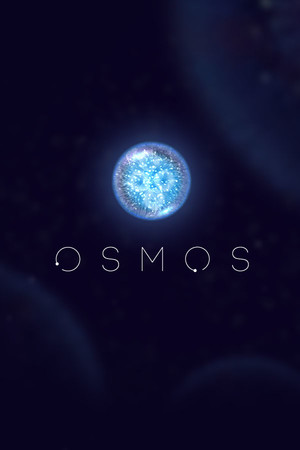
Osmos
A physics puzzle that doubles as a meditation session, until the Sentient and Force levels decide you've been too relaxed for too long.
GamerScout Verdict
Ideal for players who want meditative strategy with real mechanical depth, as long as you accept that late zones will test your patience hard.
Compare Prices(5 stores)
Every store in this table quotes us in euros, so the EUR figure is the price the seller actually set, not our arithmetic — which is why EUR is also the currency we rank in. We only list an offer here when the store gives us its price in euros, so nothing in this table is a number we invented.
Pick USD, PLN, GBP, CAD or AUD in the header and we convert from EUR at the European Central Bank reference rate — converted amounts are prefixed with ~. Your bank or the store may apply a different rate at checkout. We never hide offers based on where you are: everyone sees this whole table.
We may earn a commission when you buy games through links on this page — at no extra cost to you. It never affects our rankings or verdicts.
Price History
Screenshots & Media
About Osmos
I keep coming back to Osmos the same way I revisit a particular album late at night, not for progress, but for the feeling. That said, this is a real game with real teeth, and anyone who goes in expecting pure chill will eventually meet the wall. Let me be honest about both sides. The core mechanic is one of the most quietly brilliant things in indie game design. You are a mote, a luminous blob floating in a frictionless void. To move, you eject mass behind you, which propels you forward but also shrinks you. Every action costs you something. That tension, growth versus movement, underpins everything that follows across the game's three zone types. The Ambient levels are the opening breath, gentle floaty arenas where you learn to read colour (blue motes are smaller than you, red ones will eat you) and practise the economy of your own mass. Then come the Sentient levels, where active predator motes hunt alongside you, and the calculus shifts from patience to positioning. Finally the Force levels introduce orbital mechanics: you are working with gravity wells, attractors, and retrograde orbits, and the game even offers a trajectory-plotting tool to help you plan approach paths. The jump in conceptual demand between zones is steep, and that is by design. The time-warp mechanic deserves its own mention because it is the thing that separates Osmos from every vaguely similar absorption game. Slowing time lets you line up a trajectory with surgeon-like care; speeding it up accelerates the drift of other motes so you can read their paths before committing mass. It is not a cheat, it is the central verb of the harder levels. Players who ignore it will suffer. The Sentient and Repulsor stages, particularly, become almost hostile without it. Some reviewers have noted that certain late Odyssey levels push patience past zen and into frustration, and I think that is a fair read. The mood created by the ambient electronic soundtrack, featuring artists like Loscil and Biosphere, is genuinely hypnotic, but the music does not bend to suit a brutal level. The contrast between the serene soundscape and a level that demands six careful restarts creates a specific kind of low-grade stress that not every player will enjoy. Visually, Osmos has aged gracefully. The glowing motes, particle propulsion trails, and deep black backgrounds were striking in 2009 and still hold up as intentional art direction rather than technical limitation. The colour-coded threat system (blue is safe, red is danger) is one of the cleanest information-design decisions in the genre. Antimatter motes, which are nearly invisible against the dark background, are the one spot where the art works against the player, and that is a legitimate grievance worth knowing about before the later levels arrive. Who is this for? Genuinely, it suits anyone who finds fast-reflex games exhausting but still wants something with strategic weight. It is a strong recommendation for players who liked the early stages of Flow or who appreciated the mass-economy puzzle of something like the Gravitron bonus levels in old-school shooters. It is not the right pick for someone who needs constant feedback loops or visible progression systems. The Arcade mode adds randomised level variants for replayability once the Odyssey campaign is cleared, which extends the value considerably. Just go in knowing that Osmos at its hardest is not a relaxation app, it is a physics problem wearing a very beautiful coat.

Indie & narrative
Tags
System Requirements
Minimum
- OS
- Windows XP or Vista
- Sound
- definitely :)
- Memory
- 512 MB RAM
- Graphics
- 3D graphics card with OpenGL support. Minimum resolution 800x600
- DirectX®
- N/A (OpenGL)
- Processor
- 1 GHz
- Hard Drive
- 33 Mb
Keep exploring
Community Discussion
Be the first to comment on Osmos.
Reviews & Ratings
Game Info
- Developer
- Hemisphere Games
- Publisher
- Hemisphere Games
- Release Date
- Aug 18, 2009