Orten Was The Case
Twelve minutes to save a dank Swedish suburb, a two-slot inventory, and a mystery that keeps peeling back layers until you forget what time it is outside.
GamerScout Verdict
Best for adventure fans who want a layered mystery and can forgive wonky movement in exchange for a world that genuinely feels alive.
Compare Prices(8 stores)
Every store in this table quotes us in euros, so the EUR figure is the price the seller actually set, not our arithmetic — which is why EUR is also the currency we rank in. We only list an offer here when the store gives us its price in euros, so nothing in this table is a number we invented.
Pick USD, PLN, GBP, CAD or AUD in the header and we convert from EUR at the European Central Bank reference rate — converted amounts are prefixed with ~. Your bank or the store may apply a different rate at checkout. We never hide offers based on where you are: everyone sees this whole table.
We may earn a commission when you buy games through links on this page — at no extra cost to you. It never affects our rankings or verdicts.
Price History
Screenshots & Media
About Orten Was The Case
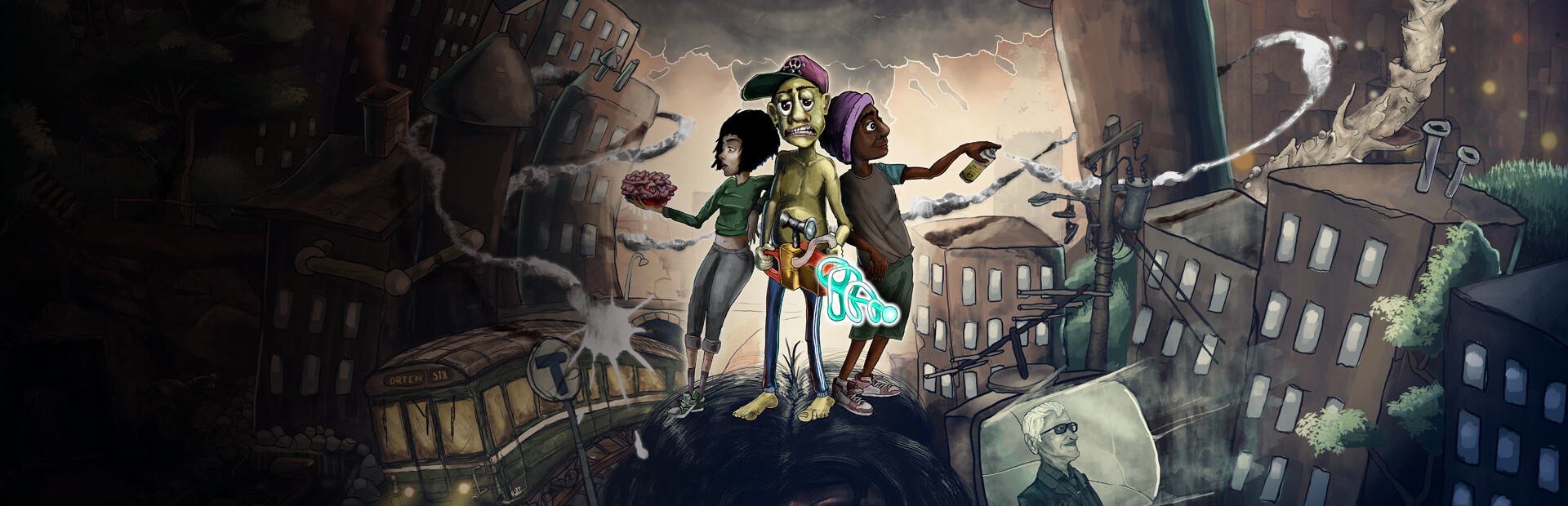
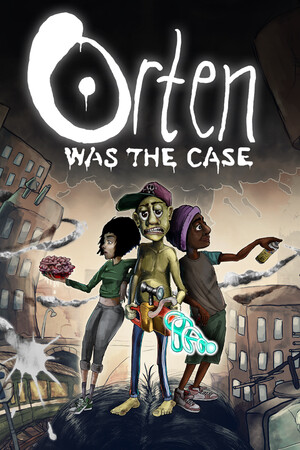
I went in expecting a clever little loop game and came out with ink-stained fingers from taking mental notes about corporate conspiracies, underground cults, and a town that somehow felt genuinely alive under all its grime. Orten Was The Case is the kind of small, handcrafted thing that only happens when one person cares obsessively about a specific place and mood. And the mood here is unmistakably European grunge: crumbling rooftops, graffiti-tagged stairwells, neighbors who deal in substances and secrets in equal measure. The core loop, literally, is this: you wake up as Ziggy, a barefoot amnesiac in a Swedish suburb called Orten, and you have roughly twelve real-time minutes before an explosion ends everything. The loop resets, but your knowledge carries forward, stored in a logbook that tracks timings, clues, visions, and NPC schedules. Each run you learn something new, find a shortcut, or realize that saving one person in this loop means letting another thread die so you can pick it up next time. That friction, the deliberate incompleteness of each cycle, is what gives the game its best tension. You are not optimizing a route so much as assembling a picture one fragment at a time. The mystery involves corporate skulduggery, a shadowy group called the Midnight Council, and supernatural elements that push the story well past simple neighbourhood drama. The two-item inventory is worth understanding before you start. It is not an annoyance, it is the design. Knowing exactly what you need on a given run, and which route gets you there fastest, creates a rhythm that starts feeling almost rogue-like. Checkpoints scattered around the map let you resume mid-loop, which adds a risk-reward dimension: use one early and preserve progress, or push further and risk losing ground to a wonky jump. And there are wonky jumps. The 2.5D perspective, where hand-drawn environments host fully 3D characters, gives the world a strange, festival-animation quality that I found genuinely beautiful, but it also makes ledge-depth difficult to read. Movement is the most-cited friction point across every review this game has received, and that reputation is earned. The platforming never breaks the game, but it does occasionally break the mood at the worst possible moment, particularly later when you are racing a tight chain of events. There are also occasional bugs: items that vanish on interaction, objectives that fail to register. Most resolve with a restart, but a restart costs loop progress unless you are near a checkpoint. On Steam, where the community is small but passionate, the response has been overwhelmingly positive nonetheless, which tells you something real about how much the story and world earn back what the mechanics occasionally give away. The soundtrack shifts and breathes with the action in a way that anchors the atmosphere even when Ziggy clips through a railing. The characters speak in a kind of wordless gibberish language rather than full voice acting, which some find charming and others find thin, but I thought it suited the slightly surreal register of the whole thing. If you have ever loved Outer Wilds for how it treats knowledge as the only real currency, or if Majora's Mask made you feel the weight of a ticking clock, this game is fishing in the same river. It is rougher around the edges than either of those, and the movement will test your patience at least once. But the world Woodhill Interactive built, solo, out of a Stockholm artist collective, has a texture and specificity that most bigger studios cannot manufacture. When the mystery finally clicks together, it clicks hard.

Indie & narrative
Tags
System Requirements
Minimum
- OS
- Windows 10
- Memory
- 6 GB RAM
- Storage
- 3 GB available space
- Graphics
- Nvidia GeForce GTX 660, 2 GB | AMD Radeon HD 7870, 2 GB
- Processor
- Intel Core i5-2300 | AMD FX-4350
Recommended
- OS
- Windows 10
- Memory
- 8 GB RAM
- Storage
- 3 GB available space
- Graphics
- Nvidia GeForce GTX 1060 | AMD Radeon RX 580
- Processor
- Intel Core i5-8400 | AMD Ryzen 5 2600X
Keep exploring
Community Discussion
Be the first to comment on Orten Was The Case.
Reviews & Ratings
No ratings available
Game Info
- Developer
- Woodhill Interactive
- Publisher
- Woodhill Interactive
- Release Date
- Nov 29, 2023