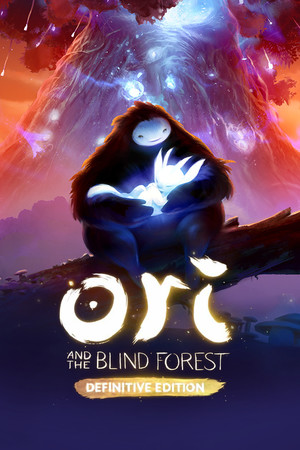
Ori and the Blind Forest Definitive Edition
Few platformers hit this hard emotionally in the first five minutes, and then spend the next ten hours making you earn every inch of ground. Worth every difficult moment.
GamerScout Verdict
Essential for Metroidvania fans who can tolerate thin combat, the platforming, presentation, and emotional pull more than carry the weight.
Compare Prices(6 stores)
Every store in this table quotes us in euros, so the EUR figure is the price the seller actually set, not our arithmetic — which is why EUR is also the currency we rank in. We only list an offer here when the store gives us its price in euros, so nothing in this table is a number we invented.
Pick USD, PLN, GBP, CAD or AUD in the header and we convert from EUR at the European Central Bank reference rate — converted amounts are prefixed with ~. Your bank or the store may apply a different rate at checkout. We never hide offers based on where you are: everyone sees this whole table.
We may earn a commission when you buy games through links on this page — at no extra cost to you. It never affects our rankings or verdicts.
Price History
Screenshots & Media
About Ori and the Blind Forest Definitive Edition
My first hour with Ori and the Blind Forest: Definitive Edition ended with me sitting quietly for a moment after the opening sequence, which is genuinely one of the most affecting intros in the medium. Moon Studios front-loads the emotional weight on purpose, and it works. You play as Ori, a small guardian spirit navigating the dying forest of Nibel alongside a companion called Sein, the light and eyes of the ancient Spirit Tree. The mission: recover three elemental forces, water, wind, and warmth, to restore balance. The setup sounds simple. The execution is anything but. At its core this is a Metroidvania, and a well-constructed one. You start fragile and slow, then gradually unlock movement abilities that change how you interact with every corner of the map. The Soul Link save system is the mechanical hook that keeps frustration from tipping into fury: you spend energy to plant a temporary save point almost anywhere (outside of enemy range), which also doubles as a spot to bank ability points across three skill trees covering combat, agility, and survivability. Forgetting to use it after a hard section is entirely your fault, and you will forget. The Definitive Edition layers on top of the original with two new zones, Black Root Burrows and Lost Grove, that add roughly a couple of hours of fresh challenge and expand Naru's backstory in ways the original left blank. Two new abilities come with them: Dash, which can later be upgraded into an aerial attack, and Light Burst, a grenade-like projectile that opens up new combat and traversal options. Fast travel between Spirit Wells was also added, which sounds minor until you realize how badly the original needed it. The difficulty spread is now genuinely wide. Easy mode reduces enemy health and softens the forced-scrolling escape sequences, while Hard and the punishing One-Life mode, where a single death ends your run entirely, no reprieve, sit at the other end. The escape sequences themselves are worth singling out: pure adrenaline, tightly scripted platforming gauntlets that the community consistently cites as highlights. They are also the sections most likely to make you mutter something unpleasant. Combat is the game's weakest link by consensus; Ori's basic attack through Sein is a homing spirit flame that gets the job done but never feels as crisp as the platforming. Enemy variety is thin, and a few late-game areas introduce mechanics without much warning. These are real friction points, not dealbreakers, but if you come in expecting combat depth to match the traversal, you will be disappointed. Visually, the hand-painted aesthetic holds up without asterisks. Each zone has a distinct personality, luminous canopy layers, shadow-soaked cave corridors, anti-gravity puzzle chambers, and the orchestrated score by Gareth Coker ties everything together in a way that is hard to separate from the experience itself. The run time lands around ten to thirteen hours depending on how thoroughly you explore, with the One-Life mode and collectible hunting adding replay value for those who want it. Sitting at 94% positive across nearly sixty thousand Steam reviews and an 88 on Metacritic, the reception is about as clear a signal as you get. If you have never played either version of Ori, the Definitive Edition is the only one worth starting with. If you played the original and found the lack of fast travel aggravating or wanted more story context, this version addresses both. The combat ceiling is low and a handful of difficulty spikes feel arbitrary, but when Ori is moving fluidly through a beautifully constructed zone with that score in the background, it is doing something few platformers manage: making the act of playing feel like it matters.

Catch-all
Tags
System Requirements
Minimum
- Processor
- Intel Core 2 Duo E4500 @ 2.2GHz or AMD Athlon 64 X2 5600+ @ 2.8 GHz
- Memory
- 4 GB RAM
- Graphics
- GeForce 240 GT or Radeon HD 6570 – 1024 MB (1 gig)
- DirectX
- Version 9.0c
- Storage
- 8…
Recommended
- Processor
- Intel Core i5 2300 or AMD FX6120
- Memory
- 4 GB RAM
- Graphics
- GeForce GTX 550 Ti or Radeon HD 6770
- DirectX
- Version 11
- Storage
- 8 GB available space
Keep exploring
Community Discussion
Be the first to comment on Ori and the Blind Forest Definitive Edition.
Reviews & Ratings
Game Info
- Developer
- Moon Studios GmbH
- Publisher
- Xbox Game Studios
- Release Date
- Mar 10, 2015