
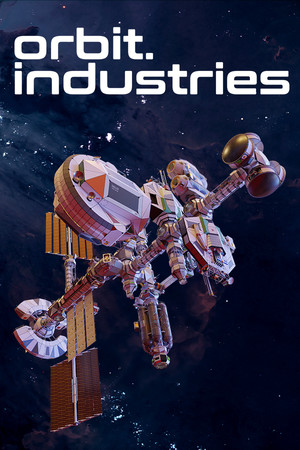
orbit.industries
A compact space-station manager with a genuinely interesting three-layer system, but a brutal onboarding curve that a 58% Steam rating reflects honestly.
GamerScout Verdict
Best for factory-builder fans who want a compact, patience-demanding space management loop with no multiplayer or mod support to fall back on.
Compare Prices(5 stores)
Every store in this table quotes us in euros, so the EUR figure is the price the seller actually set, not our arithmetic — which is why EUR is also the currency we rank in. We only list an offer here when the store gives us its price in euros, so nothing in this table is a number we invented.
Pick USD, PLN, GBP, CAD or AUD in the header and we convert from EUR at the European Central Bank reference rate — converted amounts are prefixed with ~. Your bank or the store may apply a different rate at checkout. We never hide offers based on where you are: everyone sees this whole table.
We may earn a commission when you buy games through links on this page — at no extra cost to you. It never affects our rankings or verdicts.
Price History
Screenshots & Media
About orbit.industries
I keep a mental folder of management games that get their core loop right but stumble everywhere else, and orbit.industries belongs there, filed right behind a sticky note that reads "for the patient only." LAB132 built something mechanically coherent around a very specific fantasy: you are running an orbital platform above a distant planet, responsible for its efficiency, its finances, and the plumbing that keeps its systems alive. The structural design splits into three distinct views you will cycle through constantly. The exterior 3D station view is where you physically attach new modules to the growing structure. The Abstract System Layout drops you into a 2D grid where every installed module generates a processor node, and your job is to wire those nodes together to route power, atmosphere, and other resources efficiently. The third view, the System Management Interface, tracks incoming contracts, available loans, and your running Kredit balance. None of these three panels feels redundant; they interact to create something that rewards players who think in terms of resource flow and margin, rather than players who just want to watch things go whoosh in orbit. Drone launchers, deep-space arrays, conference rooms, shuttle bays, and a handful of campaign-specific terraforming modules sit behind a research gate, so there is a genuine unlock progression to plan around. The content structure gives you three narrative campaigns, each set above a different planet with its own mission objective, plus an Endless mode with no win condition and a Creative mode with all technologies unlocked and no financial pressure from the start. That Creative mode is, honestly, the correct entry point for newcomers. The campaign throws a contract economy at you fairly quickly: upkeep rises with every new module, contracts are the only income source, and if the contract pool dries up before your station is self-sustaining, bankruptcy comes without much warning. Reviewers and Steam community threads consistently flag this as the game's most frustrating design choice. The tutorial introduces the UI mechanics competently, but it does not prepare you for the economic timing required to survive mid-campaign, and starting a campaign over after a late bankruptcy is a real time cost. Audio and narrative are the thinnest parts of the package. A voiced AI companion nudges you toward objectives, and each campaign carries a written backstory, but the world-building stops there. The soundtrack is understated to the point where you may want to queue something else for longer sessions. Visually, the exterior view is pleasant without being spectacular, and the abstract grid view is all function. Nobody is buying orbit.industries for its cinematics. What it does offer is a specific, calm kind of problem-solving: you pause, you audit your node connections, you reroute a power bus, you watch efficiency tick upward. For the kind of player who finds that loop satisfying rather than tedious, the roughly 58% Steam approval rating understates the actual enjoyment ceiling. The mod ecosystem is essentially absent, and there is no multiplayer. This is a contained, solo, spreadsheet-adjacent experience. If you have ever lost an afternoon optimizing a production chain in a factory builder and thought "I wish this had a space theme and less conveyor belt busywork," orbit.industries scratches that itch with enough mechanical depth to justify the time investment, provided you start in Creative or Endless before touching the campaigns.

Strategy & simulation
Tags
System Requirements
Minimum
- OS
- Windows 10
- Memory
- 4 GB RAM
- DirectX
- Version 11
- Storage
- 3 GB available space
- Graphics
- Nvidia GeForce GTX 770 or equivalent with 3GB or more VRAM
- Processor
- Intel i5-4570 or equivalent
Recommended
- OS
- Windows 10
- Memory
- 16 GB RAM
- DirectX
- Version 12
- Storage
- 3 GB available space
- Graphics
- Nvidia GeForce GTX 1060
- Processor
- Intel i5-4570 3.2 GHz or equivalent
Keep exploring
Community Discussion
Be the first to comment on orbit.industries.
Reviews & Ratings
No ratings available
Game Info
- Developer
- LAB132
- Publisher
- Klabater
- Release Date
- Apr 21, 2022