OPUS: The Day We Found Earth
A quiet, handcrafted stargazing game about a robot and an AI searching the cosmos for a lost Earth. Short, melancholic, and surprisingly affecting.
GamerScout Verdict
Best for narrative-first players who want a two-hour emotional gut-punch dressed up as a stargazing simulator.
Compare Prices(6 stores)
Every store in this table quotes us in euros, so the EUR figure is the price the seller actually set, not our arithmetic — which is why EUR is also the currency we rank in. We only list an offer here when the store gives us its price in euros, so nothing in this table is a number we invented.
Pick USD, PLN, GBP, CAD or AUD in the header and we convert from EUR at the European Central Bank reference rate — converted amounts are prefixed with ~. Your bank or the store may apply a different rate at checkout. We never hide offers based on where you are: everyone sees this whole table.
We may earn a commission when you buy games through links on this page — at no extra cost to you. It never affects our rankings or verdicts.
Price History
Screenshots & Media
About OPUS: The Day We Found Earth
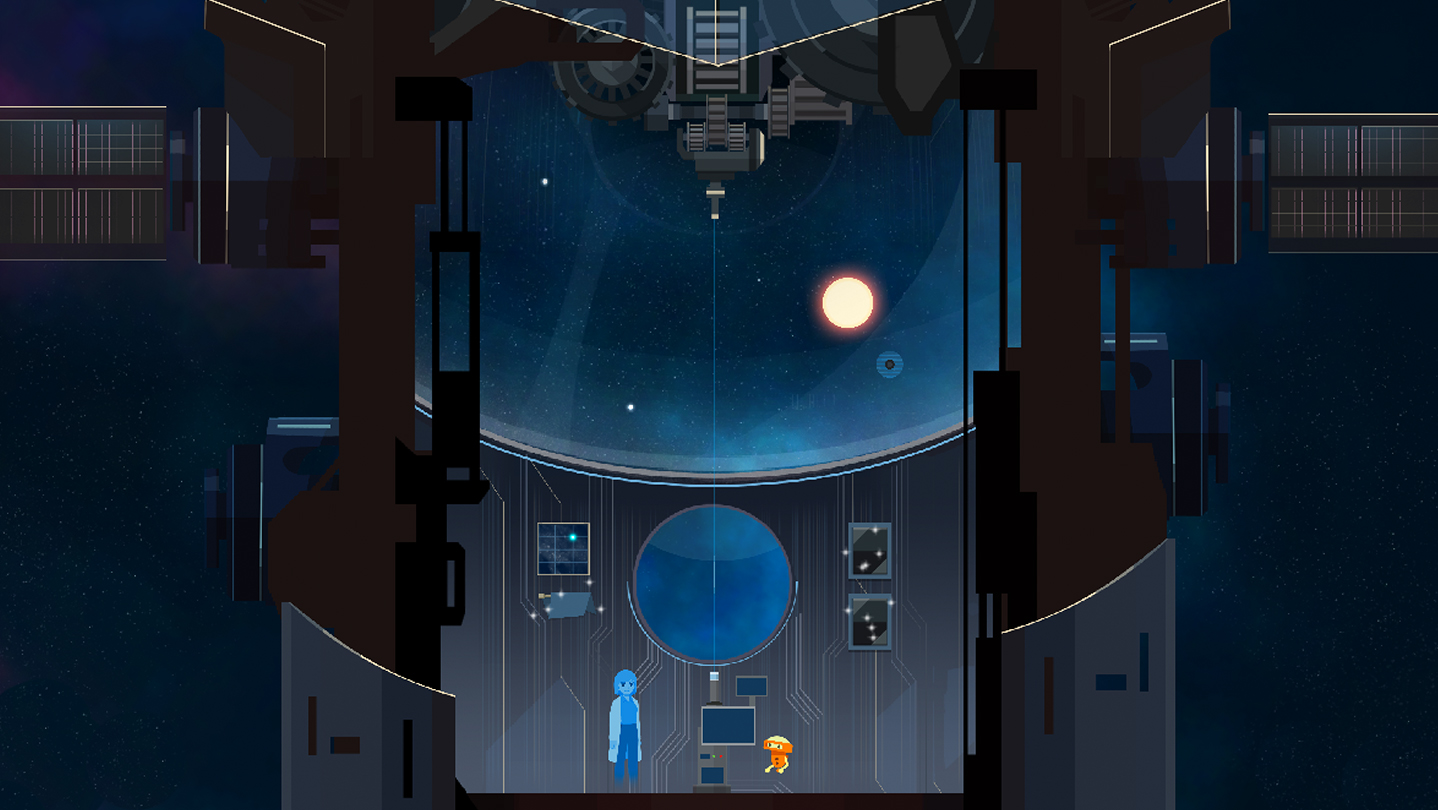
OPUS: The Day We Found Earth is a narrative stargazing game from the one-person-sized studio SIGONO INC., and it asks you to do something almost no other game does: sit still, point a telescope at the sky, and feel small in the best possible way. You play alongside Emeth, a robot, and an AI named Lisa, combing through star fields in search of a mythologized planet called Earth, lost to human memory after millennia of cosmic expansion. The premise sounds slight. The execution is anything but. The core loop involves rotating a telescope, cataloguing stars, and ruling out candidates one by one until you inch toward the one that matches ancient stellar data. It is methodical almost to the point of meditation, and people expecting a puzzle game with teeth will bounce off immediately. What it really is, underneath the coordinate-matching and the star charts, is a quiet grief story. The relationship between Emeth and Lisa carries the whole weight of the game, and SIGONO writes that relationship with enough restraint that when it does land emotionally, you feel it without having been telegraphed at every turn. The art style is pixel work that understands light. Nebulae glow in soft purples and warm ambers, and the parallax starfields have a handmade quality that a procedurally generated space game rarely achieves. The soundtrack sits somewhere between ambient and orchestral, and it paces itself to the story's rhythm rather than looping aggressively in the background. That attentiveness to soundscape is one of the things that separates OPUS from the dozens of walking-sim-adjacent titles that share its shelf space. The game is short, around two to three hours depending on how carefully you scan the sky. That runtime is not a flaw. OPUS knows precisely what it is trying to say and stops when it has said it. The slow opening, where the controls and the astronomy mechanics feel almost too gentle, is load-bearing. The deliberate pacing is what makes the final stretch hit harder than a louder, longer game would manage. If you approach this expecting spectacle or systems depth, you will be frustrated. If you approach it the way you would a beautifully illustrated short story, it rewards that patience completely. Where it shows its age and its scale is in the occasional stiffness of its translated dialogue and the barebones interface, which communicates function over comfort. These are real friction points, not dealbreakers, but worth knowing. The telescope mechanic can feel repetitive across the middle section before the story accelerates. These are the edges of a small game made by a small team, and they sit alongside craft that most larger productions simply do not bother with. If you are the kind of player who finishes a short narrative game and then sits quietly for a few minutes before doing anything else, OPUS: The Day We Found Earth was made for you specifically.

Indie & narrative
Tags
System Requirements
Minimum
- Processor
- 1.4 GHz Dual Core or Greater
- Memory
- 2 GB RAM
- Graphics
- 256 MB OpenGL 2.0 compatible graphics card
- Storage
- 1 GB available space
Keep exploring
Community Discussion
Be the first to comment on OPUS: The Day We Found Earth.
Reviews & Ratings
Game Info
- Developer
- SIGONO INC.
- Publisher
- SIGONO INC.
- Release Date
- Apr 22, 2016