
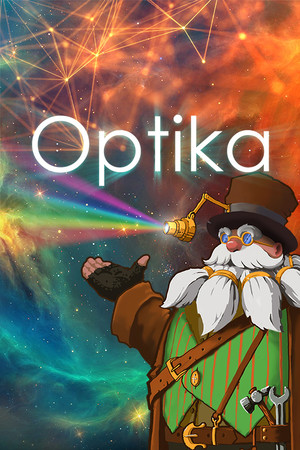
Optika
Light-bending puzzle craft that rewards patient thinkers, though pixel-precise placement will test your patience before it rewards your cleverness.
GamerScout Verdict
Solid pick for patient physics-puzzle fans; expect pixel-precision friction but a genuinely elegant core concept across 160 levels.
Compare Prices(4 stores)
Every store in this table quotes us in euros, so the EUR figure is the price the seller actually set, not our arithmetic — which is why EUR is also the currency we rank in. We only list an offer here when the store gives us its price in euros, so nothing in this table is a number we invented.
Pick USD, PLN, GBP, CAD or AUD in the header and we convert from EUR at the European Central Bank reference rate — converted amounts are prefixed with ~. Your bank or the store may apply a different rate at checkout. We never hide offers based on where you are: everyone sees this whole table.
We may earn a commission when you buy games through links on this page — at no extra cost to you. It never affects our rankings or verdicts.
Price History
Screenshots & Media
About Optika
I have a soft spot for puzzle games that treat a single physics concept as an entire universe, and Optika does exactly that: it takes the humble laser-redirect puzzle you have seen in dozens of action-adventure side rooms and asks what happens if you build a whole game around nothing else. The answer, after 160 levels, is mostly good and occasionally infuriating. The core loop is genuinely satisfying. Each level gives you a set of 14 possible optical devices, including mirrors, prisms, lenses, magnetic field generators, and beam splitters, and you have to route colored light from its emitter to the matching receiver circle. Color mixing matters: red and blue beams crossing through a prism produce the combined hue a receiver might need, and watching multiple photon streams arc and bend into the right goal has a quiet, almost meditative beauty to it. The light is rendered as flowing colored particles, and when several beams cross and separate on screen simultaneously, there is a genuine visual warmth that overdelivers for a small indie from 2016. The soundtrack sits in soft-ambient territory, functional and unobtrusive, if not especially memorable. Where the game stumbles is precision. Lenses and some mirrors require rotation to fractions of a degree, and the game's physics simulation is sensitive enough that a placement one or two pixels off will send your carefully assembled solution into chaos. That gap between "I have the right idea" and "I have the physically correct mouse position" is where patience erodes. It does not feel like intellectual defeat; it feels like a UI disagreement. Community threads flag a related bug where one post-launch patch apparently shifted certain lens positions, breaking previously solved levels, though the workaround exists for anyone who goes looking. Steam achievements have also been reported as occasionally non-triggering for a small number of players, which is a minor but real friction point for completion hunters. For whom does this click? Physics-adjacent puzzle fans, fans of older games like The Incredible Machine who want something contemplative rather than chaotic, and anyone looking for a calm hour of redirecting photons through a sandbox of optical toys. The thinly sketched story featuring Professor Opticus and Sofia adds almost nothing beyond a mild framing device; ignore it and treat each level as the self-contained spatial problem it really is. At 160 levels, there is meaningful volume here, and the difficulty ramps steadily enough that early stages read as genuine teaching rather than padding. Mac players should be aware that the game has known compatibility gaps with macOS Catalina and above, so verify before purchasing if that is your platform.

Indie & narrative
Tags
System Requirements
Minimum
- OS
- Windows 7, Windows 8.1, Windows 10, Windows XP or Windows Server 2008
- Memory
- 512 MB RAM
- Storage
- 100 MB available space
- Graphics
- Any GPU
- Processor
- 2.33GHz or faster x86-compatible processor or Intel® Atom™ 1.6GHz or faster processor for notebook class devices
Keep exploring
Community Discussion
Be the first to comment on Optika.
Reviews & Ratings
No ratings available
Game Info
- Developer
- PlayZilla.tk
- Publisher
- PlayZilla.tk
- Release Date
- Aug 26, 2016