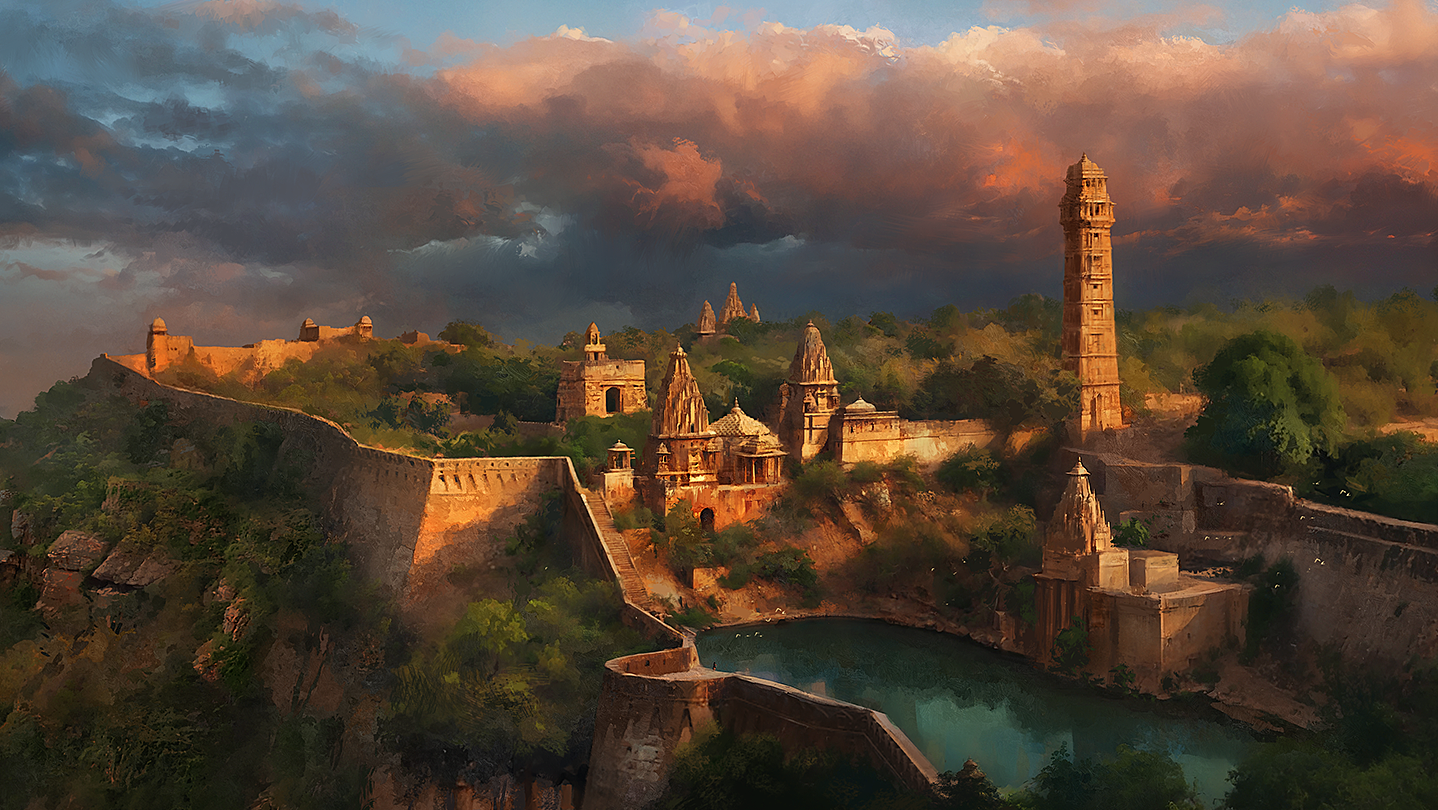
Old World - Empires of the Indus
Old World's Indian subcontinent expansion spans 600 years, three rival dynasties, and one northern tribal empire across a fully new historical theatre.
GamerScout Verdict
A solid, lore-rich expansion for existing Old World fans - new players should start with the base game first.
Compare Prices(2 stores)
Every store in this table quotes us in euros, so the EUR figure is the price the seller actually set, not our arithmetic — which is why EUR is also the currency we rank in. We only list an offer here when the store gives us its price in euros, so nothing in this table is a number we invented.
Pick USD, PLN, GBP, CAD or AUD in the header and we convert from EUR at the European Central Bank reference rate — converted amounts are prefixed with ~. Your bank or the store may apply a different rate at checkout. We never hide offers based on where you are: everyone sees this whole table.
We may earn a commission when you buy games through links on this page — at no extra cost to you. It never affects our rankings or verdicts.
Price History
Screenshots & Media
About Old World - Empires of the Indus
Old World is a turn-based historical strategy game that grafts a character-driven dynastic layer onto a 4X foundation, and Empires of the Indus is its most ambitious regional expansion yet. Where the base game centres on the Mediterranean, this add-on shifts the entire stage to the subcontinent, covering roughly 600 years of history across four distinct factions: three southern dynasties jostling over the Deccan and coastal lowlands, and a northern tribal confederation building its own imperial project from scratch. If you already have hours in the core game, you know what that means mechanically - legacy points, family intrigues, character ambitions, and the constant pressure of succession threatening to unravel everything you built. All of that is present here, recontextualised through new leaders, new events, and historical flavour text that takes the regional setting seriously rather than treating it as a reskin. From a systems perspective, the expansion does not reinvent Old World's wheel, which is both its strength and the honest caveat you need to hear. The orders-per-turn economy, the way specialists and improvements interact, the city-founding logic - none of that is redesigned. What you do get is a new map geometry that rewards different expansion priorities, rival AI factions tuned to the subcontinent's specific geopolitical pressures, and dynasty-specific mechanics that push each of the four playable groups toward a distinct playstyle. The tribal northern empire in particular plays differently from anything in the base game, leaning on momentum and aggressive consolidation rather than the settled administrative grind that Mediterranean campaigns often reward. For newcomers, the honest answer is that Old World remains one of the most approachable deep-strategy games available, and this expansion does not change that calculus. The tutorial infrastructure from the base game carries over, and the scenario framing gives you a clear geopolitical objective from turn one rather than dropping you into an open sandbox. Yes, the full decision tree - managing a ruler's ambitions while also juggling city queues and diplomacy - looks intimidating in a screenshot. In practice, the game surfaces the most urgent choices clearly and lets you learn the secondary systems at your own pace. If you bounced off Crusader Kings because the UI felt like a legal document, Old World is a significantly cleaner entry point. The Indus setting adds narrative hooks that make that learning process feel grounded rather than abstract. The review sample is small at launch - 49 reviews is not enough to draw firm conclusions about long-term AI quality or edge-case balance. What the early feedback does confirm is that the expansion launched without major bugs and that the historical presentation landed well with the existing playerbase. Mod support, which has been a genuine strength of Old World's PC ecosystem, should extend naturally to the new map and factions, though the modding community will need time to catch up. Late-game pacing, historically a mild weakness in Old World's longer scenarios, is something to watch as more players push deep into the 600-year scope. Empires of the Indus is the right purchase if you want more Old World with a fresh historical lens and distinct faction asymmetry. It is not the right starting point if you have never touched the base game - buy that first, put in twenty hours, and then this becomes an obvious next step.

Strategy & simulation
Tags
System Requirements
Minimum
- OS
- Windows® 7 SP1 64 Bit
- Processor
- Intel i5-6400 2.7ghz or similar
- Memory
- 8 GB RAM
- Graphics
- NVIDIA GTX 770 / AMD R9 290
- DirectX
- Version 11
- Storage
- 10 GB available s…
Recommended
Requires a 64-bit processor and operating system
Keep exploring
Community Discussion
Be the first to comment on Old World - Empires of the Indus.
Reviews & Ratings
Game Info
- Developer
- Mohawk Games
- Publisher
- Hooded Horse
- Release Date
- Mar 30, 2026