Oceanhorn: Monster of Uncharted Seas
If you've spent years wishing Zelda would come to PC, Cornfox & Brothers made that wish come true in 2015 - with all the charm and most of the rough edges that implies.
GamerScout Verdict
Ideal for players who want a Zelda-flavored adventure on PC and can accept light puzzles and easy combat in exchange for a gorgeous, well-scored world.
Compare Prices(6 stores)
Every store in this table quotes us in euros, so the EUR figure is the price the seller actually set, not our arithmetic — which is why EUR is also the currency we rank in. We only list an offer here when the store gives us its price in euros, so nothing in this table is a number we invented.
Pick USD, PLN, GBP, CAD or AUD in the header and we convert from EUR at the European Central Bank reference rate — converted amounts are prefixed with ~. Your bank or the store may apply a different rate at checkout. We never hide offers based on where you are: everyone sees this whole table.
We may earn a commission when you buy games through links on this page — at no extra cost to you. It never affects our rankings or verdicts.
Price History
Screenshots & Media
About Oceanhorn: Monster of Uncharted Seas
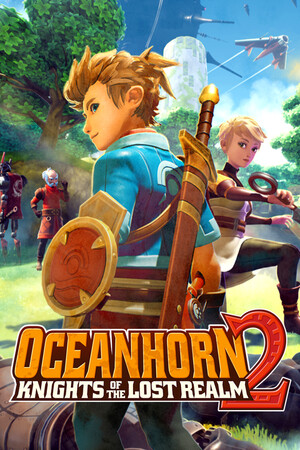
I've spent about twelve hours with Oceanhorn: Monster of Uncharted Seas, and the honest way to describe that time is: warmly pleasant, occasionally tedious, and surprisingly easy to forgive. The Finnish studio Cornfox & Brothers built something that wears its inspiration openly - this is the closest thing to a top-down Legend of Zelda game you will find on PC, and it does not pretend otherwise. Heart containers, boss keys, a silent protagonist, grass you slice for loot, bombs that crack open hidden wall passages - the furniture is all familiar. What makes it worth discussing separately is the care put into the world itself: a sun-drenched archipelago called the Uncharted Seas, scattered islands each with their own visual personality, and a story threading through the ruins of a lost civilization called Arcadia. The lore is thin but atmospheric, and that is probably the right call for a game of this scope. The core loop is sword-and-shield combat backed by a small but satisfying toolkit. You start bare with a simple blade and gradually add a bow, bombs, a fishing rod, and a handful of magic spells as you unlock new islands. Combat leans defensive - blocking and waiting for openings rewards you more than frenzied swinging, and the charge attack gives melee some texture. The game also adds light RPG progression: experience points earned from killing enemies and completing island challenges level up your Adventurer rank, which expands your health and stamina. Each island carries three completion challenges - things like defeating enemies a specific way or swimming a set distance - and chasing those kept me engaged well past the credits. Where the loop frays is in the puzzles. Dungeons mostly ask you to push boxes onto marked floor switches, flip levers, or find a key. There is one memorable boss moment where a reflective shield deflects a laser into a weak point, but that ingenuity is the exception. Most of the dungeon design is closer to a pleasant warm bath than a genuine challenge. Sailing between islands, the game's Wind Waker homage, is the other soft spot. You plot a course on the world map, your boat steers itself along a fixed path, and you shoot at sea creatures and floating crates with a pumpkin gun during the crossing. It is a light rail-shooter diversion, and the first few trips are genuinely charming. By hour eight it is more loading screen than gameplay, and the lack of manual steering - which players have been requesting since the iOS original - remains a missed opportunity. The PC port also carries some leftover awkwardness from its mobile origins: spell targeting by screen-click feels foreign with a mouse, the menu system is clunky in spots, and there is no quest tracker, so if you put the game down for a week, reconnecting the thread of what you were doing takes some effort. What the game absolutely gets right is presentation. The isometric 3D art is bright, confident, and clean - environments shift from lush coastal villages to scorched desert ruins to deep dungeon stone without ever feeling cheap. More importantly, the soundtrack is quietly extraordinary. Composed largely by Kalle Ylitalo with contributions from Nobuo Uematsu and Kenji Ito, it does exactly what a good adventure score should: it shifts with the environment, grows tense in danger and open in exploration, and makes the world feel bigger than its actual square footage. I caught myself pausing just to listen on more than one island. For a studio releasing its first major title, the soundscape alone signals a level of craft above what the price point might suggest. Oceanhorn is a game for people who want a relaxed, complete, story-shaped adventure without friction or complexity getting in the way. Veterans of Zelda or similar action-adventures will clear it comfortably, enjoy the atmosphere, and walk away satisfied but not floored. Younger players or anyone new to the genre will find it a genuinely welcoming entry point. The sequel - Oceanhorn 2: Knights of the Lost Realm - expands on almost every dimension if this one leaves you wanting more. Note that macOS users should check compatibility before purchasing, as the game does not run on macOS Catalina or above.

Indie & narrative
Tags
System Requirements
Minimum
- OS
- Windows 7
- Memory
- 1 GB RAM
- DirectX
- Version 10
- Storage
- 700 MB available space
- Graphics
- DirectX 10 compatible, 256 MB VRAM
- Processor
- 1.7 GHz Dual Core or faster
- Sound Card
- DirectX 10 compatible
Recommended
- OS
- Windows 10
- Memory
- 2 GB RAM
- DirectX
- Version 10
- Storage
- 800 MB available space
- Graphics
- DirectX 10 compatible, 512 MB VRAM
- Processor
- 2.2 GHz Dual Core or faster
- Sound Card
- DirectX 10 compatible
Keep exploring
Community Discussion
Be the first to comment on Oceanhorn: Monster of Uncharted Seas.
Reviews & Ratings
Game Info
- Developer
- Cornfox & Brothers Ltd.
- Publisher
- Cornfox & Brothers Ltd.
- Release Date
- Mar 17, 2015