
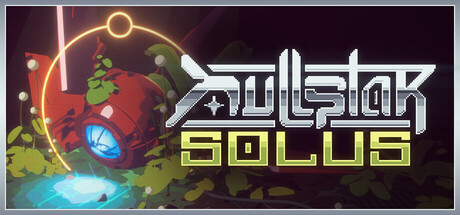
Nullstar: Solus
If the words 'just one more run' have ever cost you an hour of sleep, Nullstar: Solus knows exactly where you live. A tight, thruster-juggling drone platformer from Tasmania with a soundtrack that pulses like a dying megastructure's last heartbeat.
GamerScout Verdict
Best for score-chasing precision platformer fans who can push through the thruster learning curve to reach the game's genuinely satisfying high-speed flow state.
Compare Prices(6 stores)
Every store in this table quotes us in euros, so the EUR figure is the price the seller actually set, not our arithmetic — which is why EUR is also the currency we rank in. We only list an offer here when the store gives us its price in euros, so nothing in this table is a number we invented.
Pick USD, PLN, GBP, CAD or AUD in the header and we convert from EUR at the European Central Bank reference rate — converted amounts are prefixed with ~. Your bank or the store may apply a different rate at checkout. We never hide offers based on where you are: everyone sees this whole table.
We may earn a commission when you buy games through links on this page — at no extra cost to you. It never affects our rankings or verdicts.
Price History
Screenshots & Media
About Nullstar: Solus
My first thought after clearing world one was: this is a smaller game than it looks, and a deeper one than it admits. Nullstar: Solus comes out of Launceston, Tasmania, built by Smash Attack Aus - a small team whose fingerprints are all over every corridor. You pilot scavenger drones through the hollowed-out bones of a dead megastructure, collecting nullstar fragments across 100 hand-crafted levels split into five worlds, with 75 base stages and 25 remixed hard courses waiting for the obsessive crowd. The thing that separates this from a standard precision platformer is the Flight Path System. Your four directional thrusters are mapped to the face buttons individually, and cutting power to one redirects it to the others, letting you spike your speed in a given direction. Shut off your right-side thrusters and you accelerate left; cut the bottom thruster and you climb faster. In theory it is elegant, a kind of analogue conversation with momentum. In practice, especially under the pressure of a tight time-rank run, it asks a lot from your hands all at once. Several reviewers flagged this as sensory overload territory, and I think that is a fair read. The floor-level play - just fly, dodge lasers, collect fragments, survive - is genuinely approachable for almost any skill level. The ceiling, chasing top-tier decryption ranks that unlock codex lore entries, is brutally steep. Whether that gap feels thrilling or frustrating will depend entirely on how you relate to dying repeatedly in a ten-second stage. Level design is where the craftsmanship really shows. Each stage is built around milliseconds: alternating laser corridors where the firing pattern forces you to read ahead, homing missiles that punish hesitation, dog-leg tunnels that reward memorisation over reaction. The five distinct drone types, including the tankier Titan that can absorb an extra hit and the speed-biased Solus frame, add a light strategic layer to score-chasing that keeps replay value honest. The worlds shift their aesthetic as you descend - sci-fi industrial giving way to overgrowth, rust, volcanic heat - which, while not always dramatic, keeps the eye from going fully numb over repeat runs. The tone draws a clear line back to the manga BLAME! and its megastructure imagery: ancient, overgrown, ruinous. It lingers. The soundtrack is a genuine standout. Dark, propulsive electronic music with driving basslines and tense rhythms - the kind of score that keeps your heart rate slightly too high for comfort and refuses to let the tempo drop. Vocal contributions from Amelia Jones and Mariya Anastasova add a texture you do not often find at this price point. Story is minimal by design: no dialogue, just lore codex entries unlocked by performance, which suits the arcade DNA of the game perfectly. The honest caveat is that mechanics stop evolving meaningfully around world four, and casual players unlikely to chase high ranks may feel the back half lacks fresh ideas. At two to ten hours depending on skill level and ambition, the game knows its scope.

Indie & narrative
Tags
System Requirements
Minimum
- OS
- Windows 10
- Memory
- 2 GB RAM
- DirectX
- Version 11
- Storage
- 600 MB available space
- Processor
- 1.5 Ghz Processor
Keep exploring
Community Discussion
Be the first to comment on Nullstar: Solus.
Reviews & Ratings
No ratings available
Game Info
- Developer
- Smash Attack Aus
- Publisher
- indie.io
- Release Date
- Apr 16, 2026