
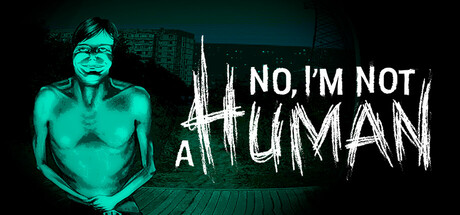
No, I'm not a Human
Papers, Please meets body-horror paranoia: you have one house, a shotgun, and no reliable way to know if the person knocking is going to murder your guests or thank you for saving their life.
GamerScout Verdict
Best for fans of Papers, Please who want moral weight and sustained dread over polished mechanical clarity.
Compare Prices(5 stores)
Every store in this table quotes us in euros, so the EUR figure is the price the seller actually set, not our arithmetic — which is why EUR is also the currency we rank in. We only list an offer here when the store gives us its price in euros, so nothing in this table is a number we invented.
Pick USD, PLN, GBP, CAD or AUD in the header and we convert from EUR at the European Central Bank reference rate — converted amounts are prefixed with ~. Your bank or the store may apply a different rate at checkout. We never hide offers based on where you are: everyone sees this whole table.
We may earn a commission when you buy games through links on this page — at no extra cost to you. It never affects our rankings or verdicts.
Price History
Screenshots & Media
About No, I'm not a Human
My first session with No, I'm Not a Human lasted about three hours and ended with me shooting a perfectly innocent woman because her eyes looked slightly wrong in the lamplight. That misfire is the whole game in one moment. Trioskaz, a small Russian indie studio, has built something that sits squarely in the lineage of Papers, Please and This War of Mine, and it earns that comparison honestly rather than by accident. The core loop is deceptively clean: the sun has become lethal during daylight hours, survivors knock on your door at night, and you have a finite pool of energy each day to run checks on your guests. Inspect body parts for signs of Visitor physiology, listen to radio broadcasts that update the identification rules, and then decide whether to let someone stay or put a shotgun round through them. The feedback is brutal and binary: a bloody mess means you got a Visitor; a black plastic bag means you just killed a person. What keeps the tension from becoming routine is the randomization layer. Most characters are randomly assigned human or Visitor status each run, so prior knowledge only gets you so far. The identification clues the game provides, things like red eyes or unusual body hair, are deliberately vague enough to apply to ordinary people too. That deliberate design ambiguity is the point. You are not solving a puzzle with a clean solution; you are managing paranoia under resource pressure, and the energy bar that limits your daily inspections ensures you cannot just check every guest for every sign. Kombucha serves as a limited save token, which is a friction point the community has legitimately criticized. Hoarding it and hitting a crash means restarting from scratch, and the single-slot approach to progression feels like an idea borrowed from a jam prototype that never got revised for a full release. That said, a Visitor who is denied entry may offer Kombucha as a bribe, which layers a nasty risk-reward calculation on top of an already stressed decision set. The 70-plus character roster, each with distinct dialogue and behaviour patterns, gives subsequent playthroughs a different texture even when the broad strokes are familiar. Over ten possible endings branch from the cumulative weight of your choices, and critics have flagged the endings themselves as the game's strongest writing, poetic and thematically tight around ideas of death, isolation, and what paranoia costs you morally. The art direction reinforces all of this: a limited, sickly colour palette, guests rendered with uncanny pale-green skin, and a post-Soviet domestic setting that feels claustrophobic without ever relying on jump scares. The atmosphere earns its tension honestly. The critical reception was genuinely split in interesting ways. Reviewers who engaged with the first playthrough largely came away positive, praising the sustained dread and the moral weight of each decision. The sharper criticism landed on the back half of the game, where some felt the mechanics did not deepen enough to justify the runtime, and the opaque identification system sometimes felt more like a coin flip than a puzzle. Both readings are correct, which is actually a fair summary of what this type of game does. If you bounced off Papers, Please because you wanted clearer feedback loops and tighter mechanical logic, No, I'm Not a Human will frustrate you in the same places. If you accepted that the uncertainty in those checkpoint-style games is the feature rather than the flaw, this is a very strong entry in that small genre. For strategy and sim players who rarely touch horror: this is worth crossing genre lines for. The resource management of the energy system and the Kombucha economy give it more decision depth than a pure visual novel, and the randomized character pool adds the kind of replayability that makes a short game feel longer. Go in on the first playthrough clean, accept that some of your calls will be wrong, and let the endings do what they were designed to do. The restrictive save system and some loose late-game mechanics are real warts, but they sit inside something that clearly knows what it wants to be.

Strategy & simulation
Tags
System Requirements
Minimum
- OS
- 10
- Memory
- 2 GB RAM
- Graphics
- GTX 960
- Processor
- Intel core i5
Recommended
- OS
- 10
- Memory
- 2 GB RAM
- Graphics
- GTX 960
- Processor
- Intel core i5
Keep exploring
Community Discussion
Be the first to comment on No, I'm not a Human.
Reviews & Ratings
No ratings available
Game Info
- Developer
- Trioskaz
- Publisher
- CRITICAL REFLEX
- Release Date
- Sep 15, 2025


