Never Again
A sorrowful first-person horror story about a girl, her asthma inhaler, and a house that has swallowed her family whole. Closer to Edith Finch than to a jump-scare fest, and far more affecting than its budget suggests.
GamerScout Verdict
Best for patient horror fans who prioritize atmosphere and story payoff over polished puzzle design or tight controls.
Compare Prices(3 stores)
Every store in this table quotes us in euros, so the EUR figure is the price the seller actually set, not our arithmetic — which is why EUR is also the currency we rank in. We only list an offer here when the store gives us its price in euros, so nothing in this table is a number we invented.
Pick USD, PLN, GBP, CAD or AUD in the header and we convert from EUR at the European Central Bank reference rate — converted amounts are prefixed with ~. Your bank or the store may apply a different rate at checkout. We never hide offers based on where you are: everyone sees this whole table.
We may earn a commission when you buy games through links on this page — at no extra cost to you. It never affects our rankings or verdicts.
Price History
Screenshots & Media
About Never Again
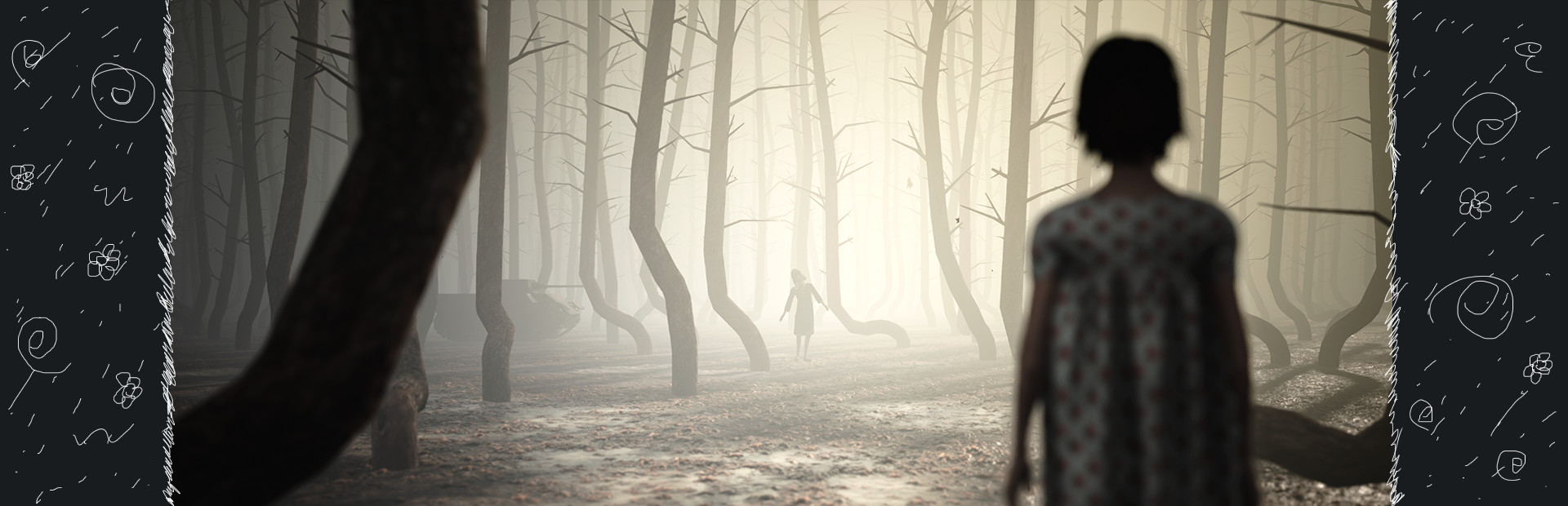
My first session with Never Again lasted longer than I planned, not because the moment-to-moment gameplay is flawless, but because the story has that rare, quiet gravity that keeps pulling you back through the dark. You play as Sasha Anders, a thirteen-year-old waking up in a home that has gone cold and silent around her. Her parents and little brother are missing, and the only things keeping her moving are a pocket inhaler and her own stubborn nerve. Fear literally suffocates her: get into a bad enough situation, burn through your inhalers, and the run ends. It is a small mechanic but an honest one, mapping childhood anxiety onto a resource system in a way that feels thought-through rather than gimmicky. The comparison that keeps coming to mind is What Remains of Edith Finch and The Vanishing of Ethan Carter. Never Again sits in that same bracket of story-forward first-person experiences where exploration and environmental storytelling carry more weight than combat or reflex tests. You comb through dim, claustrophobic rooms, pick up journal entries to flesh out Sasha's life, drag open drawers with a physics-based mouse gesture, and work through a series of puzzles that range from intuitively satisfying to genuinely head-scratching. The environmental cues can be unclear, and at least one chase-and-stealth section becomes frustrating when the movement feels sticky and the room layout demands several failed attempts before the logic clicks. The bridge sequence in particular has a small but vocal community of players who simply walked away from it. Where the game earns its overwhelmingly positive standing on Steam is in its atmosphere and its ending. The sound design is the star: an unsettling score that shifts in texture as tension rises, combined with smart use of ambient silence, makes the grungy indoor environments feel genuinely oppressive rather than just visually dark. The creature design, especially a doll-like figure that haunts the early chapter, is memorably strange. And the story, as it slowly resolves, carries real emotional weight. Small details planted early acquire meaning in the final act, and the conclusion lands harder than most horror games twice its length manage. The honest caveat is that navigation can work against you. The environment-interaction system occasionally obscures quest-critical items, certain puzzle cues rely on audio hints that may be missed or are inaccessible to players with hearing difficulties, and the floaty movement clashes with sections that demand precision. These are not minor inconveniences in a genre where tension depends on player agency feeling clean. If you have low patience for trial-and-error setpiece sequences, budget for some friction. If you can meet the game on its own uneven terms, what waits on the other side is a haunting, sorrowful narrative that lingers after the credits.

Indie & narrative
Tags
System Requirements
Minimum
- OS
- Windows 7 or later
- Memory
- 4 GB RAM
- DirectX
- Version 11
- Storage
- 1 GB available space
- Graphics
- GeForce GT 740 or later
- Processor
- Intel Core 2 Quad CPU Q6600 @ 2.40GHz (4 CPUs) or later
- Sound Card
- Stereo
Recommended
- OS
- Windows 7 or later
- Memory
- 8 GB RAM
- DirectX
- Version 11
- Storage
- 1 GB available space
- Graphics
- GeForce GTX 1050 or later
- Processor
- Intel Core i5-3450 CPU @ 3.10GHz 3.50GHz or later
- Sound Card
- Stereo
Keep exploring
Community Discussion
Be the first to comment on Never Again.
Reviews & Ratings
No ratings available
Game Info
- Developer
- Primary Games
- Publisher
- Primary Games
- Release Date
- May 9, 2019