Nanuleu
Trim the fat from your tower-defense wishlist and land here: a micro-sized, 78%-positive RTS built on one genuinely clever idea executed with minimalist confidence.
GamerScout Verdict
Best for genre newcomers wanting a calm, low-cost introduction to RTS resource management - veterans will clear it in one sitting.
Compare Prices(5 stores)
Every store in this table quotes us in euros, so the EUR figure is the price the seller actually set, not our arithmetic — which is why EUR is also the currency we rank in. We only list an offer here when the store gives us its price in euros, so nothing in this table is a number we invented.
Pick USD, PLN, GBP, CAD or AUD in the header and we convert from EUR at the European Central Bank reference rate — converted amounts are prefixed with ~. Your bank or the store may apply a different rate at checkout. We never hide offers based on where you are: everyone sees this whole table.
We may earn a commission when you buy games through links on this page — at no extra cost to you. It never affects our rankings or verdicts.
Price History
Screenshots & Media
About Nanuleu
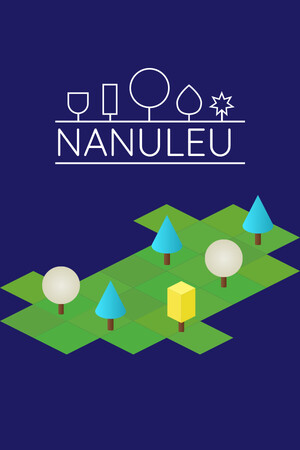
My first instinct with Nanuleu was to bench it fast and move on to something with more spreadsheet surface area. I was wrong to hesitate. Selva Interactive, a two-person studio out of Guatemala City, built this around a single mechanical premise that punches above its content count: every structure you plant must be physically connected to your existing root network, which means every expansion decision is also a supply-line decision. You cannot teleport a war tree into a contested corner; you have to pay for the road to get there first. That constraint, simple as it sounds, produces real tension in the opening minutes of each match. The tree roster is small but distinct. Life trees extend your territory and slightly boost seed production; water and mineral trees generate the two resource currencies you spend on everything else; protector trees form your passive defensive perimeter; and war trees are the offensive endgame, spawning units that push back against enemy bases. The three scenarios on the PC version, First Contact, Invasion, and Counterattack, each restructure how that toolkit gets used. First Contact has enemy trees spawning at map edges and escalating in number; Invasion puts two bases on opposite sides of a lane; Counterattack flips the script and tasks you with surrounding and dismantling a fortified central enemy. Three difficulty modes, Apprentice, Warrior, and Sage, modify enemy aggression and spawn proximity, with Sage placing dark barracks uncomfortably close to your resource nodes from the start. Here is the honest caveat for strategy veterans: the decision space, while real, is thin. The community consensus across both mobile and PC is that a dominant build order exists, and once you find it the maps stop offering fresh resistance. With only seven levels on PC, the first four functioning mostly as tutorials, you are looking at four to six hours of engagement before the curtain drops. The difficulty spike on the final three maps is steep, but the spike is more about execution tolerance than strategic variety. The AI does not adapt to you; it scales numerically. That is a meaningful ceiling for anyone who wants a game that fights back intelligently over dozens of hours. What the game does well it does genuinely well. The procedurally generated resource node placement means no two runs share the same geometry, which adds more replay texture than the raw map count suggests. Online leaderboards score on time and trees lost, giving completionists a reason to retry Warrior and Sage after clearing the campaign. The isometric art style is clean and legible under pressure, color-coding each tree type so resource reads are immediate even in the middle of a push. The soundtrack sits in a calm atmospheric register that suits the pacing. For a game prototyped in one month for a game jam and expanded from there, the overall polish is quietly impressive. For a newcomer to the RTS-lite genre, Nanuleu is close to ideal as a first step. The Apprentice mode slows enemy timing enough that you can experiment freely, learn what each tree does, and practice reading the economy without getting steamrolled. That is something I genuinely respect: the difficulty tiers are designed to teach, not just punish. If you have never managed a build order or thought about tempo in a real-time game, this is a calm, affordable place to start. Just go in knowing the experience is closer to a two-evening session than a long-term game.

Strategy & simulation
Tags
System Requirements
Minimum
- OS
- Windows XP SP2+
- Memory
- 2 GB RAM
- DirectX
- Version 9.0
- Storage
- 400 MB available space
- Graphics
- DX9 (shader model 3.0) or DX11 with feature level 9.3 capabilities.
- Processor
- 1.5 GHz Core2Duo+
Keep exploring
Community Discussion
Be the first to comment on Nanuleu.
Reviews & Ratings
No ratings available
Game Info
- Developer
- Selva Interactive
- Publisher
- Selva Interactive
- Release Date
- Nov 16, 2016