
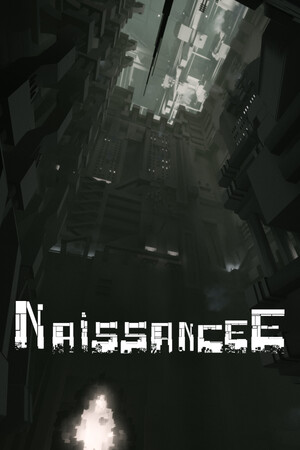
NaissanceE
A monochrome brutalist megastructure that swallows you whole, strips away every comfort, and dares you to find beauty in the loneliness. Worth the disorientation.
GamerScout Verdict
Essential for players who want spatial art that unsettles rather than comforts - a tough sell for anyone expecting clear objectives.
Compare Prices(2 stores)
Every store in this table quotes us in euros, so the EUR figure is the price the seller actually set, not our arithmetic — which is why EUR is also the currency we rank in. We only list an offer here when the store gives us its price in euros, so nothing in this table is a number we invented.
Pick USD, PLN, GBP, CAD or AUD in the header and we convert from EUR at the European Central Bank reference rate — converted amounts are prefixed with ~. Your bank or the store may apply a different rate at checkout. We never hide offers based on where you are: everyone sees this whole table.
We may earn a commission when you buy games through links on this page — at no extra cost to you. It never affects our rankings or verdicts.
Price History
Screenshots & Media
About NaissanceE
I came into NaissanceE expecting atmosphere and got something closer to architecture as confrontation. Limasse Five built one world out of gray concrete, geometric void, and oppressive scale, and then placed a single character called Lucy inside it with two words of context: "Lucy is Lost." That's the entire briefing. From there, the game opens into a first-person exploration that mixes light platforming, simple environmental puzzles, and a relentless insistence on making you feel genuinely small. The world is rendered in stark black and white, built almost entirely from extruded geometric shapes with no textures, no maps, no HUD, and no objective markers. What you get instead is a kind of brutal spatial intelligence. Pathways are folded into corners. Staircases lead nowhere, or lead somewhere you won't reach for another hour. Light sources, which take the form of plain white geometric emitters, are used both as navigational signals and as puzzle components: pressing switches repositions them, making certain platforms materialize out of darkness or vanish back into it. There's also a breathing mechanic tied to sprinting that sounds like a detail but quietly becomes one of the game's most grounding touches, a reminder that you are a body moving through an indifferent structure, not a camera on autopilot. The soundtrack, composed with contributions from Pauline Oliveros, Patricia Dallio, and Thierry Zaboitzeff, deserves separate mention. It shifts registers in ways that feel calibrated to the architecture rather than to the player's comfort. Some sections hum with low industrial drone. Others open into near-silence that is somehow louder. A few players find certain cues grating, and there is no in-game option to adjust audio, which is a genuine inconvenience. But when the score lands, it amplifies the spatial uncanniness in a way that few games of any budget have managed. Not everything holds. The platforming is the weakest element, and the friction it creates is real. The game has no hand-holding by design, which means dead ends are plentiful, and some are intentionally indistinguishable from genuine routes. Early sections can produce a specific kind of exhausting lost-ness that will make impatient players quit before the back half opens up. A post-launch patch added checkpoints to the more demanding acts, which softened the sharpest edges, but the experience still asks more patience than most people budget for a ten-dollar game. Playtime runs roughly five to ten hours depending on how much of the maze folds back on you. For the right kind of player, though, this is one of the stranger and more singular things available on Steam, full stop. It draws comparisons to Tsutomu Nihei's manga BLAME!, to Kubrick's monolithic scale, to the concrete logic of Brutalist architecture taken to an inhuman conclusion. None of those references quite cover it. NaissanceE is its own quiet obsession, and the people who connect with it tend to carry it around for years.

Indie & narrative
Tags
System Requirements
Minimum
- OS
- Windows XP SP3 or Windows Vista
- Memory
- 3 GB RAM
- DirectX
- Version 9.0c
- Storage
- 2 GB available space
- Graphics
- NVIDIA 8800 gts or similar graphics card
- Processor
- 2.0+ GHz multi-core processor
Recommended
- OS
- Windows 7
- Memory
- 4 GB RAM
- DirectX
- Version 9.0c
- Storage
- 2 GB available space
- Graphics
- NVIDIA 460 gtx or higher graphics card
- Processor
- 3.0+ GHz multi-core processor
Keep exploring
Community Discussion
Be the first to comment on NaissanceE.
Reviews & Ratings
Game Info
- Developer
- Limasse Five
- Publisher
- Limasse Five
- Release Date
- Feb 13, 2014