Myst III: Exile
Slow down, take notes, and lose yourself in six hand-crafted Ages built around logic puzzles with real teeth. Worth it for the atmospheric payoff alone.
GamerScout Verdict
Best for patient puzzle solvers who want a slow, atmospheric mystery with real narrative payoff and don't mind consulting a notepad.
Compare Prices(5 stores)
Every store in this table quotes us in euros, so the EUR figure is the price the seller actually set, not our arithmetic — which is why EUR is also the currency we rank in. We only list an offer here when the store gives us its price in euros, so nothing in this table is a number we invented.
Pick USD, PLN, GBP, CAD or AUD in the header and we convert from EUR at the European Central Bank reference rate — converted amounts are prefixed with ~. Your bank or the store may apply a different rate at checkout. We never hide offers based on where you are: everyone sees this whole table.
We may earn a commission when you buy games through links on this page — at no extra cost to you. It never affects our rankings or verdicts.
Price History
Screenshots & Media
About Myst III: Exile
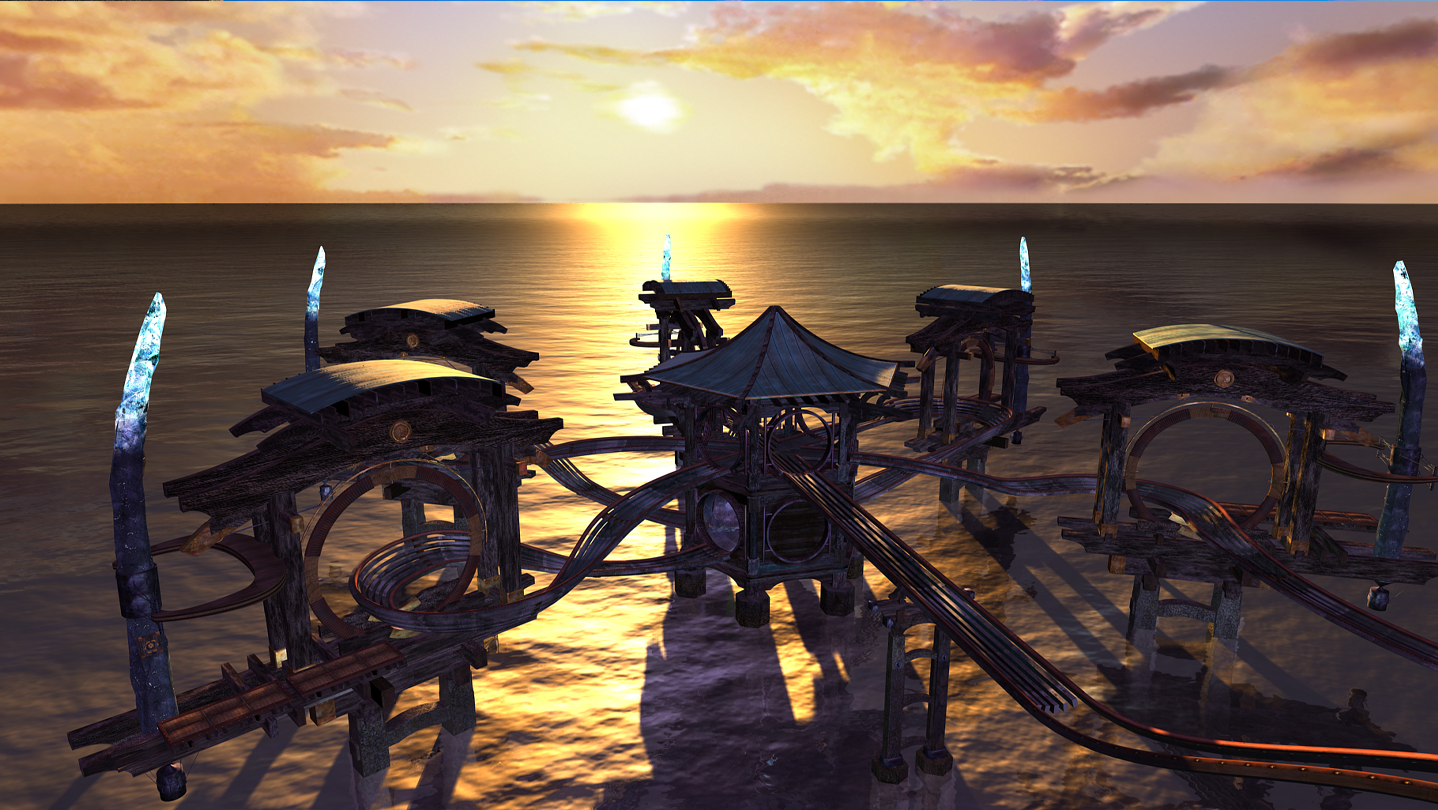
I went in expecting a nostalgia trip and came out with a notebook full of scrawled symbols and a genuine grudge against one particularly sadistic mechanical puzzle on the Age of Amateria. That is a compliment. Myst III: Exile, originally built by Presto Studios in 2001 and re-released on Steam in 2018, is a first-person, pre-rendered point-and-click puzzle adventure. You move between static scenes, clicking to traverse environments and manipulate objects, with one meaningful upgrade over its predecessors: full 360-degree free-look panning at every location. It sounds small, but it changes how you read each scene and how the puzzles breathe. The structure sends you through six Ages, each with its own visual identity and mechanical theme. J'nanin is a rocky hub world that gates access to the others. Edanna is an overgrown natural ecosystem where plant and animal interactions are the puzzle logic. Voltaic leans industrial and mechanical. Amateria is the one players remember, a kinetic contraption Age that culminates in a sequence that multiple Steam reviewers describe as a career highlight moment even 20 years later. Each Age has its own internal logic and the game trusts you to figure that logic out through observation rather than hand-holding. Collect clues, take notes, apply them. That is the entire loop, and it works. The villain, Saavedro, is the emotional spine of the game. Portrayed by Brad Dourif in live-action FMV sequences, he is a broken, desperate man with a comprehensible grievance rather than a generic antagonist. Dourif's performance carries genuine menace and pathos in equal measure, and the story's branching conclusion gives players a choice worth caring about. The narrative ties back to events from Myst and Riven, so newcomers will miss some context, but the game is functional without that prior knowledge. The rough edges are real and worth naming upfront. The Steam version runs via a compatibility layer (ResidualVM), and the base resolution was built for 640x480, meaning pre-rendered scenes can look soft or slightly pillarboxed on modern monitors. Navigation ambiguity is a recurring friction point, particularly in Edanna where valid paths blend into background foliage, turning exploration into a pixel hunt. Puzzles lock behind you as you progress, which keeps you moving forward but undercuts the sense that the Ages are living, revisitable worlds. And yes, some puzzles require precise spatial reasoning that will send impatient players straight to a walkthrough. That is not a bug, but it is a warning. This is a game for players who genuinely want to think, who can accept that progress is measured in insights rather than minutes, and who find satisfaction in an environment so carefully constructed that the scenery itself is part of the puzzle logic. For that audience, Exile holds up with surprising firmness. For anyone hoping for modernised visuals or quality-of-life conveniences, the presentation is a time capsule and the tolerance bar is real.

Catch-all
Tags
System Requirements
Minimum
- OS
- 7 / 8 / 10
- Processor
- 1.8 GHz Processor
- Memory
- 512 MB RAM
- Graphics
- 8 MB 3D graphics card compatible with DirectX 9
- DirectX
- Version 9.0
- Storage
- 5 GB available space
- Sound Card
- DirectX 9 compliant audio device Ad…
Recommended
Requires a 64-bit processor and operating system
Keep exploring
Community Discussion
Be the first to comment on Myst III: Exile.
Reviews & Ratings
Game Info
- Developer
- Presto Studios
- Publisher
- Cyan Worlds
- Release Date
- Sep 24, 2018