Mushroom 11
Pruning a blob through a post-apocalyptic wasteland sounds absurd until the first time you thread yourself through a crack in a crumbling wall and feel like a quiet genius. Patience required; wonder included.
GamerScout Verdict
Worth it for puzzle fans who can accept some late-game friction in exchange for one of the most original mechanics in indie platformers.
Compare Prices(5 stores)
Every store in this table quotes us in euros, so the EUR figure is the price the seller actually set, not our arithmetic — which is why EUR is also the currency we rank in. We only list an offer here when the store gives us its price in euros, so nothing in this table is a number we invented.
Pick USD, PLN, GBP, CAD or AUD in the header and we convert from EUR at the European Central Bank reference rate — converted amounts are prefixed with ~. Your bank or the store may apply a different rate at checkout. We never hide offers based on where you are: everyone sees this whole table.
We may earn a commission when you buy games through links on this page — at no extra cost to you. It never affects our rankings or verdicts.
Price History
Screenshots & Media
About Mushroom 11
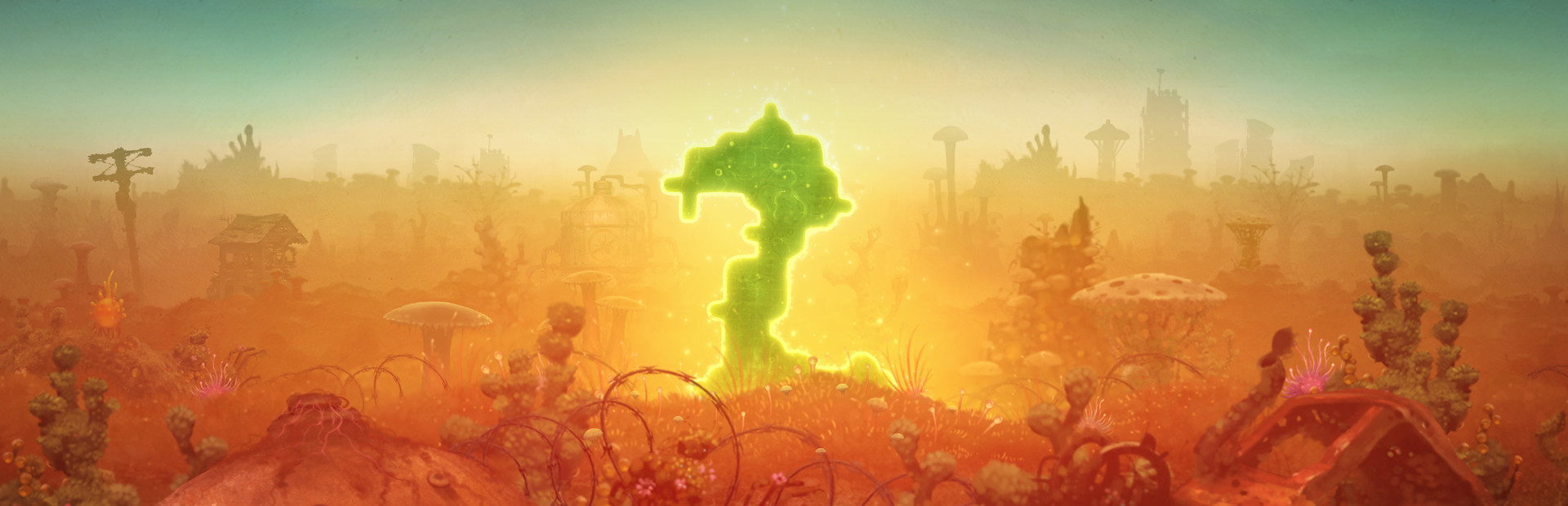
I keep coming back to a specific moment in Mushroom 11 where I had to ride a mine cart through a corridor of lava, not by pressing anything resembling a directional button, but by erasing chunks of my own body so that regrowth pushed me forward and kept me clamped inside the cart. That one moment encapsulates everything this tiny two-person studio from Brooklyn pulled off, and everything that will drive a certain kind of player absolutely up the wall. The mechanic is genuinely unlike anything else: you erase cells from your amorphous green organism with a cursor, and the lost mass immediately regrows from whatever surface the blob is touching. Erase the back, grow the front, tumble forward. Erase the left side to lean right. Stretch tall and thin to reach a ledge. Split yourself in two to hold two switches at once. The core loop asks you to unlearn every instinct you have about control and replace it with something closer to fluid reasoning. Early chapters feel almost meditative, the blob flowing across rubble and through collapsed architecture at whatever pace you choose. The soundtrack, sourced from ambient electronica legends The Future Sound of London, earns every note, sitting somewhere between haunted and quietly optimistic in a way that suits the post-humanity setting without overselling its own sorrow. The visual design is similarly considered. Hand-painted backdrops layer in details about what happened to civilization without ever spelling it out, propaganda posters half-buried, nurseries flooded with overgrowth, factory floors reclaimed by strange flora. There are seven chapters, and while that count sounds thin, the difficulty arc is steep and deliberate. The first four chapters introduce you to the system through increasingly clever variations, but chapter five is where the game stops being generous and starts demanding real mastery. Boss encounters at chapter ends require collecting DNA strands scattered through the level to weaken mutations, adding a structural beat that breaks up the pure traversal. Mine carts, rockets, air current sections, suspended platforms over acid, the designers keep finding new contexts to stress the central mechanic. Here is the honest caveat. The later chapters lean heavily on aerial sections where you fling the blob across gaps, and the regrowth randomness that feels charming on solid ground turns genuinely punishing mid-air. You know the correct approach; execution resists you because the physics respond unpredictably at speed. Frequent checkpoints absorb most of this friction, but some players will hit chapter five or six and simply stop. That is not a failing of ambition, it is a product of a mechanic that was always somewhat at war with precision. The game knows this and mostly designs around it, but not entirely. At roughly five to six hours for a first playthrough, Mushroom 11 is exactly as long as it needs to be. It does not overstay its concept. For players who want to push further, collectible DNA strands reward thorough exploration and speed runs have a committed following. But even a single clean playthrough, ending on a note that manages to be both bleak and strangely hopeful, is worth the time. This is the kind of game that Untame could only have made once, and the handcraft in every painted background and physics interaction shows.

Indie & narrative
Tags
System Requirements
Minimum
- OS
- Windows XP and up
- Memory
- 2 GB RAM
- Storage
- 500 MB available space
Keep exploring
Community Discussion
Be the first to comment on Mushroom 11.
Reviews & Ratings
Game Info
- Developer
- Untame
- Publisher
- Untame
- Release Date
- Oct 15, 2015