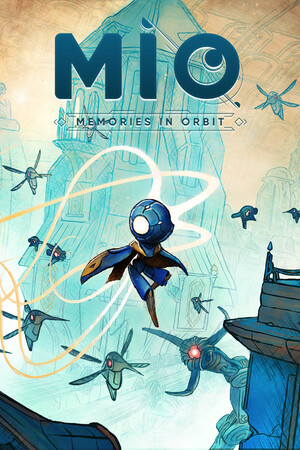
MIO: Memories in Orbit
A handcrafted 2.5D metroidvania that earns every quiet moment aboard its dying ship, but pulls no punches on the way there. Gorgeous enough to stop you mid-jump, demanding enough to make you earn the view.
GamerScout Verdict
Built for metroidvania faithful who read the environment as carefully as they read attack patterns, and can forgive thin combat for exceptional traversal craft.
Compare Prices(9 stores)
Every store in this table quotes us in euros, so the EUR figure is the price the seller actually set, not our arithmetic — which is why EUR is also the currency we rank in. We only list an offer here when the store gives us its price in euros, so nothing in this table is a number we invented.
Pick USD, PLN, GBP, CAD or AUD in the header and we convert from EUR at the European Central Bank reference rate — converted amounts are prefixed with ~. Your bank or the store may apply a different rate at checkout. We never hide offers based on where you are: everyone sees this whole table.
We may earn a commission when you buy games through links on this page — at no extra cost to you. It never affects our rankings or verdicts.
Price History
Screenshots & Media
About MIO: Memories in Orbit
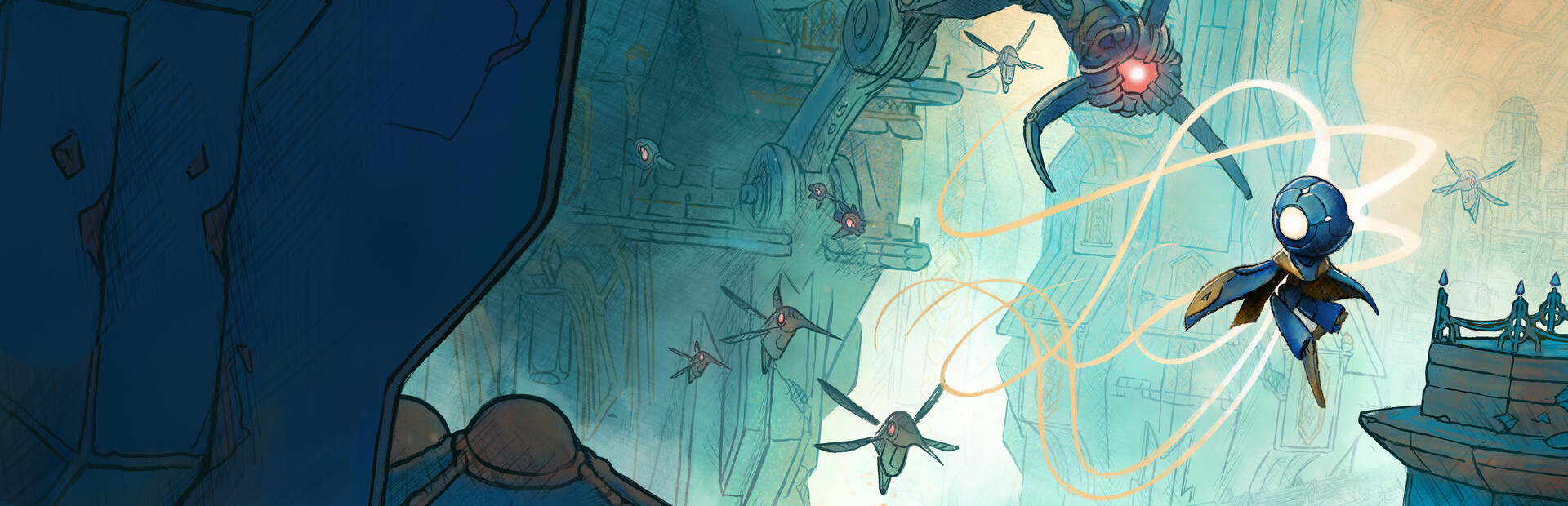
My first hour with MIO had me second-guessing whether I was paying attention or just gawking. The Vessel is one of those rare game environments that genuinely stops you mid-movement: a lush, overgrown garden bleeding into a frozen metropolis, watercolor backdrops layered over cold machinery, all of it rendered in a hand-drawn style that has no business looking this alive on a decaying spaceship. Douze Dixiemes - a small French studio also behind the touching Shady Part of Me - built something with real visual intention here, and it shows in every biome transition from the Nexus outward to the Celestial Bay, the Vaults, and the Aviaries. Mechanically, MIO opens slow and deliberately fragile. You start with a double jump and a basic tendril combo, and for a genre that trains you to expect quick empowerment, that restraint reads as almost confrontational. But the design conviction pays off. Abilities unlock in a way that feels genuinely earned rather than metered: the Hairpin grapple, wall-climbing, the Slingshot projectile tool acquired in the Vaults, and a Sail that gives MIO an almost balletic aerial quality once you learn to chain hits off enemies to recharge her energy mid-sequence. Movement and combat share the same fuel, which means staying airborne requires thinking offensively, and that loop is where the game quietly becomes something special. Loadout swapping happens only at Network Gate save points, which encourages actual commitment to your modifier setup rather than menu-surfing mid-run. Progression is harder to read clearly from the outside, and that is both a feature and a real criticism. The game gives you a map only after you spend Nacre to power up the central hub through your NPC handler Shii, and early direction is sparse enough that some players will wander for long stretches before finding their next foothold. Currency called Nacre drops from enemies and is lost permanently on death unless you crystallize it beforehand at processing units scattered through the world - a system that adds genuine stakes without being punishing to the point of contempt. The Heart's tremors, which occasionally strip a permanent layer of protection as a narrative mechanic, are a sharper edge. Some critics found the difficulty spikes uneven, and the combat itself - built around a three-hit combo with directional attacks and a dodge - does not offer the same depth as the platforming. A few reviewers noted you will likely find a modifier build early and stick with it rather than freely experiment. For a game so strong on movement craft, the combat sits a little thin by comparison. The soundscape, however, is doing extraordinary work throughout. Haunting ambient melodies shift into something more fragile and melancholic in the areas where the ship feels most broken. The sound design extends all the way down to Mio's tendril footfalls, and it all reads as intentional, considered, the work of people who cared about what you hear in quiet corridors as much as what you fight in boss arenas. Speaking of bosses: they are stylistically distinct enough to stay memorable, each demanding that you actually use your movement toolkit rather than out-damage them, which keeps even the simpler encounters from feeling like gear checks. Assist options including the Corrupted Boss Mode (which weakens bosses progressively on repeat deaths, echoing Hades' God Mode approach) and Pacifist Mode are present and notably do not lock you out of achievements, which is the right call for a game at this difficulty level. At somewhere between 15 and 25 hours depending on how deeply you comb the Vessel, MIO knows its length and does not overstay. It is the kind of game that rewards patience with the opening hours, where it asks you to move carefully and trust that the abilities to come will recontextualize everything you passed. That trust is justified. If you came up on Hollow Knight and Ori and found Celeste's precision platforming exhilarating rather than exhausting, this is firmly your kind of handcrafted world.

Indie & narrative
Tags
System Requirements
Minimum
- OS
- Windows 10/11 64-bit
- Memory
- 8 GB RAM
- DirectX
- Version 12
- Storage
- 4 GB available space
- Graphics
- AMD Radeon RX 460 / Nvidia GeForce GTX 1050 Ti
- Processor
- AMD Ryzen 3 1200 / Intel Core i3-6100
Recommended
- OS
- Windows 10/11 64-bit
- Memory
- 8 GB RAM
- DirectX
- Version 12
- Storage
- 4 GB available space
- Graphics
- AMD Radeon RX 570 / Nvidia GeForce GTX 1650
- Processor
- AMD Ryzen 3 1300X / Intel Core i3-8100
Keep exploring
Community Discussion
Be the first to comment on MIO: Memories in Orbit.
Reviews & Ratings
Game Info
- Developer
- Douze Dixièmes
- Publisher
- Focus Entertainment
- Release Date
- Jan 20, 2026