Minos Strategos
Tash-Kalar meets ancient Greek mythology in a coffee-break tactical puzzle that will demand far more from your brain than its minimalist visuals suggest.
GamerScout Verdict
Best for abstract strategy fans who want a compact, brain-flexing daily puzzle with a surprisingly steep skill ceiling.
Compare Prices(3 stores)
Every store in this table quotes us in euros, so the EUR figure is the price the seller actually set, not our arithmetic — which is why EUR is also the currency we rank in. We only list an offer here when the store gives us its price in euros, so nothing in this table is a number we invented.
Pick USD, PLN, GBP, CAD or AUD in the header and we convert from EUR at the European Central Bank reference rate — converted amounts are prefixed with ~. Your bank or the store may apply a different rate at checkout. We never hide offers based on where you are: everyone sees this whole table.
We may earn a commission when you buy games through links on this page — at no extra cost to you. It never affects our rankings or verdicts.
Price History
Screenshots & Media
About Minos Strategos
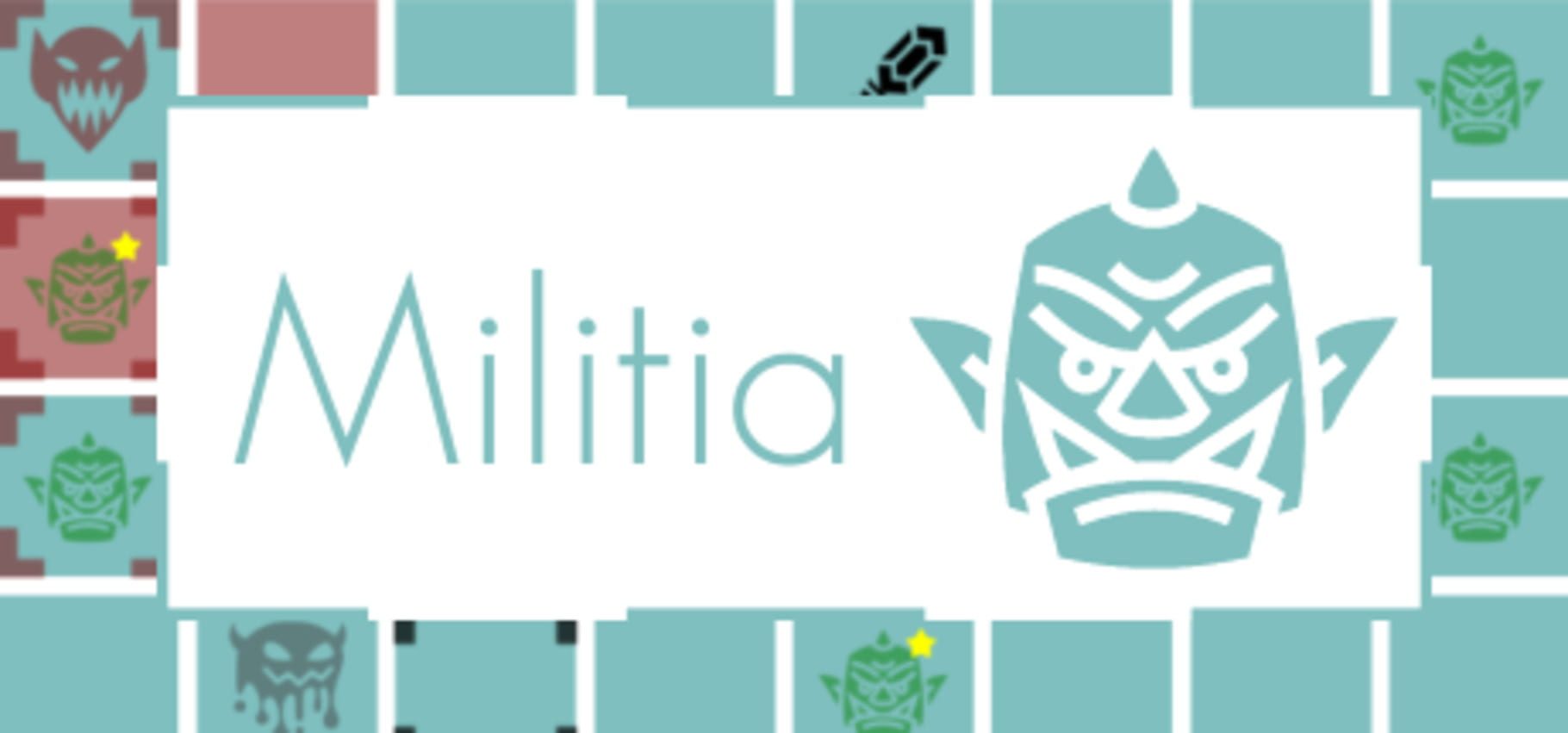
I've put enough time into BrainGoodGames titles to recognise their particular flavour of cruelty: stripped-back interfaces hiding systems with real strategic teeth. Minos Strategos is that formula taken to its sharpest point. You command a handful of warriors on a 10x10 grid, racing to hold eight temples for enough turns to hit a point threshold, while a relentless Minotaur horde does the same from the other direction. The asymmetry is the whole game. Your side moves one piece per turn; the Minotaurs move every single piece every turn. Kill one and it respawns at the board edge. Lose one of yours and it stays dead. If that sounds like a losing proposition by design, you're reading it correctly, and that deliberate imbalance is where the decision-making lives. The card system is what transforms a tight positional puzzle into something with genuine build depth. You draw from a hand of three command cards each turn, and those cards are triggered by unit formations on the board, not just played freely. Cards like Phalanx, Trident, Massacre, Cannon, and Fireblast each require you to have pieces in specific geometric arrangements before they fire. Pulling off a chaining combo where one card's spawn creates the formation for the next card is the kind of multi-step calculation that board game players with Vlaada Chvatil titles on the shelf will recognise immediately. The game cites Tash-Kalar as a direct inspiration and it shows in the best way. Over 50 cards are in the pool, unlocked incrementally through the ranked ladder and distributed via a deck that grows as you climb, so early sessions feel learnable and late-rank sessions require you to actually think about deck composition. Four modes shape how you engage with that ladder. Ranked Play is the default: a rising difficulty curve where win thresholds tighten and the enemy gets more aggressive the higher you climb. Draft Mode lets you handpick your card lineup before a run, which is where most of the metagame sits once you understand which synergies hold at high rank. Relaxed Mode removes the per-turn timer entirely for anyone who finds clock pressure more frustrating than fun. Dionysus Mode randomises your deck, pushing adaptation over preparation. The single save slot is a genuine nuisance if you want to swap modes and pick back up mid-climb, but it's a minor structural irritation rather than a design failure. The UI deserves an honest mention. Card icons can be hard to parse before you have the vocabulary memorised, and the fact that placed cards can be rotated is not surfaced cleanly at the start. There is a tutorial and the game does introduce enemy types gradually, which helps, but the first few sessions will involve some confusion about why your stone pieces are not blocking anything. Push through that. The mechanical clarity arrives once the formation logic clicks, and after that the interface friction mostly disappears. Community sentiment from the small but positive Steam review base largely mirrors this: early frustration giving way to real appreciation for the depth underneath. For a strategy specialist this is a satisfying micro-game with a deceptively long skill ceiling. It is not a 200-hour commitment; sessions run short by design, and the ranked ladder functions as the kind of persistent progression loop that keeps you returning in 20-minute bursts rather than marathon sessions. The lack of mod support or a large community means you are playing this solo against a well-tuned deterministic opponent rather than against an evolving metagame. That is entirely fine for what it is. If you want a turn-based abstract that respects your intelligence from minute one and scales difficulty honestly, this is the kind of small studio output that gets overlooked because it does not have a marketing budget.

Strategy & simulation
Tags
System Requirements
Minimum
- OS
- Windows XP or newer
- Memory
- 512 MB RAM
- Storage
- 200 MB available space
- Graphics
- OpenGL
- Processor
- Support for SSE2 instruction set
Keep exploring
Community Discussion
Be the first to comment on Minos Strategos.
Reviews & Ratings
No ratings available
Game Info
- Developer
- BrainGoodGames
- Publisher
- BrainGoodGames
- Release Date
- Jan 27, 2017