
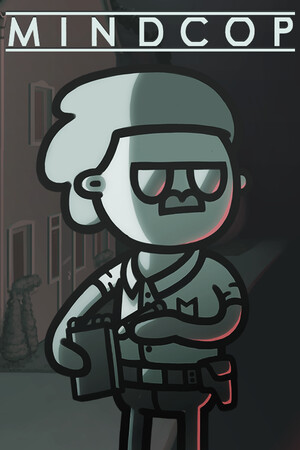
Mindcop
Solo-dev passion project meets noir murder mystery: five days, a psychic detective, and a whole camp full of people with very good reasons to lie.
GamerScout Verdict
Built for players who want a murder mystery that actually punishes bad detective work and rewards careful, curious thinking across multiple runs.
Compare Prices(8 stores)
Every store in this table quotes us in euros, so the EUR figure is the price the seller actually set, not our arithmetic — which is why EUR is also the currency we rank in. We only list an offer here when the store gives us its price in euros, so nothing in this table is a number we invented.
Pick USD, PLN, GBP, CAD or AUD in the header and we convert from EUR at the European Central Bank reference rate — converted amounts are prefixed with ~. Your bank or the store may apply a different rate at checkout. We never hide offers based on where you are: everyone sees this whole table.
We may earn a commission when you buy games through links on this page — at no extra cost to you. It never affects our rankings or verdicts.
Price History
Screenshots & Media
About Mindcop
My first session with Mindcop ended with me staring at the screen, certain I had wasted three of my five in-game days on completely the wrong leads, and feeling almost grateful for it. That sensation, the low-grade anxiety of a ticking clock attached to every mundane action, is exactly what solo developer Andre Gareis spent six years building, and it lands. The setup is a classic closed-circle whodunnit: a young woman found murdered at Merrilyn Crater Camp, a tight-knit community of thirteen residents who are, predictably, not quite as tight-knit as advertised, and a five-day window to crack the case. What separates Mindcop from the point-and-click crowd is the resource economy underneath everything. Every action costs time from a seven-hour daily budget. Entering a home, asking a question, scanning a row of jars with the observation reticle, all of it drains the clock. The five-day timeline is tight, making every single inspection feel like a genuine choice, and that constant pressure turns routine investigation into something that actually feels like detective work rather than a checklist. You can also request search warrants to access private spaces, or arrest suspects outright, though doing so burns the day and makes that person's allies far less cooperative. The game rewards careful, almost paranoid prioritization. The Mindsurf mechanic is where things get genuinely strange in the best way. Once you have questioned a suspect, you can attempt to breach their subconscious through a real-time match-3 puzzle: colored bullets fly toward a central brain block, you rotate it to line up three of a kind and buy more time for Mindcop to surf his way to the finish line below. Succeed, and you reach three doors labeled Truth, Uncertainty, and Lie, each revealing a fragment of the suspect's psyche, actual memories, things that might have happened, and falsehoods they have told themselves. Some critics found the minigame too light a challenge once you have upgraded your bullet colors, and that is a fair call. But its tonal value is genuine: the sudden shift from greyscale noir into something psychedelic and painterly gives the game its most distinct heartbeat. The Mindsurf is not the meat of the puzzle, it is the reward for doing the slower work correctly. The art direction deserves specific attention. Gareis renders Merrilyn Crater Camp almost entirely in black, white, and crimson, a palette that feels less like a stylistic shortcut and more like a deliberate mood instrument. Characters use a loose, noodle-armed cartoon style that sits in deliberate contrast to the story's adult themes of drugs, isolation, and violence. Some reviewers found that visual dissonance jarring; personally, I think it is the right choice. It keeps the horror at arm's length just enough that you never feel overwhelmed, while the writing, which balances melancholy and dry humor with real care, does the heavier lifting. The voice acting appears only in key cutscenes and is solid when present, though there is a clear argument for wishing it covered more of the script. The soundtrack has been called repetitive in longer sessions, and I would say it prioritizes atmosphere over variety, which suits the game but may wear on some players. The honest caveat is length and replayability. A focused playthrough clears in roughly five hours. The mystery is built so that you likely will not catch the killer on your first run, partly by design, and the achievements explicitly require multiple playthroughs. That structure works if you enjoy the process of re-investigation, comparing what you missed, piecing together the camp's full social map. It works less well if you wanted a single definitive story experience. The nonlinearity is real, the choices matter, and the ending is not handed to you, but short-game skeptics should go in with calibrated expectations. For narrative game fans who feel most detective titles hold their hand until the mystery dissolves, Mindcop is a precise, confident counter-argument made by one person with a very clear vision of what a whodunnit should cost you.

Indie & narrative
Tags
System Requirements
Minimum
- OS
- Windows 7/8/10+
- Memory
- 4 GB RAM
- Storage
- 2 GB available space
- Graphics
- GPU with at least 256MB of VRAM
Recommended
- OS
- Windows 7/8/10+
- Memory
- 8 GB RAM
- Storage
- 2 GB available space
- Graphics
- GPU with at least 512MB of VRAM
Keep exploring
Community Discussion
Be the first to comment on Mindcop.
Reviews & Ratings
Game Info
- Developer
- Andre Gareis
- Publisher
- Dear Villagers
- Release Date
- Nov 14, 2024