
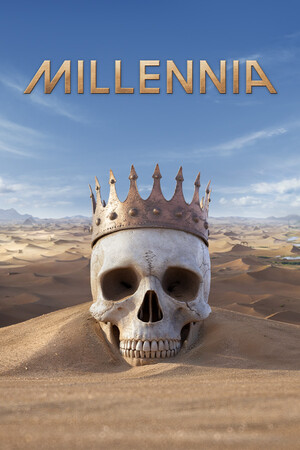
Millennia
Civ fans chasing something genuinely different get a rewarding alt-history system buried inside a rough launch package - worth your time if you can stomach the weak AI and paper-thin diplomacy.
GamerScout Verdict
Best for Civ veterans who want a different kind of late-game - if you can tolerate rough diplomacy and thin combat to get there.
Compare Prices(9 stores)
Every store in this table quotes us in euros, so the EUR figure is the price the seller actually set, not our arithmetic — which is why EUR is also the currency we rank in. We only list an offer here when the store gives us its price in euros, so nothing in this table is a number we invented.
Pick USD, PLN, GBP, CAD or AUD in the header and we convert from EUR at the European Central Bank reference rate — converted amounts are prefixed with ~. Your bank or the store may apply a different rate at checkout. We never hide offers based on where you are: everyone sees this whole table.
We may earn a commission when you buy games through links on this page — at no extra cost to you. It never affects our rankings or verdicts.
Price History
Screenshots & Media
About Millennia
I have a rule: never trust a 4X game that front-loads all of its interesting decisions. Most of them get boring the moment you hit the industrial age. Millennia breaks that rule, and not in the way I expected. The early turns are, frankly, routine - place your capital, send a warrior to poke at fog, queue up archers. Standard stuff. But the moment you start shaping which Age the world enters next, the game reveals a genuinely different spine. The Ages system is the whole game, and it earns that weight. Each of the ten Ages a run passes through carries its own tech tree, units, buildings, and resource logic. Crucially, the first nation to research enough to trigger the next Age locks that Age in for everyone - so if you have been neglecting sanitation and someone else pushes the world into the Age of Plague, your cities suffer for their ambition. Variant Ages add alternate-history branches: steer well and you might land in the Age of Aether with steampunk cloud estates; neglect your social fabric and watch an Age of Intolerance reshape every rival's military priorities. National Spirits compound the replay value further. There are five Domains - Exploration, Warfare, Engineering, Arts, and Diplomacy - and the XP you earn in each can be spent on special powers or slotted into National Spirit trees that define what your civilisation actually is. Wild Hunters get elephant tile improvements; Chivalry-path nations can convert cloth production into mounted knights. None of this is present in Civilization, and that gap is real. The problems are real too, and I would be doing you a disservice by waving them away. The AI diplomacy is rudimentary to the point of being nearly useless - rivals declare war on a whim and there are no meaningful ways to build lasting alliances. Combat is functional but thin: armies are capped in size, which keeps doom-stacking off the table, but the battle resolution screen is mostly noise that you will skip after the second session. City expansion has hard limits that frustrate anyone who wants to sprawl freely, and the UI has rough edges that matter during the mid-game when you are tracking six resource chains simultaneously. Multiplayer ships with hotseat rather than full simultaneous online, though that was flagged as a post-launch target. On medium maps the late game can slow down even on capable hardware. Steam player reviews sit at a mixed aggregate, and the critical consensus at launch landed in the same territory - praised for the Ages and National Spirits, dinged hard for the foundation. Here is what I would tell a newcomer who has 200 hours in Civilization VI and wants something with more teeth: Millennia is approachable because the early Ages act as a gentle on-ramp. You are not staring at Paradox-density modifiers from turn one. The complexity arrives at your pace, tied to the Ages you push for. If you pursue a clean historical path - Iron Age, Renaissance, Revolution, Space - the game is manageable and coherent. The alternate-history layers are opt-in by design, which means you can dial the weirdness up as your confidence grows. The encyclopedia is thorough, tooltips explain their own logic, and the turn structure never demands real-time reflexes. The tutorial respects your time. At its best Millennia delivers the kind of late-game spirals where you are simultaneously managing a supply-chain stranglehold, rushing a Victory Age trigger before a rival does, and hoping an Age of Intolerance you accidentally seeded two hundred turns ago does not torch your production tiles. Those sessions are genuinely absorbing. At its worst it is a Civ-like with a weaker AI, a shallower diplomacy screen, and less visual polish than its obvious competition. Whether that trade-off works for you depends entirely on how much you value the one thing it does better than anyone else right now: the Age pivot system and the alternate histories it generates.

Strategy & simulation
Tags
System Requirements
Minimum
- OS
- Windows® 10 Home 64 Bit
- Processor
- Intel® Core™ i5-6600K | AMD® Ryzen™ 3 2300X
- Memory
- 8 GB RAM
- Graphics
- Nvidia® GeForce™ GTX 660 (2GB) | AMD® Radeon™ R9 380 (4GB) D…
Recommended
- OS
- Windows® 11
- Processor
- Intel® Core™ i7-9700K | AMD® Ryzen™ 5 5600X
- Memory
- 16 GB RAM
- Graphics
- Nvidia® GeForce™ GTX 1060 (6GB) | AMD® Radeon™ RX…
DLC & Add-ons for Millennia1
Expansions, DLC packs and add-on content for this game. Click any item to see store offers.

Keep exploring
Community Discussion
Be the first to comment on Millennia.
Reviews & Ratings
No ratings available
Game Info
- Developer
- C Prompt Games
- Publisher
- Paradox Interactive
- Release Date
- Mar 26, 2024