
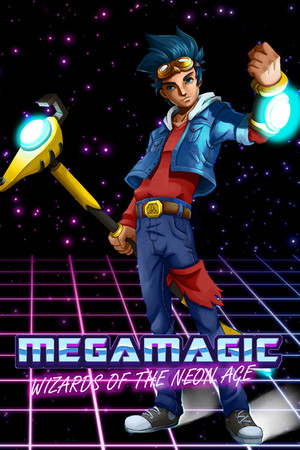
Compare Megamagic: Wizards of the Neon Age prices across 50+ stores and find the best deal. Developed by BeautiFun Games. Published by BeautiFun Games. Released on 4/20/2016. Available on PC, Mac, Linux. Genres: Action, Adventure, Indie, RPG, Strategy. Metacritic score: 67/100.

Retro-neon aesthetics and a killer Mitch Murder soundtrack do a lot of heavy lifting here, but the real question is whether the spell-and-grim RTS loop underneath has enough legs to carry you through ten hours of oversized maps.

My first instinct with Megamagic was to shelve it after the opening chapters, and that instinct was wrong. The early game is genuinely sluggish: maps are wider than their content justifies, the tutorial is thin, and combat feels underpowered while your spell roster is still sparse. Push through that initial friction, though, and something more interesting starts to emerge. The isometric action-RPG shell conceals a small but real RTS decision layer that rewards players who treat grim management as a core competency rather than an afterthought. Here is the actual loop: you play as Phoban, a wizard-school dropout turned fugitive, and your primary resource is a hotbar of four active spells drawn from a pool of twenty you unlock and craft from enemy drops across five magical schools: Neonmancy, Vegemancy, Sanctumancy, Fulgomancy, and Necromancy. Each school has a distinct tactical role, and assembling a loadout that covers offense, support, and control is the closest this game gets to genuine build thinking. Alongside the spells, you summon and direct grims, sixteen craftable creature types that function somewhere between Pokemon and an RTS unit queue. You direct them manually or let them free-roam, which works fine, but the tactical ceiling rises sharply when you start micromanaging their positioning during the nine boss encounters scattered across the chapters. The co-op option, which lets up to four local players each take control of a grim, is the sleeper mode here: suddenly that creature management layer feels purpose-built rather than incidental. The criticism that sticks, and it is consistent across reviews, is that the RPG scaffolding is thin. There is no gear to equip, no stat sheet to tune outside of health and mana growth, and character progression leans almost entirely on what you choose to craft. For players conditioned by loot-dense ARPGs, that will feel skeletal. The maps also include one-off stealth sections and sprint puzzles that appear once and disappear, which reads as design scope that outpaced development time. The story has charm: the 80s post-apocalyptic setting, a post-comet Earth where neon magic replaced nuclear anxiety, is genuinely well-realized, and the faction politics between the Order, the Punks, and the Techno Rangers give the world texture. What the writing delivers in wit, though, it sometimes loses in pacing, with the early chapters front-loading exposition in a way that buries the more interesting beats. The soundtrack, composed by Mitch Murder of Kung Fury and Hotline Miami 2 fame, is not a detail worth glossing over. It does functional work that the combat alone cannot always do, keeping energy levels up during the longer traversal stretches. Visually, the isometric art holds up well, with neon-trimmed suburbs giving way to sentient-plant forests, desert wastelands, and dungeon interiors that vary enough to avoid visual fatigue across the roughly ten-hour runtime. At a Metacritic of 67 and a Steam user rating that sits around 60 percent, this is not a consensus recommendation, but it is also not a throwaway. Treat it as a compact, low-overhead hybrid for players who want a taste of unit control without committing to a full RTS, and manage expectations on the RPG depth. If the aesthetic alone speaks to you, the substance is enough to justify the ride. Diego, Scout Team

Megamagic: Wizards of the Neon Age
ActionAdventureIndieRPGStrategy

Megamagic: Wizards of the Neon Age

Apr 20, 2016BeautiFun Games
GamerScout Says

Retro-neon aesthetics and a killer Mitch Murder soundtrack do a lot of heavy lifting here, but the real question is whether the spell-and-grim RTS loop underneath has enough legs to carry you through ten hours of oversized maps.

PCMacLinux
Best Price Available
0.00
at N/A
Historical low: $1.22

Compare Prices(0 stores)

Loading prices...

We may earn a commission when you buy games through links on this page — at no extra cost to you. It never affects our rankings or verdicts.

Screenshots & Media

Screenshot

About Megamagic: Wizards of the Neon Age

My first instinct with Megamagic was to shelve it after the opening chapters, and that instinct was wrong. The early game is genuinely sluggish: maps are wider than their content justifies, the tutorial is thin, and combat feels underpowered while your spell roster is still sparse. Push through that initial friction, though, and something more interesting starts to emerge. The isometric action-RPG shell conceals a small but real RTS decision layer that rewards players who treat grim management as a core competency rather than an afterthought. Here is the actual loop: you play as Phoban, a wizard-school dropout turned fugitive, and your primary resource is a hotbar of four active spells drawn from a pool of twenty you unlock and craft from enemy drops across five magical schools: Neonmancy, Vegemancy, Sanctumancy, Fulgomancy, and Necromancy. Each school has a distinct tactical role, and assembling a loadout that covers offense, support, and control is the closest this game gets to genuine build thinking. Alongside the spells, you summon and direct grims, sixteen craftable creature types that function somewhere between Pokemon and an RTS unit queue. You direct them manually or let them free-roam, which works fine, but the tactical ceiling rises sharply when you start micromanaging their positioning during the nine boss encounters scattered across the chapters. The co-op option, which lets up to four local players each take control of a grim, is the sleeper mode here: suddenly that creature management layer feels purpose-built rather than incidental. The criticism that sticks, and it is consistent across reviews, is that the RPG scaffolding is thin. There is no gear to equip, no stat sheet to tune outside of health and mana growth, and character progression leans almost entirely on what you choose to craft. For players conditioned by loot-dense ARPGs, that will feel skeletal. The maps also include one-off stealth sections and sprint puzzles that appear once and disappear, which reads as design scope that outpaced development time. The story has charm: the 80s post-apocalyptic setting, a post-comet Earth where neon magic replaced nuclear anxiety, is genuinely well-realized, and the faction politics between the Order, the Punks, and the Techno Rangers give the world texture. What the writing delivers in wit, though, it sometimes loses in pacing, with the early chapters front-loading exposition in a way that buries the more interesting beats. The soundtrack, composed by Mitch Murder of Kung Fury and Hotline Miami 2 fame, is not a detail worth glossing over. It does functional work that the combat alone cannot always do, keeping energy levels up during the longer traversal stretches. Visually, the isometric art holds up well, with neon-trimmed suburbs giving way to sentient-plant forests, desert wastelands, and dungeon interiors that vary enough to avoid visual fatigue across the roughly ten-hour runtime. At a Metacritic of 67 and a Steam user rating that sits around 60 percent, this is not a consensus recommendation, but it is also not a throwaway. Treat it as a compact, low-overhead hybrid for players who want a taste of unit control without committing to a full RTS, and manage expectations on the RPG depth. If the aesthetic alone speaks to you, the substance is enough to justify the ride. Diego, Scout Team

Tags

singleplayermultiplayercoopachievementstrading-cardscloud-savestier:sub-5Grim SummoningSpell CraftingLocal Co-op RTSFive Magic SchoolsIsometric Action-RTSBoss-Focused Chapters80s Synth SoundtrackFaction PoliticsThin Loot System

Steam Deck & Linux

Steam Deck Playable

Valve rates this game Steam Deck Playable.

System Requirements

Minimum

OS
Windows XP/Vista/7/8/10
Memory
2 GB RAM
DirectX
Version 9.0
Storage
3 GB available space
Graphics
Intel HD Graphics 4400
Processor
Intel Core 2 Duo 2GHz (or similar)

Recommended

OS
Windows 7/8/10
Memory
4 GB RAM
DirectX
Version 11
Storage
3 GB available space
Graphics
GeForce GTX 650 (or similar)
Processor
Inte Core i3 (or similar)

Community Discussion

Be the first to comment on Megamagic: Wizards of the Neon Age.

Reviews & Ratings

Metacritic
67

Game Info

Developer
BeautiFun Games
Publisher
BeautiFun Games
Release Date
Apr 20, 2016

Price Alert

Get notified when the price drops below your target!

Create Alert

Price History

2026-06-101.22(lowest)

More from BeautiFun Games

Buy smarter: helpful guides

Frequently asked questions about Megamagic: Wizards of the Neon Age

How much does Megamagic: Wizards of the Neon Age cost?

Megamagic: Wizards of the Neon Age pricing changes often and varies by store, edition and region. The live price table on this page compares the cheapest in-stock key and store offers across 50+ verified shops, so you always see the current lowest price before you buy.

Where can I buy Megamagic: Wizards of the Neon Age cheapest?

Compare Megamagic: Wizards of the Neon Age prices across every verified store in the price table on this page. We list the cheapest in-stock key and store offers, updated regularly, so you always see the best current deal before you buy.

What platforms is Megamagic: Wizards of the Neon Age available on?

Megamagic: Wizards of the Neon Age is available on PC, Mac, Linux.

When was Megamagic: Wizards of the Neon Age released?

Megamagic: Wizards of the Neon Age was released on 20 April 2016.

Who developed Megamagic: Wizards of the Neon Age?

Megamagic: Wizards of the Neon Age was developed by BeautiFun Games.

Is Megamagic: Wizards of the Neon Age worth buying?

Megamagic: Wizards of the Neon Age holds a Metacritic score of 67/100, making it one of the standout Action titles. See the full reviews, ratings and how-long-to-beat times on this page to decide.