Mashinky
Solo-dev train empire builder where you lay track, balance budgets, and watch your network scale from a rusty two-stop line into a continent-spanning rail giant.
GamerScout Verdict
Best for rail-planning enthusiasts who want visual polish and card-driven progression, and can overlook a passive AI.
Compare Prices(5 stores)
Every store in this table quotes us in euros, so the EUR figure is the price the seller actually set, not our arithmetic — which is why EUR is also the currency we rank in. We only list an offer here when the store gives us its price in euros, so nothing in this table is a number we invented.
Pick USD, PLN, GBP, CAD or AUD in the header and we convert from EUR at the European Central Bank reference rate — converted amounts are prefixed with ~. Your bank or the store may apply a different rate at checkout. We never hide offers based on where you are: everyone sees this whole table.
We may earn a commission when you buy games through links on this page — at no extra cost to you. It never affects our rankings or verdicts.
Price History
Screenshots & Media
About Mashinky
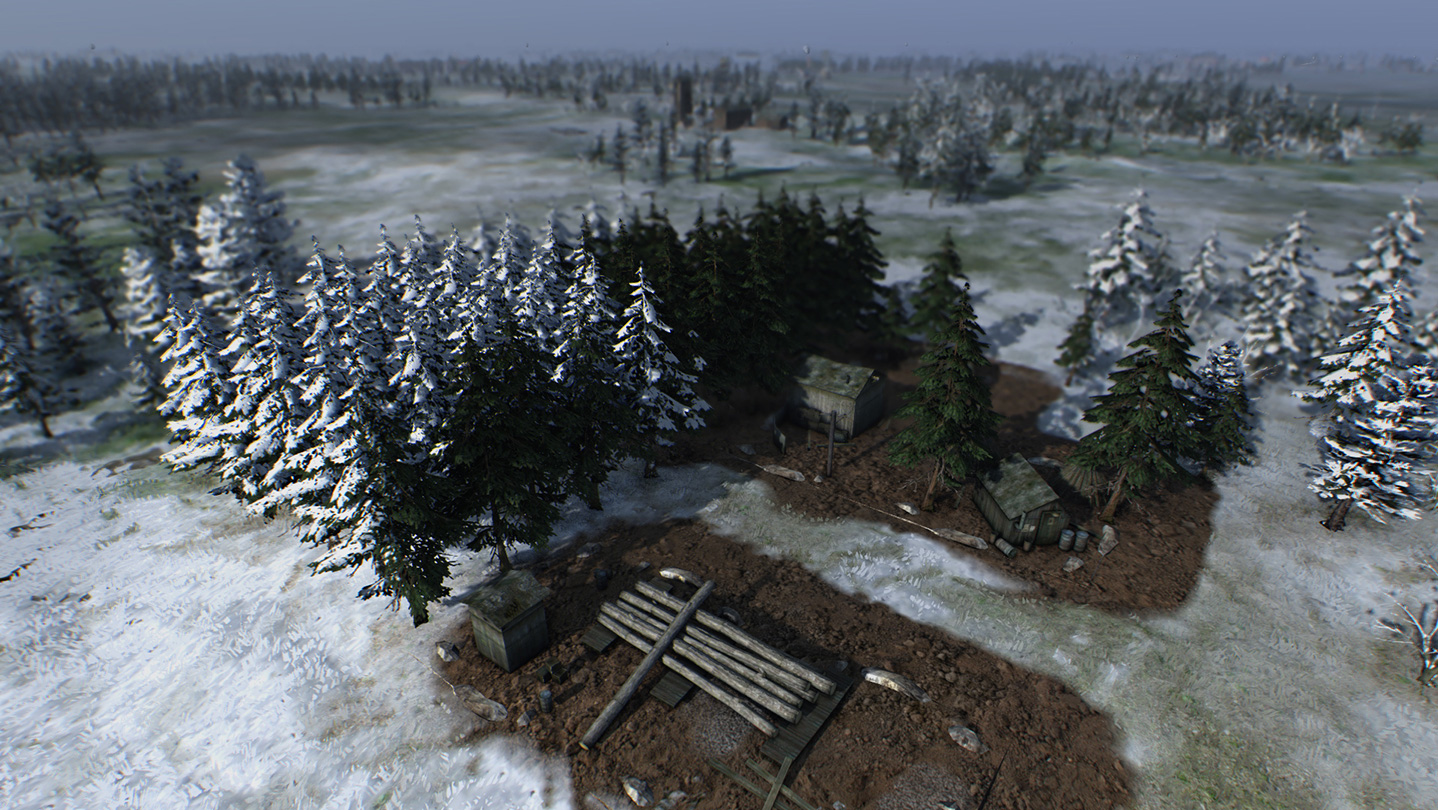
Mashinky is a transport strategy game built entirely by one developer, and that context matters. It sits in the same genre neighbourhood as Transport Fever and the old Transport Tycoon lineage, but it carves its own lane with a distinctive art style that blends realistic lighting with chunky, almost toy-like train models rendered in an isometric view. The result looks immediately inviting on a screenshot, and it holds up across hundreds of hours at the desk. The core loop is classic but satisfying: generate a map, connect raw resource nodes to processing towns, earn tokens, upgrade your rolling stock, and gradually untangle the routing puzzle that emerges when a growing network starts competing with itself for track space. Signals, timetables, and dedicated freight versus passenger lines are all live variables. There is a card-based upgrade system layered on top of the economic simulation that gates access to more advanced locomotives and infrastructure, which gives progression a concrete shape rather than the vague "just keep earning money" drift that plagues weaker entries in the genre. That system is the single most interesting design choice here, and it rewards players who plan their upgrade path instead of chasing every shiny new engine the moment it unlocks. For newcomers to the genre, Mashinky is actually a reasonable starting point if you accept a moderate tutorial curve. The built-in guidance covers the basics of track laying, station placement, and the token economy without drowning you in menus. What it does not do well is explain the signal system, which is the genre's traditional brick wall for beginners. Budget an hour with the community wiki or a YouTube primer on one-way signals and block sections, and that wall disappears. After that, the difficulty curve becomes a rewarding planning exercise rather than a frustrating obstacle. The procedurally generated maps mean no two starting conditions are identical, which adds meaningful replay value once you have the systems internalized. Where Mashinky still shows its early access origins - even after several years of updates - is in AI competitor behaviour and certain quality-of-life gaps. The opposing railroad companies rarely apply real pressure; they function more as background noise than genuine rivals, which means the challenge comes almost entirely from self-imposed efficiency goals and map terrain rather than competitive dynamics. Players who need a strong opponent to stay motivated may find the late game too sandbox-flavoured. The mod ecosystem on Steam Workshop is active and adds new locomotives, maps, and visual assets, but total-conversion overhauls of the depth you get in something like OpenTTD are not common yet. The flip side is that the base game's visual identity is strong enough that most players will not feel an urgent need to change it. If you can tolerate a signal learning curve and a gentle AI, Mashinky delivers a deeply satisfying network-building experience with one of the cleanest visual presentations in the transport sim space. The solo-dev origin story is not just a marketing footnote - it shows in both the obvious passion poured into the train models and the occasional rough edge in UI depth. Worth your time if spreadsheet-brained rail planning sounds like an evening well spent.

Strategy & simulation
Tags
System Requirements
Minimum
- Processor
- Dual Core 2.0 GHz
- Memory
- 4 GB RAM
- Graphics
- GeForce 750 or equivalent
- DirectX
- Version 9.0c
- Storage
- 2 GB available space
Recommended
- Processor
- Quad Core 2.66 GHz
- Memory
- 4 GB RAM
- Graphics
- GeForce GTX 970 or equivalent
- DirectX
- Version 11
- Storage
- 2 GB available space
Keep exploring
Community Discussion
Be the first to comment on Mashinky.
Reviews & Ratings
Game Info
- Developer
- Jan Zelený
- Publisher
- Jan Zelený
- Release Date
- Oct 6, 2018