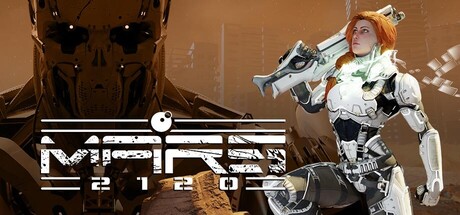
MARS 2120
A sci-fi metroidvania from Brazilian studio QUByte that wears its Metroid love proudly, but stumbles on the fundamentals that make the genre click. Worth a look if you can forgive some rough edges.
GamerScout Verdict
Best for patient metroidvania completionists who can tolerate a finicky map and want more of that Metroid itch scratched on a budget.
Compare Prices(4 stores)
Every store in this table quotes us in euros, so the EUR figure is the price the seller actually set, not our arithmetic — which is why EUR is also the currency we rank in. We only list an offer here when the store gives us its price in euros, so nothing in this table is a number we invented.
Pick USD, PLN, GBP, CAD or AUD in the header and we convert from EUR at the European Central Bank reference rate — converted amounts are prefixed with ~. Your bank or the store may apply a different rate at checkout. We never hide offers based on where you are: everyone sees this whole table.
We may earn a commission when you buy games through links on this page — at no extra cost to you. It never affects our rankings or verdicts.
Price History
Screenshots & Media
About MARS 2120
I went into MARS 2120 already a little skeptical, because the metroidvania shelf in 2024 is genuinely crowded, and loving a genre is not the same as mastering it. QUByte Interactive, a Brazilian indie studio, put in real years of work here, including a stretch in Early Access before the 1.0 launch, and that effort shows in patches. What it does not always show is a confident grasp of what makes the genre feel effortless. The setup is lean: Sergeant Anna "Thirteen" Charlotte crash-lands on Mars, finds the colony overrun by mutants and corrupted researchers, and begins piecing together what went wrong through scattered audio logs. The narrative is almost nonexistent at first, but those voice-acted audio recordings carry quiet weight as the picture of the colony's collapse comes together. The atmosphere is the game's strongest card. A creeping sense of dread fills the research station corridors, and the monster and boss designs are large, threatening, and genuinely memorable, from a bionic ape encounter early on to an ice spider that will test your patience in the best and worst ways simultaneously. The core mechanic that tries to give MARS 2120 its own identity is the elemental Core system. Charlotte's modular suit can be tuned to Electric, Ice, or Fire configurations, each of which not only changes how her rifle and melee attacks behave but also gates specific areas of the map, unlocking purple doors, energising broken circuits, and opening paths only accessible to that particular Core. On paper this is a satisfying riff on classic ability-gating, and switching elements on the fly to exploit enemy weaknesses does produce a few moments that feel genuinely rewarding. The platforming, however, is where things wobble. The occasional shift from 2D to 2.5D perspective looks interesting but causes real confusion when you are expected to land on objects that do not fully occupy your movement plane. The free-aim system delays a couple of seconds before taking over, which is long enough to eat hits you should not be taking. And the map, frustratingly, marks partially-explored rooms in a way that makes finding the next path a guessing game rather than a skill. The upgrade system deserves its own mention because it is genuinely odd. You accumulate experience points throughout the whole game, but cannot spend them until you physically find the corresponding upgrade in the world. The result is that your XP bar fills up meaninglessly for long stretches, and the post-launch patch that at least adds a warning when you lack sufficient experience to buy something suggests QUByte heard the feedback. Combat itself leans heavily toward melee, with most enemies dying faster to a couple of combo strings than to a full rifle magazine. That makes the ranged options feel decorative outside of elemental puzzle scenarios. Boss encounters are divisive: some reviewers found them satisfying and challenging, others found them poorly telegraphed or trivially easy when you happen to have the correct elemental Core equipped. Both readings can be true depending on the order you explore. Visually the game is clean without being remarkable. The 2.5D presentation gives the world some depth, and the lighting in the colony sections works well for mood. The soundtrack is the area that disappointed me most personally. Sci-fi atmospheric scores can be a whole texture on their own, and this one stays in generic territory, with a few chiptune boss arrangements that hint at something more interesting but never commit. That is a real miss for a game whose best quality is its atmosphere.

Indie & narrative
Tags
System Requirements
Minimum
- OS
- Windows 10 64-bit (1809 or later)
- Memory
- 8 GB RAM
- DirectX
- Version 11
- Storage
- 6 GB available space
- Graphics
- NVIDIA GTX 1660 / AMD RX 590 or better
- Processor
- Intel Core i5-9600K / AMD Ryzen 5 3600 or better
Recommended
- OS
- Windows 11
- Memory
- 16 GB RAM
- DirectX
- Version 12
- Storage
- 10 GB available space
- Graphics
- NVIDIA RTX 3060 / AMD RX 6700 XT
- Processor
- Intel Core i5-12400F / AMD Ryzen 5 5600
Keep exploring
Community Discussion
Be the first to comment on MARS 2120.
Reviews & Ratings
No ratings available
Game Info
- Developer
- QUByte Interactive
- Publisher
- QUByte Interactive
- Release Date
- Jul 31, 2024