
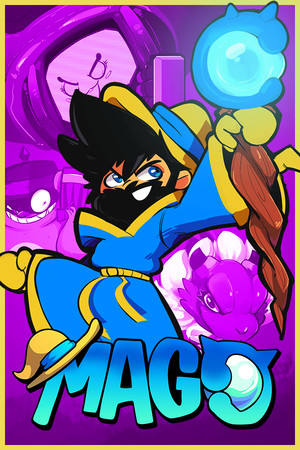
Mago
Ninety-four percent of Steam players approved this one, and after spending time with its hand-crafted worlds and surprisingly varied spell-slinging, I get why. A Peruvian indie gem that punches well above its obscurity.
GamerScout Verdict
A compact, inventive retro platformer best suited for players who want charm and variety over mechanical depth or a weighty story.
Compare Prices(6 stores)
Every store in this table quotes us in euros, so the EUR figure is the price the seller actually set, not our arithmetic — which is why EUR is also the currency we rank in. We only list an offer here when the store gives us its price in euros, so nothing in this table is a number we invented.
Pick USD, PLN, GBP, CAD or AUD in the header and we convert from EUR at the European Central Bank reference rate — converted amounts are prefixed with ~. Your bank or the store may apply a different rate at checkout. We never hide offers based on where you are: everyone sees this whole table.
We may earn a commission when you buy games through links on this page — at no extra cost to you. It never affects our rankings or verdicts.
Price History
Screenshots & Media
About Mago
I went into Mago expecting a competent little retro sidescroller and came out genuinely charmed by something that had no business being this inventive. Dream Potion Games, an independent studio out of Peru, built a 2D platformer around a sorcerer who stumbles into a rescue quest after accidentally eating the wrong villain's food. The premise is silly on purpose, and the game leans into that absurdist warmth at every turn. At its core, Mago gives you a wand, a jump, and a short-range spell projectile, then spends world after world recontextualizing those tools in ways you did not see coming. You dash, swim, and bounce through levels whose themes shift dramatically between areas: a teapot prairie here, a centipede-guarded giant tree there, ancient ruins balanced on the back of an enormous bird. Each zone carries its own logic. Some stages hand you control of a mecha robot and abruptly turn the game into something closer to a brawler. The tonal whiplash is part of the identity, and it works because the handcrafted level design holds everything together. Orb collectibles scattered through each stage serve a double purpose: they raise the skill ceiling for completionists while feeding an upgrade economy tied to the town of Musicalia, a quiet hub where you can spend, breathe, and meet characters between levels. The difficulty curve is gentle through world one and climbs meaningfully after that, with boss encounters that reviewers have praised for variety even when win conditions occasionally go unexplained. The pixel art deserves more than a passing mention. Every biome has a distinct visual palette and the sprite work carries real weight, described by at least one observer as having that chunky "beefy" quality closer to Wario Land than the featherweight aesthetic of many modern indie platformers. The movement itself has a slight floatiness to it, that classic Mario-adjacent hang time that some players will find comforting and others will find imprecise. If tight-frame-perfect platforming is your benchmark, be aware. The narrative is communicated entirely through character expressions and symbols rather than written text, which keeps the pacing clean and gives it a universal, almost wordless storybook quality that I personally found lovely. The soundtrack tag on Steam is not empty decoration. The score is genuinely nostalgic in a studied way, the kind of music that clearly references the SNES and Game Boy Advance eras without merely copying them. It gives the quieter overworld moments a meditative quality that makes Mago feel more considered than its modest price point suggests. If there is a knock, it is that the story is tissue-thin and the earliest levels can feel almost too inviting for anyone coming in with years of platformer muscle memory. You will not find a morally complex narrative or deep mechanical systems here. What you will find is a small, confident game that knows exactly what it wants to be and lands it. For fans of Kirby-style adventure structure who want something off the beaten path, this Peruvian indie is quietly one of the better discoveries in its genre.

Indie & narrative
Tags
System Requirements
Minimum
- OS
- Windows 10
- Memory
- 4 GB RAM
- DirectX
- Version 10
- Storage
- 1 GB available space
- Graphics
- 2 GB
- Processor
- 3.2 ghz dual core
- Sound Card
- -
Keep exploring
Community Discussion
Be the first to comment on Mago.
Reviews & Ratings
No ratings available
Game Info
- Developer
- Dream Potion Games
- Publisher
- Dream Potion Games
- Release Date
- Jun 21, 2022