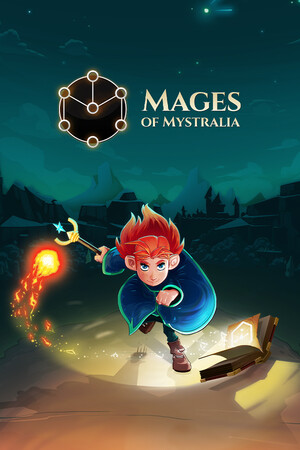
Mages of Mystralia
Build a fireball that bounces off walls, spawns a homing clone, then freezes whatever it touches - the spell board alone is worth the price of admission for anyone tired of pressing 1-2-3 in an RPG.
GamerScout Verdict
Best for players who want to build their own spells from scratch inside a competent, if uneven, Zelda-paced adventure.
Compare Prices(5 stores)
Every store in this table quotes us in euros, so the EUR figure is the price the seller actually set, not our arithmetic — which is why EUR is also the currency we rank in. We only list an offer here when the store gives us its price in euros, so nothing in this table is a number we invented.
Pick USD, PLN, GBP, CAD or AUD in the header and we convert from EUR at the European Central Bank reference rate — converted amounts are prefixed with ~. Your bank or the store may apply a different rate at checkout. We never hide offers based on where you are: everyone sees this whole table.
We may earn a commission when you buy games through links on this page — at no extra cost to you. It never affects our rankings or verdicts.
Price History
Screenshots & Media
About Mages of Mystralia
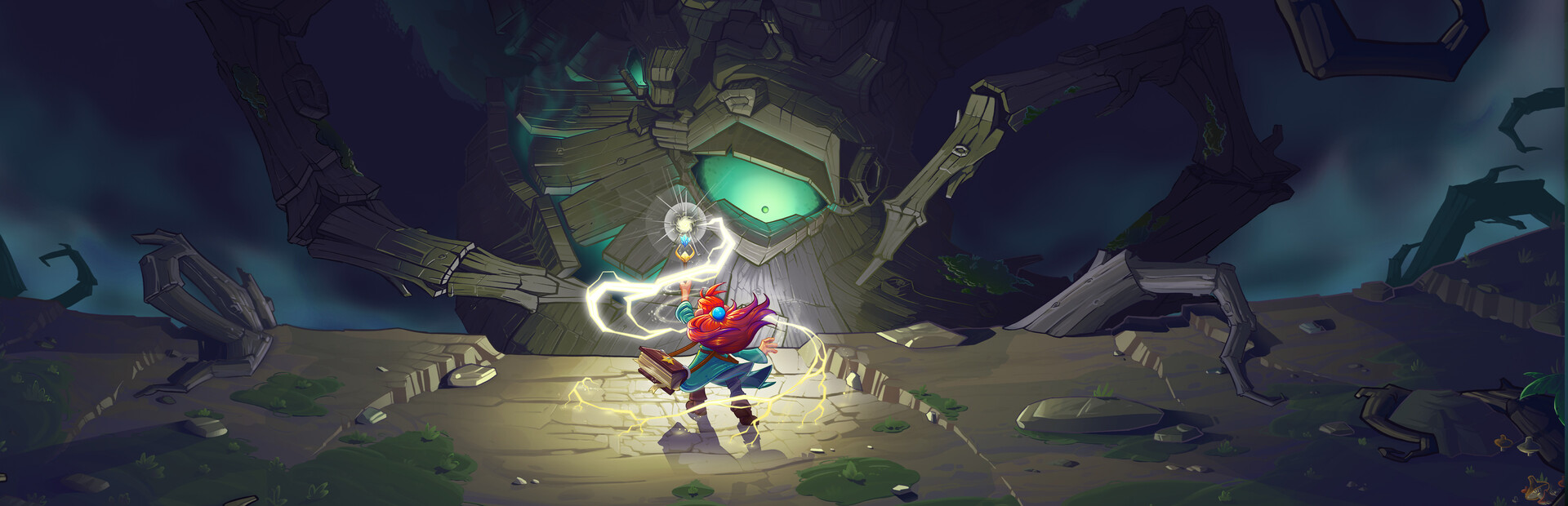
My first instinct when I loaded Mages of Mystralia was to ignore the main quest entirely and just sit in the spell crafting screen. That instinct was correct. Borealys Games built something rare here: a system where constructing a piece of magic feels like its own puzzle, separate from whatever you plan to do with it once you walk out the door. Four base spell types - Immedi (melee burst), Actus (active projectile), Creo (terrain-altering), and Ego (self-affecting shield or dash) - sit on a triangular rune board, and you slot modifier runes into the available connection points to change their behaviour. Add a Move rune to a basic fire orb and you have a fireball. Stack a Homing rune on top of that and it tracks. Layer a Duplicate rune and it splits mid-flight. Nest a conditional trigger so that on impact it spawns a freezing Creo patch, and suddenly you have a spell that no preset ability menu could ever hand you. The satisfaction is real and it never fully expires, even late in the run. The adventure wrapped around that system is solid, if familiar. Zia, a young exile with uncontrolled magic, works through a Zelda-patterned world of connected zones, environmental puzzles, and boss arenas. The isometric camera is fixed but readable, and the controller mapping - each spell type on its own face button - makes switching in combat instinctive. Ed Greenwood wrote the story, and it carries a lightness that suits the bright, saturated art direction well. Zia herself has a quietly sarcastic edge that makes the quieter dialogue moments land better than the genre average. The soundtrack leans soothing and adventurous in turns, with boss tracks that ramp up appropriately, though a couple of reviewers noted the music can disappear into the background during longer exploration stretches. The honest caveats worth naming: the game front-loads its difficulty and then bleeds it away. In the early hours, a few goblins with a basic fireball feel genuinely threatening. By the final third, an optimised spell board of chained Igni, Aqua, and Aura triggers can fill the screen with projectiles, and most enemy encounters stop asking anything of you. Completionists who hunt every Soulsbeads upgrade and Rune challenge will actually accelerate this power cliff faster than the game expects them to. The Trials arena offers wave combat for 100% hunters, but even that becomes routine with a good spell loadout. Backtracking for optional collectibles - Scarabs, Seeds, scattered Rune puzzles - also asks more of your patience than the sparse fast-travel points justify. The story, meanwhile, lands its character beats unevenly; the ending in particular closes on an unresolved note that clearly anticipated a sequel that has not yet materialised. None of that cancels the central draw. There are three difficulty modes including a permadeath Archmage option that reintroduces tension if the standard run feels too forgiving. A typical playthrough runs eight to twelve hours, and a completionist loop pushes closer to twenty. For a small studio's debut-scale project it is polished, largely bug-free, and built with genuine craft. The spell board is not a gimmick bolted onto a mediocre adventure - it is the whole point, and it earns every minute spent with it. If you have ever felt cheated by RPG magic systems that just unlock spells from a list, this is the corrective you have been waiting for. It does not reach every height it aims for, but what it does well it does with a quiet confidence that stays with you.

Indie & narrative
Tags
System Requirements
Minimum
- OS
- Windows 7 64-bit
- Memory
- 4 GB RAM
- DirectX
- Version 11
- Storage
- 8 GB available space
- Graphics
- GeForce GTX 560 Ti or equivalent
- Processor
- Intel Core i5 2300 or equivalent
Recommended
- OS
- Windows 7+ 64-bit
- Memory
- 8 GB RAM
- DirectX
- Version 11
- Storage
- 8 GB available space
- Graphics
- GeForce GTX 760 or equivalent
- Processor
- Intel Core i7 4790 or equivalent
Keep exploring
Community Discussion
Be the first to comment on Mages of Mystralia.
Reviews & Ratings
Game Info
- Developer
- Borealys Games
- Publisher
- Borealys Games
- Release Date
- May 18, 2017