
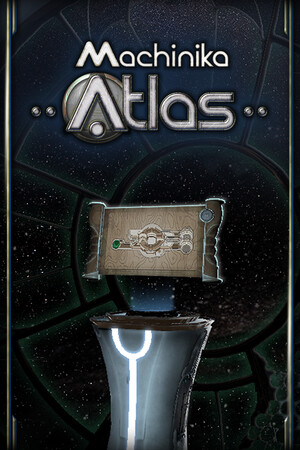
Machinika: Atlas
A quiet, handcrafted sci-fi puzzler that trades The Room's intimacy for a full alien spaceship to explore, with results that are charming but slightly uneven.
GamerScout Verdict
Worth an afternoon for fans of quiet first-person puzzlers, but veterans of Museum should temper expectations on difficulty.
Compare Prices(6 stores)
Every store in this table quotes us in euros, so the EUR figure is the price the seller actually set, not our arithmetic — which is why EUR is also the currency we rank in. We only list an offer here when the store gives us its price in euros, so nothing in this table is a number we invented.
Pick USD, PLN, GBP, CAD or AUD in the header and we convert from EUR at the European Central Bank reference rate — converted amounts are prefixed with ~. Your bank or the store may apply a different rate at checkout. We never hide offers based on where you are: everyone sees this whole table.
We may earn a commission when you buy games through links on this page — at no extra cost to you. It never affects our rankings or verdicts.
Price History
Screenshots & Media
About Machinika: Atlas
My first hour aboard Atlas felt exactly like what I wanted more of after Machinika: Museum: hushed, tactile, and just alien enough to feel genuinely foreign. You crash-land your escape pod into a derelict vessel orbiting Saturn's moon, and from that moment the game hands you a toolkit of strange materials and asks you to figure out what everything does. There is no combat timer, no lives counter, no leaderboard breathing down your neck. Just you, the low ambient hum of a dead ship, and a growing inventory of crystalline objects and mechanical components whose purposes slowly reveal themselves. The puzzle vocabulary here is satisfying in its breadth. Littlefield Studio layers in gear-alignment challenges, laser-routing sequences that require you to spin coloured rings into perfect configuration, pattern-memory puzzles where a solution flashes briefly before disappearing, and a recurring small drone you deploy to reach compartments your researcher cannot physically access. A new free-movement option lets you walk the ship's corridors in proper 3D rather than snapping between fixed points, which opens the world up considerably compared to the first game. Collectible letters scattered across the ship's ten chapters slowly fill in who else passed through this vessel, and they do quiet narrative work without ever becoming mandatory reading. A built-in hints system is there if you get stuck, though reviews suggest it occasionally points players toward the wrong spot on the map, which is more frustrating than helpful when it misfires. Here is where I have to be honest with you, because I think fans of the original deserve that. The puzzle difficulty lands softer than Museum's. Several players who came in hoping for the series' tighter, more logic-dense contraptions found Atlas leaning casual, with only a handful of genuinely memorable aha moments scattered across the runtime. The drone mechanic, inventive at first, shows up frequently enough that some players felt it was patching gaps rather than adding variety. Launch bugs compounded the frustration, including softlocks across multiple chapters that required reloads to escape. The developer acknowledged these issues quickly and committed to patches, which is the correct response from a small team. Checking current reports before purchasing is wise if stability matters to you. What Atlas does maintain, though, is the series' rare sense of quiet wonder. The 3D environments carry a genuinely alien material logic: everything looks like it was designed by a civilisation that solved problems differently than humans did. The ambient soundtrack wraps the whole thing in a low, patient atmosphere that rewards anyone who sits with the game rather than rushing it. At roughly four to six hours for a full run, it knows its length and does not overstay its welcome. A speedrun achievement adds a second-visit incentive if you want one. It is also newcomer-friendly; the connective tissue to Museum is there for returning players, but the game does not require prior knowledge to follow along. For me, the handcraft is still present enough to matter. A small studio building a full alien spaceship across eight chapters, adding free movement, collectible lore, a hint system, and a coherent atmospheric soundscape is a genuine achievement, even if the puzzle design occasionally buckles under the expanded scope. Think of it as a stepping stone game: more ambitious than its predecessor in setting, somewhat less focused in puzzle craft, and worth your afternoon if the genre speaks to you at all.

Indie & narrative
Tags
System Requirements
Minimum
- OS
- Windows 7 or above
- Memory
- 4 GB RAM
- Storage
- 4 GB available space
- Graphics
- Graphics card with at least 1 GB of dedicated VRAM
- Processor
- CPU running at 3.4 GHz or higher
- Sound Card
- Integrated or dedicated compatible
Recommended
- OS
- Windows 7 or above
- Memory
- 8 GB RAM
- Graphics
- GeForce GT 440 / AMD Radeon HD 5750
- Processor
- AMD FX 4100 / Intel Core i3-4130
Keep exploring
Community Discussion
Be the first to comment on Machinika: Atlas.
Reviews & Ratings
No ratings available
Game Info
- Developer
- Littlefield Studio
- Publisher
- Dear Villagers
- Release Date
- Sep 17, 2024