
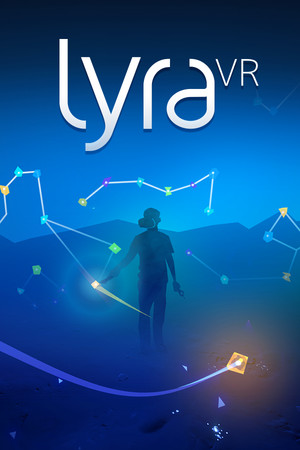
LyraVR
If you ever wished you could reach into a song and physically rearrange its atoms, LyraVR is the closest thing to that feeling, assuming you have a VR headset and a tolerance for Early Access roughness.
GamerScout Verdict
Best for VR-owning musicians who want to physically sculpt a loop, not for casual players expecting a polished app.
Compare Prices(4 stores)
Every store in this table quotes us in euros, so the EUR figure is the price the seller actually set, not our arithmetic — which is why EUR is also the currency we rank in. We only list an offer here when the store gives us its price in euros, so nothing in this table is a number we invented.
Pick USD, PLN, GBP, CAD or AUD in the header and we convert from EUR at the European Central Bank reference rate — converted amounts are prefixed with ~. Your bank or the store may apply a different rate at checkout. We never hide offers based on where you are: everyone sees this whole table.
We may earn a commission when you buy games through links on this page — at no extra cost to you. It never affects our rankings or verdicts.
Price History
Screenshots & Media
About LyraVR
I came into LyraVR expecting a gimmick, one of those VR curiosities that screenshots well and plays thin. What I found instead was a genuinely strange little instrument, the kind of handcrafted oddity that only a small, obsessive team could ship. The core idea is spatial music sequencing: you stand inside a three-dimensional environment, reach out, place sound nodes in physical space, link them into sequences, and then press play and watch your composition breathe around you. It is not a game in any conventional sense. It is closer to a sculptor's studio where every object hums. The building blocks are modest but thoughtfully chosen. Five virtual instrument controllers cover the expected ground: the KB88 keyboard for melodic work, the DK9 drum kit for rhythmic foundation. Beyond those you have 15 instrument node types to chain together, which gives you enough variety to construct loops with genuine texture rather than one-bar filler. The Autoplayer 3000 controller lets you trigger chords and arpeggios without needing a musician's precision, which lowers the floor meaningfully. Spatial 3D audio means the mix changes depending on where you stand relative to your nodes, and that alone is the kind of thing you simply cannot replicate on a flat screen. Royalty-free Loopmasters samples are bundled in, so even if you bring zero musical background you have professional-grade material to work with from the first session. WAV import and export means anything you build here can leave the headset and go somewhere useful. The honest caveats are worth naming plainly. LyraVR entered Early Access back in 2017 and has stayed there. The developer has posted roadmap ambitions including a social sharing system, expanded node palettes, and deeper environment customization, but progress has been slow and the update cadence is quiet. The community is small. The interface, while intuitive in concept, has a learning curve that feels steeper than it should because onboarding documentation is sparse. If you are not already curious about VR music tools specifically, this will not convert you. The five environments give you visual variety but they are not especially elaborate, and the app's overall polish sits firmly at the "ambitious indie prototype" tier rather than finished product. Who should care, then? Primarily: musicians or producers who own a room-scale VR setup and are genuinely curious about spatial composition as a new way of thinking about arrangement. Secondarily: VR enthusiasts who want something meditative and open-ended rather than another wave shooter. The 3D audio alone, the experience of standing at the center of a loop you built yourself with your hands, carries a quiet wonder that I did not expect. MusicTech singled it out as one of the most promising VR music tools available, and for a niche that has very few serious contenders, that praise still holds weight. Approach it as an instrument in early development, not a finished application, and it rewards that patience with moments that feel genuinely new.

Indie & narrative
Tags
System Requirements
Minimum
- OS
- Windows 10
- Memory
- 8 GB RAM
- Storage
- 2 GB available space
- Graphics
- Nvidia GTX 970
- Processor
- Intel i5-4590 or better
- Sound Card
- Required
- VR Support
- SteamVR
Recommended
- OS
- Windows 10
- Memory
- 16 GB RAM
- Storage
- 2 GB available space
- Graphics
- Nvidia GTX 1070
- Processor
- Intel i7
- Sound Card
- Required
- VR Support
- SteamVR
Keep exploring
Community Discussion
Be the first to comment on LyraVR.
Reviews & Ratings
No ratings available
Game Info
- Developer
- LyraVR
- Publisher
- LyraVR
- Release Date
- Mar 22, 2017