LYNE
A one-person puzzle built on a single rule set that somehow never runs out of ideas: 650 handcrafted levels, daily procedural challenges, and an ambient soundscape that turns your commute into a meditation session.
GamerScout Verdict
The rare puzzle game that works as genuine stress relief: best for players who want a low-stakes logic fix they can revisit for years.
Compare Prices(7 stores)
Every store in this table quotes us in euros, so the EUR figure is the price the seller actually set, not our arithmetic — which is why EUR is also the currency we rank in. We only list an offer here when the store gives us its price in euros, so nothing in this table is a number we invented.
Pick USD, PLN, GBP, CAD or AUD in the header and we convert from EUR at the European Central Bank reference rate — converted amounts are prefixed with ~. Your bank or the store may apply a different rate at checkout. We never hide offers based on where you are: everyone sees this whole table.
We may earn a commission when you buy games through links on this page — at no extra cost to you. It never affects our rankings or verdicts.
Price History
Screenshots & Media
About LYNE
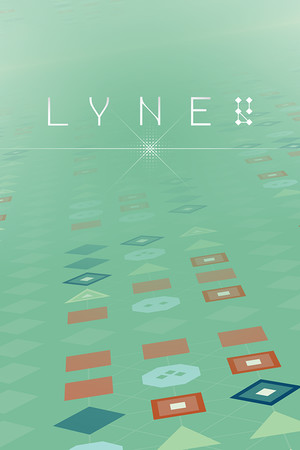
I keep LYNE pinned in my library the same way some people keep a particular album queued for the right mood. Thomas Bowker built this entirely alone, and that solitude shows in every design decision: nothing is here by accident, nothing overstays its welcome, and the whole thing hums with the quiet confidence of someone who knew exactly what they were making. The mechanic is almost embarrassingly simple to describe. You draw continuous lines connecting shapes of the same color across a grid, lines cannot cross, and every shape must be included. Squares, triangles, and diamonds serve as the color-coded endpoints and pass-through nodes; octagonal junction pieces add the real wrinkle, requiring multiple lines of any color to pass through them a specific number of times before they register as complete. That junction mechanic is where the puzzles transform from pleasant warm-up exercises into genuine spatial brainteasers that have you staring at a 4x5 grid for fifteen quiet minutes before the solution clicks open like a lock. There are 26 named sets, each containing 25 puzzles, for 650 built-in levels in total, and the game has been pushing procedurally generated daily challenges since launch, scaling from accessible to demanding as the week progresses. The audio deserves its own paragraph because it is doing heavy lifting. There is no conventional background music track to speak of: instead, each shape you connect plays a soft panpipe note, and those notes layer into something that sounds improvised but never random. Reviewers have compared it to an Ocarina of Time-adjacent kind of calm. Whether you find that description precious or accurate, the effect is real: the act of solving becomes acoustic. The visual side is equally considered, all soft pastels, high-contrast palette swaps you unlock through daily play, and clean grid lines that communicate without clutter. A tenth-anniversary update arrived in 2024, confirming that Bowker still cares about the thing he made. The honest caveats are small but worth naming. Once the junction rules are fully introduced, the game does not add further mechanical layers, so players chasing escalating systems complexity will plateau faster than they might like. Some players on PC note that the click-and-drag interface feels more natural on a touchscreen, which is fair; the game launched on mobile first and it shows, though controller support softens that gap. A late-game difficulty spike in the final sets has caught people off-guard after hours of gentle progression. None of these are dealbreakers, they are the cost of a design this lean. If you are the kind of person who treats puzzle games as a wind-down ritual rather than a speed-run competition, LYNE is practically designed for you. No fail states, no timers, no punishment for stepping away mid-puzzle. The Steam rating sits at 95% positive across over three thousand English reviews, which for a sub-three-dollar solo indie from 2014 is the kind of quiet longevity that says more than any launch-week press cycle could.

Indie & narrative
Tags
System Requirements
Minimum
- OS
- Windows 10
- Memory
- 1 GB RAM
- DirectX
- Version 11
- Storage
- 250 MB available space
- Graphics
- 256MB Graphics Card
- Processor
- 2.0 GHz Dual Core CPU
Keep exploring
Community Discussion
Be the first to comment on LYNE.
Reviews & Ratings
No ratings available
Game Info
- Developer
- Thomas Bowker
- Publisher
- Thomas Bowker
- Release Date
- Mar 17, 2014