
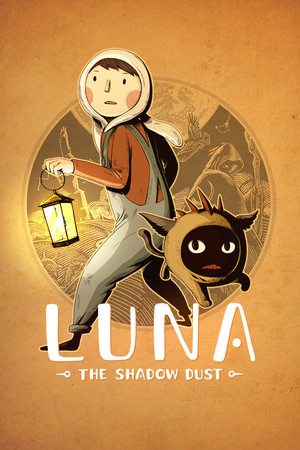
LUNA The Shadow Dust
Hand-drawn to its bones, crafted by a tiny team, and short enough to finish in one candlelit sitting - if Samorost ever made you forget dinner was getting cold, this tower is calling you.
GamerScout Verdict
For fans of wordless puzzle adventures like Machinarium who want three to five hours of hand-crafted atmosphere done with genuine care.
Compare Prices(3 stores)
Every store in this table quotes us in euros, so the EUR figure is the price the seller actually set, not our arithmetic — which is why EUR is also the currency we rank in. We only list an offer here when the store gives us its price in euros, so nothing in this table is a number we invented.
Pick USD, PLN, GBP, CAD or AUD in the header and we convert from EUR at the European Central Bank reference rate — converted amounts are prefixed with ~. Your bank or the store may apply a different rate at checkout. We never hide offers based on where you are: everyone sees this whole table.
We may earn a commission when you buy games through links on this page — at no extra cost to you. It never affects our rankings or verdicts.
Price History
Screenshots & Media
About LUNA The Shadow Dust
I think about small games the way I think about short films: the constraint is the point, and LUNA The Shadow Dust wears its constraints like a deliberate costume. Lantern Studio - reportedly a four-person core team - built this entirely in traditional cel animation at twelve frames per second, with over 250 hand-drawn animations across the whole run. The result looks less like a video game and more like a Miyazaki storyboard that somehow became interactive. The colour palette alternates between amber warmth and cool, muted blues, and each room you unlock bleeds colour back into a world that started grey. That visual heartbeat is the game's most confident move, and it never stops working. The structure is as stripped-back as it gets: a boy named Uri falls from a dark sky, finds a mysterious tower, and meets Layh - a round, cat-like companion with enormous eyes and limited patience for being separated from her human. You click to move, click to interact, and swap control between the two characters with a spacebar press or a mouse click. There is no inventory. There is no dialogue. There is not a single line of text until the credits roll. Every puzzle is self-contained to its room, with no backtracking required. Within that simplicity, the dual-character mechanic carries real weight: Layh can flatten herself into a shadow and traverse walls, leaping across platforms formed by cast light. She can crawl through pipes to open doors from the other side. One room sends her into a sequence of shadows projected by a floor lantern; another uses a door that cycles between seasons to let a tree grow fruit. The music room and the kitchen involving a creature's digestive system are legitimately delightful puzzle designs that I will not spoil further. Where the honest criticism lands: the game runs between three and five hours depending on how quickly puzzle logic clicks for you, and a few rooms near the top of the tower lean toward trial-and-error rather than genuine discovery. The silent storytelling, so effective in its early storybook chapters, grows ambiguous enough by the finale that some players will reach the end credits feeling like they missed a connective thread. The artbook DLC fills in lore gaps - which is a slightly uncomfortable admission from a game that bills itself on showing rather than telling. And while most of the character switching feels fluid, the companion's movement speed in certain sequences can drag against your patience when a solution requires precise repositioning. None of that undoes what is genuinely rare here. The soundtrack, composed by Wang Qian, sits heavy on strings and a kind of inquisitive melody that feels like it is always just ahead of you, pulling rather than pushing. It is scored for exploration rather than spectacle, and it reads as one of the most atmospherically considered indie soundtracks in the point-and-click genre. Steam user reception sits at 88% positive across over 1,300 reviews, which tracks: this is the sort of game that players who connected with it remember in a specific, personal way. Players who want dense mechanics or explicit narrative payoff will bounce off it. Players who responded to Machinarium, Samorost, or the quieter corners of Ghibli will find something that knows exactly when to end.

Indie & narrative
Tags
System Requirements
Minimum
- OS
- Windows 7, Windows 8, 8.1, Windows 10
- Memory
- 4 GB RAM
- Storage
- 1 GB available space
- Graphics
- GeForce GT440 or HD5570
- Processor
- Intel core i5 2557M
Keep exploring
Community Discussion
Be the first to comment on LUNA The Shadow Dust.
Reviews & Ratings
Game Info
- Developer
- Lantern Studio
- Publisher
- Coconut Island Games
- Release Date
- Feb 13, 2020