
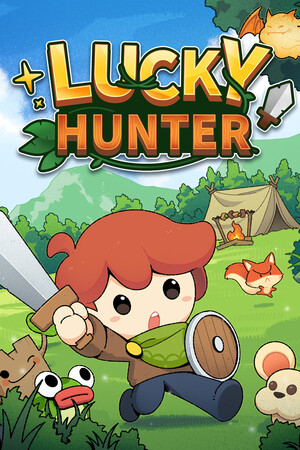
Lucky Hunter
A dirt-cheap roguelite that crosses deck-building with match-3 merging, and somehow the hands-off combat never feels passive once you're chasing broken synergies across 100-plus pieces and artifacts.
GamerScout Verdict
Best for roguelite fans who want a low-stakes entry point with genuine depth hiding behind the cute cartoon exterior.
Compare Prices(5 stores)
Every store in this table quotes us in euros, so the EUR figure is the price the seller actually set, not our arithmetic — which is why EUR is also the currency we rank in. We only list an offer here when the store gives us its price in euros, so nothing in this table is a number we invented.
Pick USD, PLN, GBP, CAD or AUD in the header and we convert from EUR at the European Central Bank reference rate — converted amounts are prefixed with ~. Your bank or the store may apply a different rate at checkout. We never hide offers based on where you are: everyone sees this whole table.
We may earn a commission when you buy games through links on this page — at no extra cost to you. It never affects our rankings or verdicts.
Price History
Screenshots & Media
About Lucky Hunter
My first reaction to Lucky Hunter was skepticism. Auto-battlers have a reputation for being spectator sports dressed up as strategy, and at a glance this one, built by solo indie outfit 159 Studio, looks like it could confirm every suspicion. Cute cartoon sprites, a thin post-apocalyptic premise, a hunter off to kill a demon king, nothing here screams 'deep systems.' Then one run with a slime-ninja hybrid deck completely rewired my expectations, and I lost a full afternoon to it. The core structure should be immediately readable to anyone who has touched Slay the Spire or StS-adjacent roguelites. You travel a branching map, pick your nodes, fight escalating encounters, and strengthen your deck between battles. What Lucky Hunter layers on top is the merge mechanic: pieces are deployed automatically onto a grid each turn, and when three identical pieces align adjacently, they collapse into a single, significantly more powerful version. The decision layer sits entirely in piece selection, relic acquisition, path routing, and archetype targeting. You never touch the battlefield mid-fight. That sounds passive, but the math of which pieces to add, which relic to prioritize at the blacksmith, and whether to fight an elite early for fast artifact income creates a constant low-level pressure that strategy players will find familiar. The Normal mode runs four chapters, each capped by a boss, while Endless mode strips the finish line and just watches you die slower and slower as enemy health scales into the billions. One Steam community player reported reaching stage 77 with slimes doing trillions of damage per hit, which tells you everything about how the scaling curve bends in Endless. The piece pool is where the depth lives. Soldiers, ninjas, slimes, alchemists, and hackers all have distinct behaviors, damage dealers, shields, buffers, piece-generators, and each archetype has relics tied to it that deepen the identity of a given run. Unlocking new piece packs is the persistent meta-progression hook; each pack introduces fresh mechanics, but be aware that a larger pool also dilutes your draw odds, so chasing every unlock can actually hurt mid-run consistency before you know the interactions well. The randomization means some runs offer obvious build paths and others give you nothing coherent. That run-variance is the biggest friction point, and a meaningful critique, there is a real ceiling on how much agency you have when the offered pieces simply do not match your relic setup. Community feedback also flags that the English translation is rough in places and that some UI elements, like the pack-favorite system in the Talent menu, appear to do nothing. At 3x speed, prolonged Endless runs can drag once enemy HP values become absurd. These are genuine rough edges on an otherwise tight loop. For newcomers to the genre, Lucky Hunter is probably the lowest-friction entry point I have seen in a while. There is no real-time pressure, the merge logic is explained fast, and the auto-combat removes any execution skill ceiling. You are optimizing your draft choices, not your reflexes. That said, the deeper satisfaction scales with how aggressively you read the piece interactions. Players who commit to understanding which relics gate which archetypes, and who pick fights with elites early for faster artifact income, will get dramatically stronger runs than those who draft randomly. The campfire node becomes mandatory survival infrastructure once you hit the mid-game, and knowing that early saves a lot of failed attempts. Steam users sit at a Very Positive consensus with an 89 percent approval rate across several hundred reviews, a genuine signal for a sub-five-dollar title with this much run count in it.

Strategy & simulation
Tags
System Requirements
Minimum
- OS
- Windows 10 or above
- Memory
- 1 GB RAM
- DirectX
- Version 11
- Storage
- 500 MB available space
- Processor
- 1.6GHz
Recommended
- Memory
- 1 GB RAM
- DirectX
- Version 11
- Storage
- 500 MB available space
Keep exploring
Community Discussion
Be the first to comment on Lucky Hunter.
Reviews & Ratings
No ratings available
Game Info
- Developer
- 159 Studio
- Publisher
- indienova
- Release Date
- Nov 4, 2024