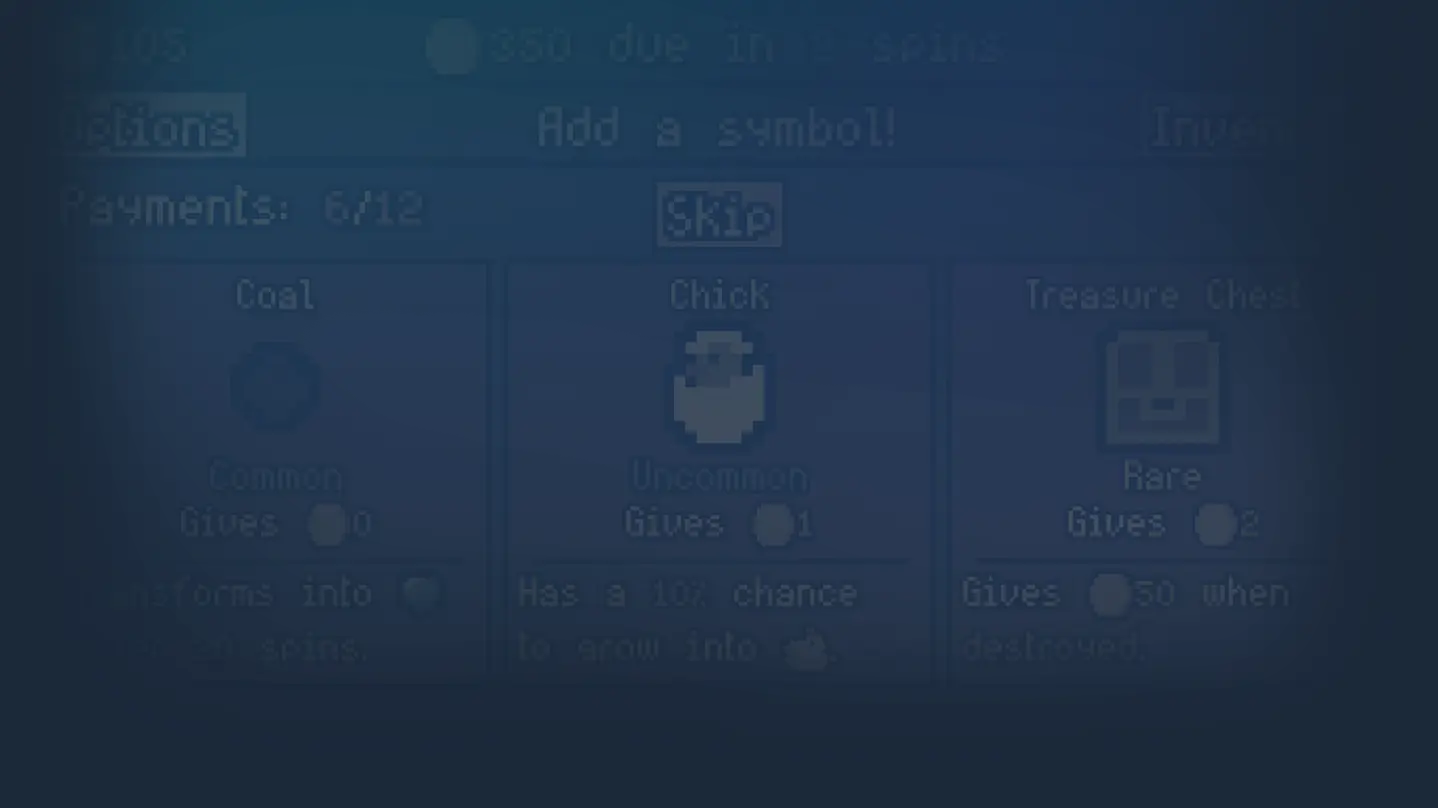
Luck be a Landlord
A roguelike deckbuilder where you draft slot machine symbols, chain synergies, and grind rent money until capitalism buckles. Surprisingly deep for something that looks like a one-night curiosity.
GamerScout Verdict
A compact but genuinely deep synergy-builder best suited for players who like to theorycraft their roguelike runs between attempts.
Compare Prices(7 stores)
Every store in this table quotes us in euros, so the EUR figure is the price the seller actually set, not our arithmetic — which is why EUR is also the currency we rank in. We only list an offer here when the store gives us its price in euros, so nothing in this table is a number we invented.
Pick USD, PLN, GBP, CAD or AUD in the header and we convert from EUR at the European Central Bank reference rate — converted amounts are prefixed with ~. Your bank or the store may apply a different rate at checkout. We never hide offers based on where you are: everyone sees this whole table.
We may earn a commission when you buy games through links on this page — at no extra cost to you. It never affects our rankings or verdicts.
Price History
Screenshots & Media
About Luck be a Landlord
Luck be a Landlord wraps a dense symbol-synergy engine inside a slot machine skin, and the result is one of those rare games where a single run can teach you something new about the system after fifty hours of play. Each run starts you with a small pool of symbols and a rent deadline: spin the reels, collect coins, hit your quota, or get evicted. Between spins you draft new symbols from a randomized selection, and that drafting layer is where the real game lives. The question is never "what is the best symbol" but rather "what does this symbol do inside the specific constellation I am building right now." Pearls feed oysters, oysters feed the arrow, the arrow depends on adjacency, and suddenly you have an engine that prints coins faster than your landlord can raise the rent. From a pure decision-space perspective the game punches well above its pixel-art weight class. Symbol pools are large enough that no two runs feel identical, and the item system adds a second layer of modification that can completely reshape a symbol's value mid-run. I tracked synergy chains on a notepad for my first dozen hours, which is the kind of thing I do for Paradox titles, and Luck be a Landlord held up to that level of scrutiny. The scaling curve across the rent rounds is well-tuned: early rounds reward greedy drafting, late rounds punish any gaps in your engine ruthlessly, and the final rent spikes force you to have actually planned ahead rather than improvised your way through. The roguelike structure means failure is fast and informative rather than punishing. A bad run lasts maybe fifteen minutes before the game tells you what went wrong by evicting you, and that tight feedback loop is genuinely newcomer-friendly despite the combinatorial depth underneath. If you are used to deck builders like Slay the Spire, the transition is natural: think of symbols as cards and synergies as card interactions, except you cannot control draw order, only density. That randomness layer is intentional and central to the design. If you despise variance and want deterministic optimization, temper your expectations. The main legitimate criticism is replayability ceiling. Once you have internalized the strong archetypes and the rough probability math behind symbol density, runs start to feel like confirmation exercises rather than discovery exercises. There is a challenge mode that locks your symbol choices and forces specific builds, which extends the shelf life, but the base game will feel solved to experienced roguelike players faster than the hour count suggests. The developer has updated the game post-launch with new symbols and balance passes, and the community around it is active, so the ceiling is higher than it was at release, but it is still there. For anyone who likes build optimization games and wants something that respects their intelligence without demanding forty hours of tutorial investment, this is a strong pickup. The no-gambling-mechanics disclaimer in the official description is worth taking seriously: there is no real-money anything here, just pure mechanical slot-machine logic used as a strategy substrate. That design integrity matters. Luck be a Landlord knows exactly what it is trying to be and executes it cleanly.

Strategy & simulation
Tags
System Requirements
Minimum
- Processor
- 2.0 GHz
- Memory
- 1 GB RAM
- Storage
- 100 MB available space
Keep exploring
Community Discussion
Be the first to comment on Luck be a Landlord.
Reviews & Ratings
Game Info
- Developer
- TrampolineTales
- Publisher
- TrampolineTales
- Release Date
- Jan 6, 2023