
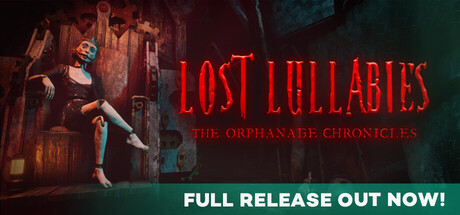
Lost Lullabies: The Orphanage Chronicles
If Phasmophobia ever felt too shallow for you, this co-op horror from Pugsy Studios answers back with ghost backstories that make you feel guilty for the exorcism. Still Early Access rough, but the bones are genuinely compelling.
GamerScout Verdict
Best for patient co-op horror groups who want ghost-hunting with genuine emotional stakes, not just evidence spreadsheets.
Compare Prices(7 stores)
Every store in this table quotes us in euros, so the EUR figure is the price the seller actually set, not our arithmetic — which is why EUR is also the currency we rank in. We only list an offer here when the store gives us its price in euros, so nothing in this table is a number we invented.
Pick USD, PLN, GBP, CAD or AUD in the header and we convert from EUR at the European Central Bank reference rate — converted amounts are prefixed with ~. Your bank or the store may apply a different rate at checkout. We never hide offers based on where you are: everyone sees this whole table.
We may earn a commission when you buy games through links on this page — at no extra cost to you. It never affects our rankings or verdicts.
Price History
Screenshots & Media
About Lost Lullabies: The Orphanage Chronicles
My first session inside Lowell Orphanage ended with me standing in a burnt dormitory, holding a torn journal entry, genuinely unsure whether the child whose room I was trespassing through deserved to be banished or mourned. That emotional snag is exactly what separates Lost Lullabies: The Orphanage Chronicles from the pile of Phasmophobia adjacents that flood the co-op horror space. Pugsy Studios, an independent Turkish debut team, built something with a real point of view here, and it shows in the smallest details: the period-appropriate props, the 1980s van hub area where your team of up to four gears up before each run, and a sock-puppet shopkeeper called the Shady Dealer who trades trinkets for special items mid-investigation. It is quirky in the best way. The core loop borrows the evidence-gathering skeleton you already know from the genre: EMF readers, thermometers, spirit orbs, cross-referenced clues to pin down one of 18 distinct ghost types. What the game adds on top is the part worth talking about. Once you identify the spirit, the real work begins. Every ghost has a tragic backstory woven into the orphanage walls through journal entries, tattered drawings, and faded letters. Solving the exorcism means engaging with that story, assembling pieces of a lost toy for a grief-stricken child ghost named Emma, decoding letters to understand what made Margaret the entity she became. The puzzle design pushes you to pay attention rather than just grind evidence counters. The voice recognition layer adds another texture: ghosts respond to spoken words through your actual microphone, and saying the right phrase can unlock hidden doors, trigger events, or provoke a spirit into a hunt. When it works, it is quietly extraordinary. When it does not respond correctly, and in Early Access it sometimes does not, the immersion cracks in a way that feels frustrating rather than atmospheric. The map is a multi-level orphanage of burnt hallways, cramped basements, and creaky dormitories, with clue locations and ghost spawn points shifted each session to maintain variety. New corridors unlock as you progress through chapters and complete mini-games, which gives the space a living quality that purely randomized maps lack. The sound design deserves its own paragraph: children whispering, footsteps you cannot account for, and a spirit box that responds in individual ghost voices create a texture that is more sustained dread than cheap startle. The visual fidelity for an indie release of this scale is genuinely impressive, with dynamic lighting casting shadows that feel purposeful rather than decorative. Honesty demands noting the rougher edges. Two of the four planned chapters are available in Early Access, meaning the content ceiling is real right now. Solo play is functional but noticeably weaker, with the map's size turning navigation into a slog without teammates to split objectives. Lobby management has friction, keybinds need consulting before a first run, and some players have found ghost spawn locations predictable across repeat sessions in the same chapter. The puzzle variety also shows strain across replays in the current build. These are Early Access problems that a responsive developer team, one that has demonstrably acted on community feedback, has a reasonable shot at solving. But they are real problems today. For a three or four person group who wants horror that lingers past the jump scare, who wants to feel something when they finally exorcise a ghost they have spent forty minutes learning about, this is a rare thing: a co-op horror game where the narrative weight actually lands. Go in with patient friends and the right expectations for what Early Access means.

Indie & narrative
Tags
System Requirements
Minimum
- OS
- Windows (64-bit) 10
- Memory
- 4 GB RAM
- DirectX
- Version 11
- Network
- Broadband Internet connection
- Storage
- 10 GB available space
- Graphics
- NVIDIA GTX 1060 / AMD R9 270X
- Processor
- i5 3550 / RYZEN 5 2500X
Recommended
- OS
- Windows (64-bit) 10
- Memory
- 16 GB RAM
- DirectX
- Version 12
- Network
- Broadband Internet connection
- Storage
- 10 GB available space
- Graphics
- NVIDIA RTX 3050 / AMD RX 6600
- Processor
- i5 7600K / Ryzen 5 2600x
Keep exploring
Community Discussion
Be the first to comment on Lost Lullabies: The Orphanage Chronicles.
Reviews & Ratings
No ratings available
Game Info
- Developer
- Pugsy Studios
- Publisher
- GameDev.ist
- Release Date
- Oct 27, 2025