
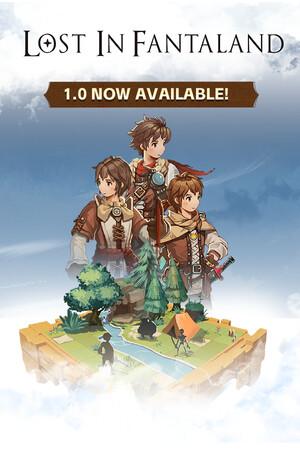
Lost In Fantaland
Slay the Spire meets Into the Breach on an 8x8 grid, with six classes and 300+ cards to break. The depth is real, but the English translation will test your patience.
GamerScout Verdict
Solid tactical deckbuilder for players who want grid positioning to matter, hampered only by a rough English localization.
Compare Prices(4 stores)
Every store in this table quotes us in euros, so the EUR figure is the price the seller actually set, not our arithmetic — which is why EUR is also the currency we rank in. We only list an offer here when the store gives us its price in euros, so nothing in this table is a number we invented.
Pick USD, PLN, GBP, CAD or AUD in the header and we convert from EUR at the European Central Bank reference rate — converted amounts are prefixed with ~. Your bank or the store may apply a different rate at checkout. We never hide offers based on where you are: everyone sees this whole table.
We may earn a commission when you buy games through links on this page — at no extra cost to you. It never affects our rankings or verdicts.
Price History
Screenshots & Media
About Lost In Fantaland
My spreadsheet instincts kicked in the moment I saw the setup: a roguelite deckbuilder where every fight resolves on an 8x8 tactical grid, class identity is baked into the card pool, and positioning matters as much as the cards in your hand. That combination is rare, and Lost in Fantaland earns genuine attention for pulling it off with a reasonable degree of polish. The core loop works like this. You pick one of six characters, each with a distinct deck archetype, and navigate branching, randomly generated chapter maps. Along the branches you encounter monster fights, artifact rewards, random events, and bonfires that restore hit points. Every combat plays out on that isometric checkerboard, where terrain and weather effects add a layer of positional thinking you simply do not get in a flat-lane card game. The multi-card play system lets you chain several cards in a single turn, which opens up combo lines that reward players who plan two or three moves ahead. You can lure enemies into traps even after exhausting your hand, which matters in late-game fights where resources run tight. The Warrior, Mage, and Trickster class archetypes each demand a different deck philosophy, and the full six-character roster means you will not exhaust the build space quickly. Persistence is handled through Soul Orbs, earned in every run and spent at the pre-run Soul Orb Shop. These unlock global rules and quality-of-life perks rather than raw power bumps, which is the correct design call. It means a skilled newcomer can reach deep runs without grinding for upgrades, and it keeps the roguelite loop from collapsing into a numbers race. Once you clear normal difficulty, Ascension mode layers in mutated enemies, special weather conditions, and harder bosses, so there is a meaningful endgame for players who want continued punishment. Now for the honest caveat the community has flagged consistently. The English localization is poor. Card text is sometimes ambiguous enough to leave you guessing whether a combo works the way you think it does. The developer has publicly acknowledged multiple failed translation attempts. It does not wreck the game, because the visual feedback during combat is clear enough to self-teach most mechanics, but it creates friction that a tighter translation would eliminate entirely. Story is also functionally nonexistent beyond a light isekai framing, so do not come in expecting narrative payoff. The pixel art is charming without being remarkable, and the audio gets the job done. For strategy-leaning players who want a smaller-scope daily driver, the depth-to-price ratio here is hard to argue with. The grid combat genuinely separates this from the crowd of Spire imitators. Set low narrative expectations, keep a mental note that some card descriptions may need re-reading, and you will find a game that has earned its positive reception from a patient, tactically minded audience.

Strategy & simulation
Tags
System Requirements
Minimum
- OS
- Windows 7
- Memory
- 512 MB RAM
- Storage
- 700 MB available space
- Processor
- 1.6GHZ
Recommended
- OS
- Windows 10
- Memory
- 4 GB RAM
- Storage
- 700 MB available space
- Processor
- Dual Core 3.0 Ghz
Keep exploring
Community Discussion
Be the first to comment on Lost In Fantaland.
Reviews & Ratings
No ratings available
Game Info
- Developer
- Supernature Studio
- Publisher
- NPC Entertainment
- Release Date
- Sep 26, 2024