
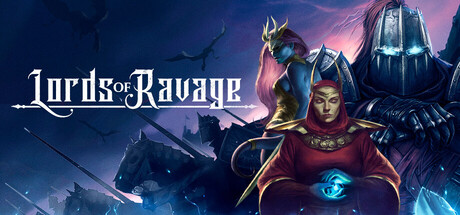
Lords of Ravage
Playing the villain is usually window dressing. Here it's the entire mechanical skeleton: three distinct dark lords, cross-faction army building, and a Menace system that punishes greed. Worth knowing what you're getting.
GamerScout Verdict
Solid pick for tactical RPG fans who want villain-POV depth, but expect a repetitive endgame that deflates each campaign's momentum.
Compare Prices(8 stores)
Every store in this table quotes us in euros, so the EUR figure is the price the seller actually set, not our arithmetic — which is why EUR is also the currency we rank in. We only list an offer here when the store gives us its price in euros, so nothing in this table is a number we invented.
Pick USD, PLN, GBP, CAD or AUD in the header and we convert from EUR at the European Central Bank reference rate — converted amounts are prefixed with ~. Your bank or the store may apply a different rate at checkout. We never hide offers based on where you are: everyone sees this whole table.
We may earn a commission when you buy games through links on this page — at no extra cost to you. It never affects our rankings or verdicts.
Price History
Screenshots & Media
About Lords of Ravage
My spreadsheet instincts lit up the moment I clocked the Menace system. As you stomp across the map, every action you take - raiding cities, absorbing magic sources, simply traveling - bleeds Menace into the world, and enemy power scales directly with that meter. It's a resource-management layer that sits quietly above every tactical decision, and it's the kind of pressure valve that separates a game with interesting choices from one that just looks like it has them. Lords of Ravage lands, cautiously, in the former camp. The structure is a dark-fantasy tactical RPG with roguelite DNA. You pick one of three villain-protagonist lords - Lord Berold of the Dread Knights, forbidden-magic prodigy Zavris, or Abyss demoness Azneya - and each is locked behind completing the previous lord's campaign, so the game gates its own replayability. On the map layer you move your lord across nodes, razing towns for gold, looting temples for knowledge, and gathering building materials to unlock base structures that feed passive bonuses into combat. In battle the core loop involves deploying followers drawn from the Dark Alliance and the Mercenary Guild, blending units across faction lines using Edicts to paper over weaknesses, and managing Relics that can reshape how a fight flows. The lord themselves can enter the fray personally at any point - a high-risk move given that an injured leader heading into the next encounter is a genuine spiral toward a run-ending loss. The combat holds up. Each enemy group - classical hero parties, lone summoners, warrior brotherhoods, full military expeditions - brings its own behavioral logic rather than a simple stat bump, so learning the exploitable patterns is real tactical work. Early encounters forgive mistakes; later ones, especially the convergent climax where each lord faces the same final opponent, feel considerably less inspired. That repeated boss structure drew criticism from reviewers, and fairly so - it reads like a budget decision rather than a design choice, and it undercuts the tonal investment each campaign builds. Steam user reception sits at a mixed 67 percent positive across 131 reviews, which roughly tracks: the combat and atmosphere land, the late-game repetition and the locked campaign order are genuine friction points. For newcomers to the genre, the approachability is real. The pixel-art presentation is clean and atmospheric without demanding you parse complex unit trees from the first minute, the Menace system teaches tempo management through natural consequence rather than a manual, and each lord's faction essentially comes with a suggested default playstyle - horde flooding for Berold's Dread Knights, curse stacking for Zavris's magic-forward builds, and Azneya's demonic toolkit for players who want personal-lord combat to carry more weight. None of the three feel like reskins. The cross-faction unit mixing with Edicts adds genuine build-order decisions once you understand the faction synergy tables, which is where the replay value actually lives. No mod ecosystem to speak of at time of writing, no multiplayer, and the procedural-generation layer is light enough that calling this a full roguelite is a stretch. What it is: a compact, mechanically honest villain-POV tactical RPG that does more right than wrong in the mid-game, stumbles at the finish line of each campaign, and earns its asking price if turn-based combat with actual positioning stakes is what you're hunting.

Strategy & simulation
Tags
System Requirements
Minimum
- OS
- Windows 10
- Memory
- 6 GB RAM
- DirectX
- Version 11
- Storage
- 5 GB available space
- Graphics
- NVidia GTX 1060 / 3 GB or Radeon RX 580 / 4GB
- Processor
- Intel Core I3 or AMD Ryzen 3
Recommended
- OS
- Windows 10
- Memory
- 8 GB RAM
- DirectX
- Version 12
- Storage
- 5 GB available space
- Graphics
- NVidia GTX 1070 / 8 GB or RX Vega 56 / 8GB
- Processor
- Intel Core I5 or AMD Ryzen 5
Keep exploring
Community Discussion
Be the first to comment on Lords of Ravage.
Reviews & Ratings
No ratings available
Game Info
- Developer
- Synthetic Domain
- Publisher
- 101XP
- Release Date
- Oct 15, 2025