
Lonesome Village
A seven-hour puzzle-and-village loop that asks almost nothing of you except attention, patience, and the occasional willingness to save manually before it saves nothing for you.
GamerScout Verdict
Worth it for cozy-puzzle fans who save obsessively; too shallow for life-sim devotees chasing Stardew-depth.
Compare Prices(9 stores)
Every store in this table quotes us in euros, so the EUR figure is the price the seller actually set, not our arithmetic — which is why EUR is also the currency we rank in. We only list an offer here when the store gives us its price in euros, so nothing in this table is a number we invented.
Pick USD, PLN, GBP, CAD or AUD in the header and we convert from EUR at the European Central Bank reference rate — converted amounts are prefixed with ~. Your bank or the store may apply a different rate at checkout. We never hide offers based on where you are: everyone sees this whole table.
We may earn a commission when you buy games through links on this page — at no extra cost to you. It never affects our rankings or verdicts.
Price History
Screenshots & Media
About Lonesome Village
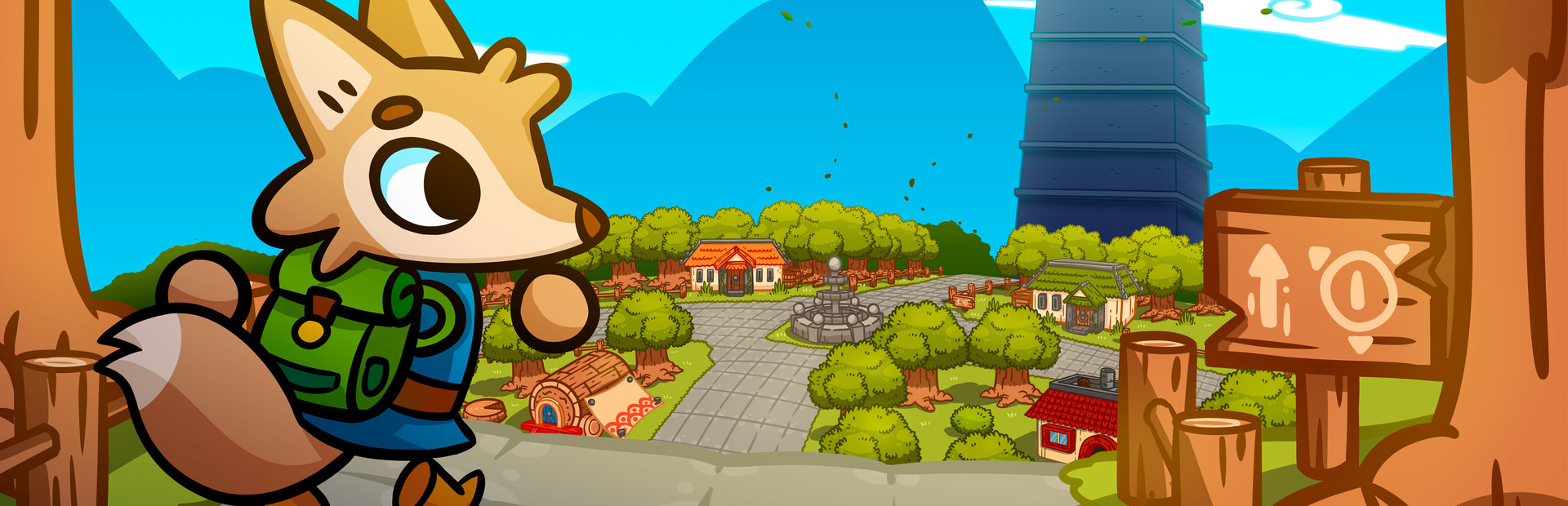
My instinct with games like this is to sit with them quietly before writing anything, because the mood Ogre Pixel has built in Lonesome Village is genuinely fragile, the kind of thing that falls apart if you poke at it too hard. You play as Wes, a coyote who rolls into an empty town called Lonesome, guided by a fairy companion named Coronya, and very quickly figures out that every single villager has been imprisoned inside a looming, floor-by-floor tower. The setup is light on drama, but it works as a spine: climb the tower, free some residents, return to the village, accept their quests, earn hearts, unlock the next tower segment. Repeat. The loop is intentional and unhurried, and for the right player, it clicks like a soft metronome. The tower floors are where the game earns its keep. Each room presents a different kind of challenge: spatial puzzles, memory tests, mazes, the occasional bit of 2D platforming logic. They vary enough that the whole ascent rarely feels samey, even if the difficulty is pitched squarely at beginners or players who simply want to unwind rather than strain. A Magic Glass item lets you uncover hidden clues in the environment, which is one of the more thoughtful tool designs in recent cozy-game memory. Critics and players both noted that the puzzle difficulty curve has some uneven moments, lurching from too gentle to briefly head-scratching, but the overall experience holds together. The issue is that some puzzles end just as they get interesting, which leaves harder-core puzzle fans wanting a few more floors of genuine resistance. The village half is the weaker side of the equation. Digging, planting, harvesting, fishing, mining, crafting, and house decoration are all present, but each one exists at a shallower depth than players used to Stardew Valley or Animal Crossing will expect. Villager quests tend toward the fetch-and-deliver end of the spectrum: bring five sticks, catch a fish, photograph a landmark. Simple, yes, but they do give you real reasons to wander the map across its distinct biomes, from forest to desert, and the art style rewards exploration generously. The hand-drawn, cartoony visuals are the clearest mark of craft here: vibrant, detailed, and cohesive with the gentle tone the game is reaching for. The soundtrack follows that same quiet warmth, the kind of music you notice has been doing a lot of emotional work only once it stops. The practical problems are real and worth knowing about before you commit. At launch, crashing was a documented issue across platforms, and the manual save system means lost progress when things go sideways. The inventory is cramped for how many tools Wes eventually accumulates, and there is no visual indicator when a villager has a quest waiting, so you end up doing a full circuit of the town more often than feels elegant. Menu navigation drew complaints about noise and awkwardness. These are not fatal wounds, but they are friction in a game whose whole promise is frictionlessness, and that tension is worth naming. Lonesome Village is the kind of small, made-with-care game I want to exist in the world. It knows what it is: a roughly seven-hour exhale with a tower at the center and a community growing quietly around the edges. It does not try to be Stardew, and the places where it almost tries and retreats are its only real disappointments. If you can meet it on its own terms and save often, it genuinely delivers on the cozy-puzzle promise it makes.

Indie & narrative
Tags
System Requirements
Minimum
- OS
- Windows 10
- Memory
- 8 GB RAM
- Storage
- 6 GB available space
- Processor
- Intel® Core™ i3 @ 3.2 GHZ
Keep exploring
Community Discussion
Be the first to comment on Lonesome Village.
Reviews & Ratings
No ratings available
Game Info
- Developer
- Ogre Pixel
- Publisher
- Ogre Pixel
- Release Date
- Nov 1, 2022