
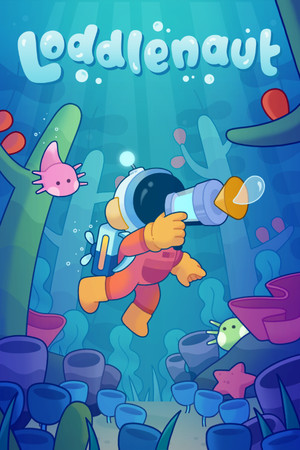
Loddlenaut
A five-hour underwater cleanup with a soundtrack that hums like a memory and creatures you will absolutely name before the first hour is up.
GamerScout Verdict
Best for cozy-game fans who want a complete, unhurried experience under five hours and don't need systems that push back.
Compare Prices(9 stores)
Every store in this table quotes us in euros, so the EUR figure is the price the seller actually set, not our arithmetic — which is why EUR is also the currency we rank in. We only list an offer here when the store gives us its price in euros, so nothing in this table is a number we invented.
Pick USD, PLN, GBP, CAD or AUD in the header and we convert from EUR at the European Central Bank reference rate — converted amounts are prefixed with ~. Your bank or the store may apply a different rate at checkout. We never hide offers based on where you are: everyone sees this whole table.
We may earn a commission when you buy games through links on this page — at no extra cost to you. It never affects our rankings or verdicts.
Price History
Screenshots & Media
About Loddlenaut
My first hour with Loddlenaut felt like finding a very small, very sincere letter tucked inside a library book. Moon Lagoon is a two-person studio out of Austin, and every corner of this thing telegraphs that it was made by people who cared about exactly one idea and executed it with real gentleness. You drop onto the ocean planet GUP-14 as a custodian hired to clean up after the mega-corporation GUPPI, which stripped the place and left. What follows is one of the most intentionally low-pressure gameplay loops in recent indie memory. The core tools are beautifully minimal. You start with a bubble gun that traps goop and debris, then unlock a scrap vac for microplastic clouds, and eventually a cleaning vehicle that handles sludgy oil spillages on the ocean floor. Recycled junk goes back to your Home Cove station, where it converts into resources for upgrading your gear: better oxygen tank capacity, longer boost duration, expanded bubble gun range. The crafting is light, the upgrade curve is gentle, and the one survival pressure, your oxygen supply, is just enough friction to keep you moving without ever turning into stress. Portable oxygen rings you can place and carry remove almost all of that threat once you know they exist. The five-to-six hour campaign across five distinct biomes feels exactly the right length. It ends before the loop wears out, which is a discipline many larger games should study. The loddles themselves sit at the center of the game's warmth. These axolotl-shaped creatures wash up coated in goop, and once you clean them and bring them back to your cove, they evolve based on what you feed them. Fruit types, home-cooked loddle meals, and diet combinations influence which of the thirteen evolution types they grow into, including Jumbo, Snake, Siren, and Octo forms. A post-launch Loddlepedia update added an in-game tracker for evolutions and variants, gave loddles distinct personalities, and introduced a Boost Overdrive mechanic tied to cleaned flora. The honest caveat: the loddle-raising side is more decoration than depth. You can complete the campaign while barely touching it. Critics who wanted the creatures to feel more mechanically essential have a fair point. But as ambient companionship, as tiny named friends floating through the water around you while you scrub purple ooze off coral, they do something real. The soundscape is the quiet star. Composer Ryan Yoshikami built a score of soft synths layered over strings, woodwinds, and gentle percussion, and it matches the visual tone almost too well. The ocean of GUP-14 reads bright and colorful by design, pollution rendered in dark contrast so your eye always knows what needs cleaning. There is a depth-of-field effect that blurs distant sections just enough to keep you curious about what sits past the next hundred meters. One design choice divides players: cleaned zones gradually re-contaminate over time, a deliberate message about real-world cleanup not being permanent. It reads as conscientious, but it can feel like it undermines your sense of progress if you return to an earlier biome and find it grimy again. Loddlenaut knows what it is, and it is not trying to be more. There is no combat, no fail state that punishes harshly, no sprawling quest log. Steam user reviews sit at ninety-eight percent positive across several thousand entries, which says something about the audience it found. If you want mechanical depth or loddle systems that rival creature-collectors, look elsewhere. If you want a quiet afternoon, a soundtrack you will leave on after the screen goes dark, and a game that ends gracefully, Loddlenaut earns its place.

Indie & narrative
Tags
System Requirements
Minimum
- OS
- Windows 7 SPI+ or later
- Memory
- 4 GB RAM
- DirectX
- Version 11
- Storage
- 3 GB available space
- Graphics
- Radeon RX 550
- Processor
- Intel / AMD Dual Core @ 1+ GHz
Recommended
- OS
- Windows 7 SPI+ or later
- Memory
- 8 GB RAM
- DirectX
- Version 11
- Storage
- 3 GB available space
- Graphics
- NVIDIA GeForce GTX 970
- Processor
- Intel / AMD Dual Core @ 2+ GHz
Keep exploring
Community Discussion
Be the first to comment on Loddlenaut.
Reviews & Ratings
Game Info
- Developer
- Moon Lagoon
- Publisher
- Secret Mode
- Release Date
- Nov 16, 2023