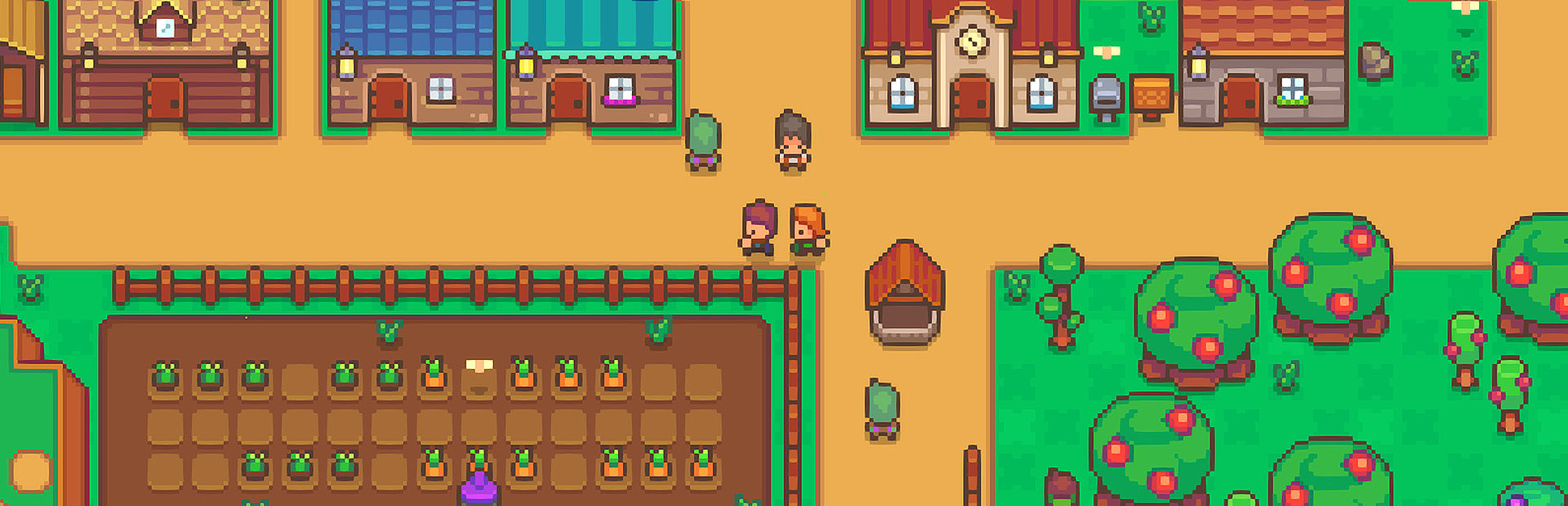

Littlewood
Skip the tutorial anxiety, Littlewood is the rare town-builder that respects your time, skips the combat entirely, and still finds ways to make a number go up for 70-plus hours.
GamerScout Verdict
A gentle but surprisingly layered town-builder for players who want satisfying constraint puzzles without combat pressure or time-clock stress.
Compare Prices(5 stores)
Every store in this table quotes us in euros, so the EUR figure is the price the seller actually set, not our arithmetic — which is why EUR is also the currency we rank in. We only list an offer here when the store gives us its price in euros, so nothing in this table is a number we invented.
Pick USD, PLN, GBP, CAD or AUD in the header and we convert from EUR at the European Central Bank reference rate — converted amounts are prefixed with ~. Your bank or the store may apply a different rate at checkout. We never hide offers based on where you are: everyone sees this whole table.
We may earn a commission when you buy games through links on this page — at no extra cost to you. It never affects our rankings or verdicts.
Price History
Screenshots & Media
About Littlewood
My first instinct when I fired up Littlewood was to look for the catch. A solo-developer life sim with ten levelled skills, a full town-builder, terraforming tools, a card battle minigame, and no punishment mechanics, something had to give. Turns out the catch is that it never quite swings for the fences on any one system. But here is the thing: it doesn't need to. What Sean Young built is a remarkably coherent stack of interlocking loops that pull you forward without ever demanding optimization. The moment-to-moment structure runs on a stamina bar rather than a real-time clock. Each day you have a finite energy budget that drains when you mine, chop, fish, catch bugs, or farm, but terraforming, decorating, and talking to residents costs nothing. That is a quietly smart design call. It removes the anxiety of wasting seconds on social interactions and lets you front-load your resource runs when you feel like grinding, or spend a whole session reshaping the town's elevation and pond layout without burning a single point. Six of the game's ten skills, Gathering, Mining, Woodcutting, Bug Catching, Fishing, and Farming, level up simply by doing the associated activity, with each capped at 99. Townsfolk requests add a light puzzle layer on top: residents specify furniture preferences, preferred elevation, and proximity to certain structures, which means a perfectly optimized town layout has to actually balance a dozen competing spatial constraints. That tension kept me rearranging things well past the point where I had unlocked everything. The breadth is real. Outside the core loop you have the Dust Caverns for rare ore mining, the Endless Forests for exotic lumber, a hot-air balloon upgrade path that opens new biomes, and Tarott Monster, a fully-formed card battle game hidden inside the sim. Tarott Monster fields decks of ten cards split across five elements, with Arcana-cost attack abilities and reactive defensive plays. It rewards cosmetic town decorations and more cards, so it never feels mandatory, but it is a surprisingly polished diversion. Relationship mechanics let you hang out with any of the 15 residents while doing normal activities, which is a low-friction way to level platonic and romantic bonds without a dedicated daily gift cycle. The marriage system exists but critics have noted it feels a little shallow compared to the town-building side, and that is a fair read. The social writing is charming but thin. Where Littlewood draws criticism is also where it earns its widest audience. The simplicity that makes it accessible is the same simplicity that makes it feel light compared to Stardew Valley or My Time at Portia. Farming is streamlined to a plant-and-harvest-every-few-days system that won't satisfy players who want a deep agricultural loop. Seasonal changes cycle in new fish and bugs but don't alter resource gathering in a meaningful way. Some players report that mid-game, once the novelty of new residents wears off, the gathering loop can feel repetitive. The audio design has taken minor criticism too, looping woodcutting and mining sounds become background noise across longer sessions. None of these are deal-breakers, but players who need mechanical escalation in the late game may find the ceiling arrives before the completionist tasks do. For a strategy-adjacent audience that normally demands depth, I would frame it this way: Littlewood is less about decision-making under pressure and more about satisfying constraint puzzles at your own pace. The Town Wishes upgrade system, a pool of character and town perks that refreshes twice a week, is the closest thing to a build order, and planning which wishes to prioritize early does have downstream consequences for stamina and resource yields. It is not grand strategy. It is a well-constructed toy with more levers than it first appears, built by one developer, shipped with a 93% positive rating on Steam from over five thousand players. For genre newcomers, it is genuinely one of the most approachable entry points available. For veterans looking for a low-stakes palate cleanser between heavier titles, it holds up well.

Strategy & simulation
Tags
System Requirements
Minimum
- OS
- Windows XP, Vista, 7, 8/8.1, 10
- Memory
- 1 GB RAM
- Storage
- 1 GB available space
- Graphics
- 256mb Video Memory, capable of OpenGL 2.0+ support
- Processor
- 2.0 Ghz
- Sound Card
- Any
Keep exploring
Community Discussion
Be the first to comment on Littlewood.
Reviews & Ratings
No ratings available
Game Info
- Developer
- Sean Young
- Publisher
- SmashGames
- Release Date
- Aug 4, 2020