
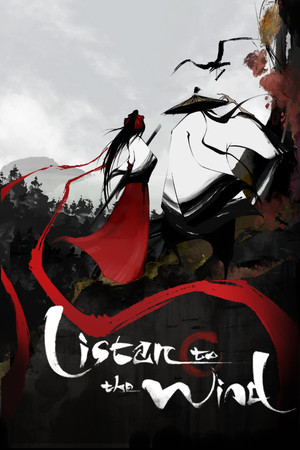
Listen to the Wind
A four-person studio's love letter to Ming dynasty martial arts, built almost entirely around the single discipline of reading an enemy and striking back at precisely the right moment.
GamerScout Verdict
Best for patience-first players who want a beautifully crafted, focused dueling game over a long one.
Compare Prices(6 stores)
Every store in this table quotes us in euros, so the EUR figure is the price the seller actually set, not our arithmetic — which is why EUR is also the currency we rank in. We only list an offer here when the store gives us its price in euros, so nothing in this table is a number we invented.
Pick USD, PLN, GBP, CAD or AUD in the header and we convert from EUR at the European Central Bank reference rate — converted amounts are prefixed with ~. Your bank or the store may apply a different rate at checkout. We never hide offers based on where you are: everyone sees this whole table.
We may earn a commission when you buy games through links on this page — at no extra cost to you. It never affects our rankings or verdicts.
Price History
Screenshots & Media
About Listen to the Wind
I have a soft spot for games made by tiny teams with something specific to prove, and Listen to the Wind is exactly that kind of project. Papertiger Studio, a Chinese indie outfit of four people, built this around one obsessive design idea: forget blocking, forget button-mashing, and learn to counter. Every fight is a 1-on-1 duel where you wait, read the opponent's telegraph, parry at the right frame, then punish. It plays less like a traditional side-scrolling beat-em-up and more like a 2D Sekiro with the camera pulled all the way out and the art dipped in ink. The visual language is the first thing that earns goodwill. Sword slashes render as brushstroke lines across the screen, and the whole aesthetic sits somewhere between woodblock print and animated comic panel. The world is small but handcrafted, and the attention to cultural texture shows in the smaller details: you restore health and stamina by drinking wine from gourds or using traditional herbal remedies, and a cooking system invites you to engage with ingredients that feel rooted in actual Chinese culinary history. The soundtrack carries that same intentional quality, quiet and atmospheric between fights, then taut during the duels themselves. The boss roster is where the game really breathes. You fight a corrupt monk swinging a double-sided spade, a dual-axe warlord, a forest-stage brute named Urashima who literally clubs you with a tree trunk, and even a Western buccaneer called "Fast Sword" Rogerio who ended up working for the Wukou pirates for reasons the story keeps satisfyingly vague. Historical figures like Qi Jiguang and Matsura Takanobu appear as the story progresses, grounding the fantasy in something that feels researched. The branching narrative gives you two playable heroes with different combat styles and difficulty curves, plus an arcade mode if you only want the fights stripped of story context. Multiple endings reward replays. The caveats are real. The entire campaign can be cleared in around an hour on a single route, and the parry-first combat demands patience that not every player will offer willingly. Some Steam community threads mention Unity engine stability issues at launch, and the English localization is functional rather than polished. If you want a sprawling world or a deeper moveset, this is not the game for that itch. But if you respect a small, focused design that knows exactly what it is, and you find something almost meditative in mastering a tight counter-attack window, Listen to the Wind earns its runtime completely. The branching structure and two distinct protagonists give it more replay density than the runtime implies.

Indie & narrative
Tags
System Requirements
Minimum
- OS
- Windows 10 x64
- Memory
- 4096 MB RAM
- DirectX
- Version 11
- Storage
- 4096 MB available space
- Graphics
- AMD Radeon HD7770,Nvidia GeForce GTX750Ti
- Processor
- AMD Ryzen3 1200,Intel Corei3 6100
- Sound Card
- DirectX 11
Recommended
Requires a 64-bit processor and operating system
Keep exploring
Community Discussion
Be the first to comment on Listen to the Wind.
Reviews & Ratings
No ratings available
Game Info
- Developer
- Papertiger Studio
- Publisher
- Gamirror Games
- Release Date
- Sep 22, 2021