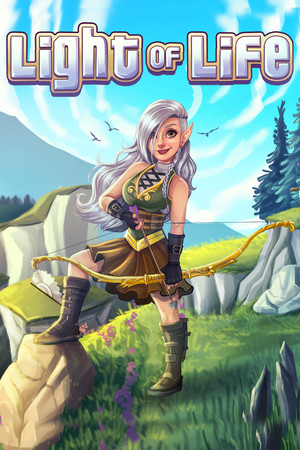
Light of Life
A handcrafted solo-dev precision platformer with a genuinely odd arrow-recoil dash mechanic that will either click for you immediately or frustrate you across all 100 levels.
GamerScout Verdict
Worth trying if the recoil-dash mechanic clicks in the first few levels; a tough sell if it doesn't, even at a bargain price.
Compare Prices(2 stores)
Every store in this table quotes us in euros, so the EUR figure is the price the seller actually set, not our arithmetic — which is why EUR is also the currency we rank in. We only list an offer here when the store gives us its price in euros, so nothing in this table is a number we invented.
Pick USD, PLN, GBP, CAD or AUD in the header and we convert from EUR at the European Central Bank reference rate — converted amounts are prefixed with ~. Your bank or the store may apply a different rate at checkout. We never hide offers based on where you are: everyone sees this whole table.
We may earn a commission when you buy games through links on this page — at no extra cost to you. It never affects our rankings or verdicts.
Price History
Screenshots & Media
About Light of Life
I have a soft spot for solo-developer games that arrive quietly, with no PR campaign and a pixel art elf on the title screen. Light of Life is exactly that kind of small, earnest project, and the honest thing to say upfront is that how much you enjoy it hinges almost entirely on one mechanic. The setup is a single-screen precision platformer across 100 handmade levels spread across 5 worlds. You play as Elanor, an elf recovering life fragments from goblins, and the core loop is simple: move, jump, survive spikes and saws, reach the exit. The wrinkle, and it is a significant one, is the dash. Instead of a conventional directional dash, the game uses arrow-recoil: fire your bow in the opposite direction you want to travel, and the kickback launches you across the gap. Mid-jump, that means facing away from your target platform, firing, and sticking the landing into a field of spikes. It is unconventional by design, developer Renan Felipe leaning into the physics of it as the game's distinguishing idea. Community reception has been split almost cleanly on this point. Some players find the rhythm after a few worlds and settle into it. Others report that the directional input, tied to both movement and arrow aim, never stops feeling awkward. Visually, the game sits comfortably in early 16-bit territory: cute, colorful, hand-drawn pixel art with a brightness that contrasts pleasantly against the lethality of the traps. The art is genuinely charming and shows care, even if the world theming across the five areas does not dramatically reinvent the visual language between them. The soundtrack loops on short cycles within each world, which becomes noticeable by the time you are replaying a tough level for the twentieth time. It is not unpleasant music, it just runs out of breath before you do. Level design is mostly linear, each screen offering one clear route from start to finish. That keeps the puzzle element minimal and the focus squarely on execution. For players who want a tight, readable challenge, that clarity is a feature. Those expecting branching solutions or emergent routing will find it thin. Crystals scattered across levels unlock cosmetic outfits for Elanor, giving completionists a secondary goal beyond simply surviving. Achievements are present and, on console versions, front-loaded toward the early worlds, which somewhat deflates the incentive to push into the harder back half. What I keep coming back to with Light of Life is that it feels like a developer learning in public, which is something I find genuinely worth respecting. The idea behind the arrow-dash is interesting. The pixel art has real handcraft in it. The levels are designed with care even if the variety plateaus. At its price point, the risk is low, and if the recoil-launch mechanic clicks for you in the first two worlds, the remaining 80-plus levels give you enough space to feel your mastery of it grow. If it does not click, though, no amount of charming art will smooth that friction out.

Indie & narrative
Tags
System Requirements
Minimum
- OS
- Windows XP
- Memory
- 2 GB RAM
- DirectX
- Version 10
- Storage
- 500 MB available space
- Graphics
- 512 MB VRAM
- Processor
- 2.0 GHz
Keep exploring
Community Discussion
Be the first to comment on Light of Life.
Reviews & Ratings
No ratings available
Game Info
- Developer
- Renan Felipe
- Publisher
- Renan Games
- Release Date
- Nov 14, 2022