Letter Quest: Grimm's Journey
Scrabble tiles meet turn-based combat in this pint-sized word RPG, and the result is far more strategic than it has any right to be. Worth every minute for vocabulary nerds and puzzle lovers alike.
GamerScout Verdict
Ideal for word game fans who want tactical bite behind the spelling, less so for players who bore fast of fixed stage layouts.
Compare Prices(3 stores)
Every store in this table quotes us in euros, so the EUR figure is the price the seller actually set, not our arithmetic — which is why EUR is also the currency we rank in. We only list an offer here when the store gives us its price in euros, so nothing in this table is a number we invented.
Pick USD, PLN, GBP, CAD or AUD in the header and we convert from EUR at the European Central Bank reference rate — converted amounts are prefixed with ~. Your bank or the store may apply a different rate at checkout. We never hide offers based on where you are: everyone sees this whole table.
We may earn a commission when you buy games through links on this page — at no extra cost to you. It never affects our rankings or verdicts.
Price History
Screenshots & Media
About Letter Quest: Grimm's Journey
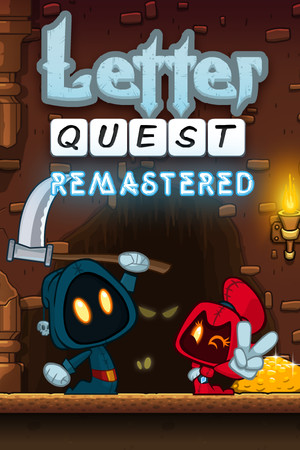
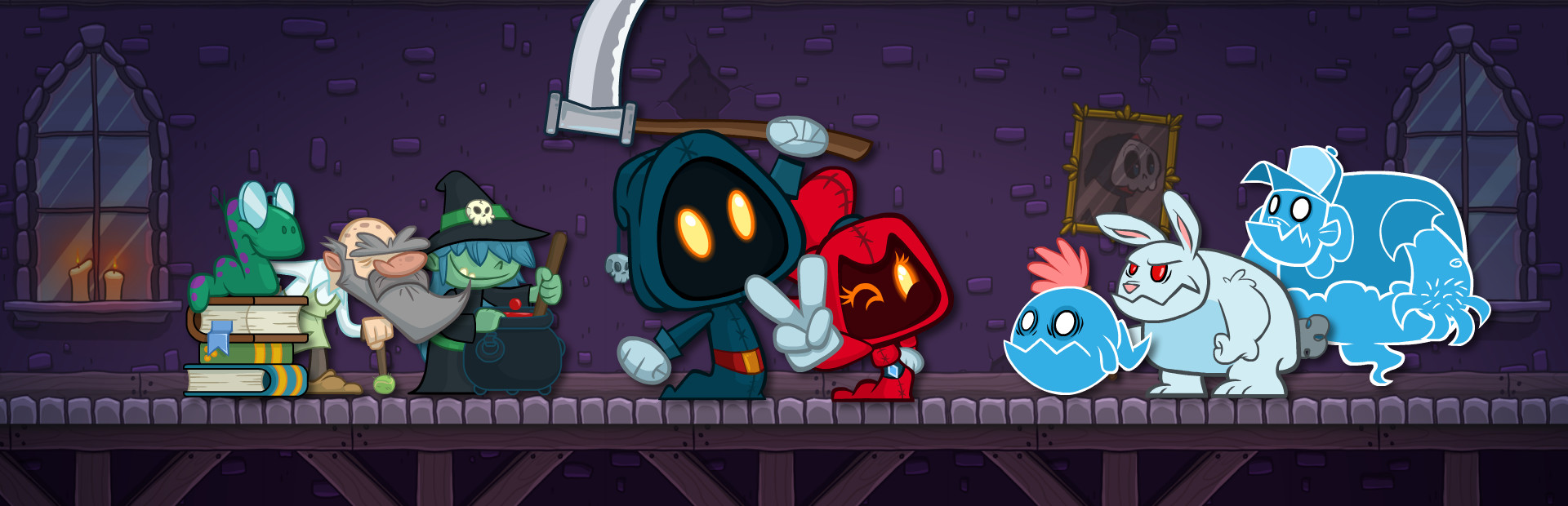
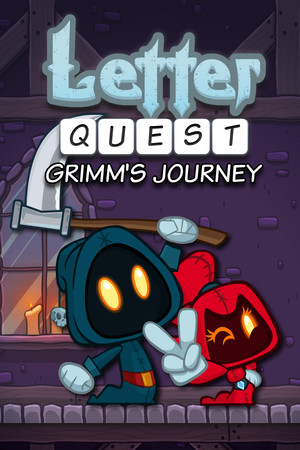
I came to Letter Quest: Grimm's Journey half-expecting a mobile port dressed up in PC clothes, and while that heritage is genuinely visible in places, what surprised me was how much the core loop earns its own weight. You play as Grimm, a tiny grim reaper whose singular ambition is obtaining pizza, and every enemy standing between him and that pepperoni slice must be defeated by spelling words. Fifteen Scrabble-style letter tiles sit on a grid, and each turn you find the best word you can manage, with longer words and rarer letters dealing more damage. The enemy hits back, turns alternate, and you either win the stage or limp away to grind for upgrades. That is the whole engine. It sounds slight. It is not. The tactical texture builds steadily across the game's 40 stages. Enemies start messing with your tile board in genuinely nasty ways: plague tiles spread to adjacent letters if you leave them alone, stone tiles lock up entirely for several rounds, poisoned tiles hurt you when used, and whirlwind effects keep reshuffling your options mid-fight. Some enemies will only take damage from words meeting specific criteria, forcing you to think about word length, letter choice, and tile positioning all at once. It is a clever pressure system. The urge to fire off your best word immediately fights against the smarter play of holding it back to finish a tougher foe two monsters down the line. One common criticism from reviewers is valid: extraordinarily long or rare words do not always feel proportionally impactful, so the vocabulary flex is sometimes more satisfying in your own head than on the damage meter. The RPG scaffolding is lighter than the genre label implies but more thoughtful than a mobile origin suggests. Defeated enemies drop gems that fund a meaningful upgrade tree: base health, attack power, armor, crystal tile chance, and a set of equippable books that level up with use and provide passive bonuses like life-steal on five-plus-letter words or extra damage on words containing double letters. You can equip up to three books at a time, and choosing a build that complements your spelling instincts, whether that is aggressive burst damage, sustainable healing, or crystal-tile manipulation, adds genuine replayability. The gem-gating system, where progress naturally asks you to replay earlier stages in challenge modes to afford upgrades, is the clearest signal of the game's mobile DNA, but it never felt punishing so much as unhurried. Each of the 40 stages carries four challenge variants: a standard clear, a time trial, a special gimmick run (think four-letter-words-only or fewest total letters), and a crystal star mode where every enemy has a unique weakness. That structure multiplies the raw stage count considerably. There is also an Endless mode for players who want to skip the narrative scaffolding entirely and just see how many monsters they can spell into oblivion. Both Grimm and Rose are selectable characters, each with different dodge stats worth considering if you care about min-maxing your loadout. The clean vector art style and the retro-inflected soundtrack sit quietly in the background, warm and unobtrusive, exactly the right register for a game you might play in 15-minute bursts or across a long afternoon. The dictionary, which accepts over 192,000 words including archaic stems, loanwords, and a few pop-culture surprises, rewards players who test its limits rather than defaulting to safe three-letter fallbacks. If your vocabulary runs thin under pressure or you dislike repetition in stage design, some of the late-game friction will feel less charming. But for anyone who has ever wanted a word game that actually pushes back, this small and carefully crafted package from a two-person studio punches well above its size.

Indie & narrative
Tags
System Requirements
Minimum
- OS
- Microsoft® Windows® XP, Windows Server 2008, Windows Vista® Home Premium, Business, Ultimate, or Enterprise (including 64 bit editions) with Service Pack 2, Windows 7, or Windows 8 Classic
- Memory
- 1024 MB RAM
- Storage
- 200 MB available space
- Processor
- 2.33GHz or faster x86-compatible processor, or Intel Atom™ 1.6GHz or faster processor for netbook class devices
Keep exploring
Community Discussion
Be the first to comment on Letter Quest: Grimm's Journey.
Reviews & Ratings
Game Info
- Developer
- Bacon Bandit Games
- Publisher
- Digerati
- Release Date
- Nov 20, 2014