
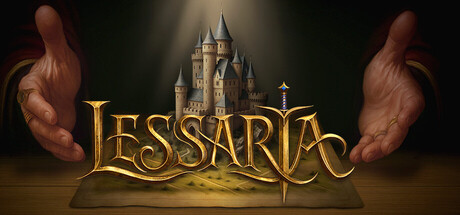
Lessaria: Fantasy Kingdom Sim
Indirect hero control done right for the first time in years, but the sandbox runs out of ideas faster than your treasury runs out of gold.
GamerScout Verdict
Solid campaign for Majesty fans and indirect-control newcomers alike, but the thin sandbox makes this a hard sell as a long-term time sink.
Compare Prices(6 stores)
Every store in this table quotes us in euros, so the EUR figure is the price the seller actually set, not our arithmetic — which is why EUR is also the currency we rank in. We only list an offer here when the store gives us its price in euros, so nothing in this table is a number we invented.
Pick USD, PLN, GBP, CAD or AUD in the header and we convert from EUR at the European Central Bank reference rate — converted amounts are prefixed with ~. Your bank or the store may apply a different rate at checkout. We never hide offers based on where you are: everyone sees this whole table.
We may earn a commission when you buy games through links on this page — at no extra cost to you. It never affects our rankings or verdicts.
Price History
Screenshots & Media
About Lessaria: Fantasy Kingdom Sim
I've spent a fair amount of time spreadsheet-watching kingdom sims, and the thing that grabbed me about Lessaria isn't the base-building or the fantasy trappings, it's the core tension of being completely in charge and almost completely powerless at the same time. You don't click units and send them to fight. You post bounties, manage gold flow, and hope your knights are feeling brave enough to earn their pay. That gap between intent and execution is where this game lives, and for the most part, it's a fascinating place to be. The mechanical backbone is a single-resource economy built around gold. You construct mines, lumber yards, markets, and guild halls, but the income from all of it funnels into one number you're constantly watching deplete. Hire a fighter, post an attack bounty on an orc lair, cast a support spell, upgrade your castle to unlock late-game tools like magical research buildings and forges, and suddenly that treasury looks thin. The pressure is real and it arrives early. What keeps it interesting is the hero-progression layer underneath: adventurers gain experience, unlock abilities, buy gear from your shops, and, in one of the more clever design touches, can develop fear traits from traumatic near-death encounters with specific enemy types. A ranger who nearly died to a cultist ambush may never walk near cultist territory again without serious financial persuasion. That kind of emergent character behaviour is exactly what this subgenre needs more of, and Lessaria delivers it in flashes. The campaign is the strongest part of the package. It introduces new buildings, enemy types (orcs, barbarians, cultists), and objective wrinkles at a sensible pace, teaching economy-first logic without a wall of tooltips. Missions escalate from straightforward base defense into situations where you're actively deciding whether to destroy monster dens or preserve them to keep wave difficulty manageable. That lair-wave tension is a smart addition: clearing lairs too fast leaves you facing doom-stacks with no soft target to drain them. The problem is that once the campaign ends and you move to sandbox or skirmish mode, the game loses its shape. With no structured objectives, the loop collapses into upgrade-and-wait, and the limited building footprint, no freeform expansion beyond designated trading post spots, means there's no late-game sprawl to keep you invested. Several community voices land on the same note: the campaign lands, the open-ended modes feel unfinished. There are real rough edges to acknowledge. Battle readability suffers when multiple hero parties and enemy groups stack up on the same tile, floating health bars turning into visual noise. The bounty re-issuing loop gets repetitive as maps evolve, and the building placement system offers minimal strategic depth since there's no meaningful terrain interaction or placement bonus to consider. No multiplayer mode exists. The community has also flagged UI gaps, including limited key rebinding and tooltips that don't fully explain building synergies. To Rockbee Team's credit, they're patching actively and have publicly acknowledged that the longer-session modes need work, which is at least an honest developer posture. Whether the fixes arrive fast enough to hold players past the campaign is the real question. For someone coming in without Majesty nostalgia, Lessaria is a genuinely accessible starting point for indirect-control strategy. The campaign's pacing is deliberate and respectful of new players, the single-resource economy removes onboarding friction, and the hero AI produces enough unexpected moments to carry you through. For genre veterans, it hits the familiar notes but stops short of the complexity and personality depth the originals had. Think of it as a well-structured first album from a band covering a classic, technically solid, emotionally close, but not yet playing with the same confidence as the source material.

Strategy & simulation
Tags
System Requirements
Minimum
- OS
- 7,8,10,11
- Memory
- 4 GB RAM
- DirectX
- Version 10
- Storage
- 14 GB available space
- Graphics
- 1060
- Processor
- Intel core i3
Recommended
- OS
- 7,8,10,11
- Memory
- 16 GB RAM
- DirectX
- Version 11
- Storage
- 14 GB available space
- Graphics
- 1080
- Processor
- Intel core i5
Keep exploring
Community Discussion
Be the first to comment on Lessaria: Fantasy Kingdom Sim.
Reviews & Ratings
Game Info
- Developer
- Rockbee Team
- Publisher
- Polden Publishing
- Release Date
- Oct 20, 2025