LEGRAND LEGACY: Tale of the Fatebounds
A hand-drawn PS1-era JRPG throwback with real craft in its visuals and a combat system that will either charm or infuriate you depending on your patience for timing-based mechanics.
GamerScout Verdict
Recommended at a discount for players with nostalgia for PS1-era JRPGs who can tolerate a timing-based combat layer and verbose dialogue.
Compare Prices(5 stores)
Every store in this table quotes us in euros, so the EUR figure is the price the seller actually set, not our arithmetic — which is why EUR is also the currency we rank in. We only list an offer here when the store gives us its price in euros, so nothing in this table is a number we invented.
Pick USD, PLN, GBP, CAD or AUD in the header and we convert from EUR at the European Central Bank reference rate — converted amounts are prefixed with ~. Your bank or the store may apply a different rate at checkout. We never hide offers based on where you are: everyone sees this whole table.
We may earn a commission when you buy games through links on this page — at no extra cost to you. It never affects our rankings or verdicts.
Price History
Screenshots & Media
About LEGRAND LEGACY: Tale of the Fatebounds
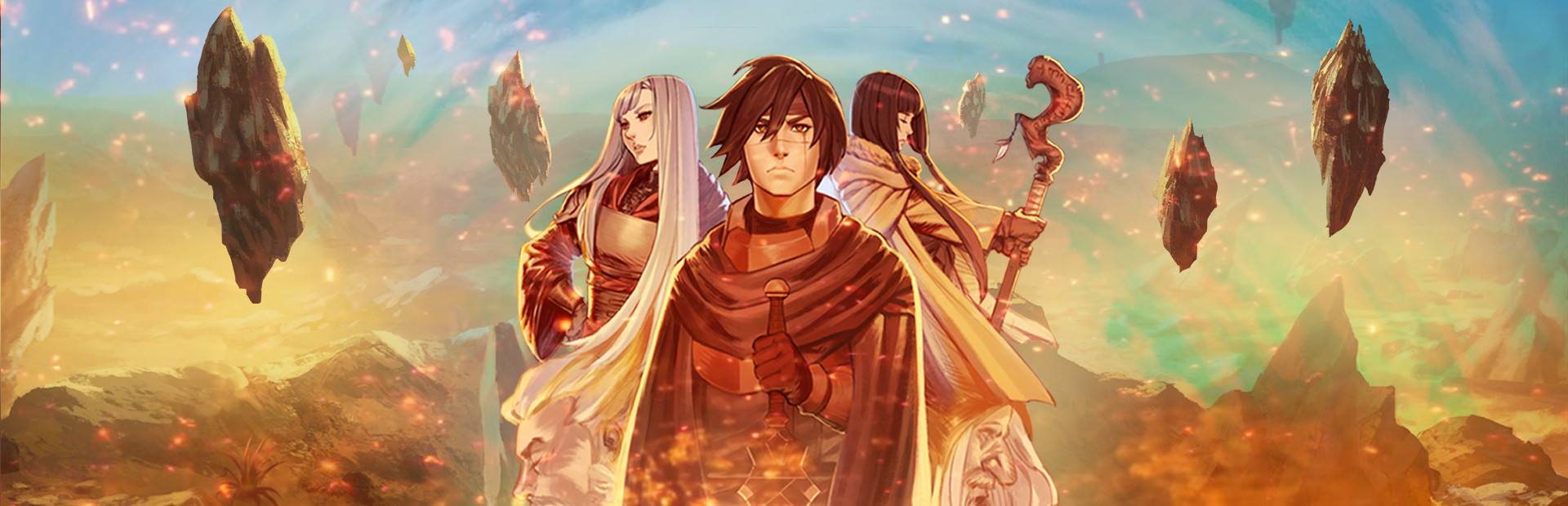
My first honest reaction to Legrand Legacy was something close to disbelief that a 27-person studio had produced backgrounds this painterly. The pre-rendered 2D environments are genuinely gorgeous, layered with detail in a way that recalls the best of what the PS1 and early PS2 era looked like in your memory rather than on original hardware. Semisoft clearly studied their influences closely. The 3D character models moving over those hand-drawn painted backdrops is a visual choice that pays off almost every time you enter a new area, and the FMV cutscenes introduced at key story moments punch well above the game's budget. The combat is where opinions split, and they split hard. At its core it is turn-based: you queue actions for your party, watch them resolve, and manage a weapons triangle that will be familiar to anyone who has spent time with Fire Emblem. The twist is the Action Circle Tempo system, abbreviated ACT, which asks you to hit a button when a spinning dial lands on the target zone. Nail it and you deal solid damage or block effectively. Miss it and the numbers crater. Characters can also build toward Arcana moves, powerful personal ultimates that come with their own short cutscenes and can reverse bad situations quickly. The problem is that the ACT system introduces a layer of randomness that sits uneasily on top of the strategic elements. Some players find the rhythm satisfying; others find that a mistimed press invalidates good preparation entirely. Elemental weaknesses, Grimoire loadouts, crafting from enemy drops, careful formation choices, and the separate large-scale tactical skirmish battles all suggest a game that wants to reward planning. Whether the QTE layer supports or undercuts that reward is genuinely a matter of taste, and you should know your own before paying. The story follows Finn, an amnesiac pulled out of the gladiator pits, and Aria, the noblewoman who draws him into a world-ending conflict between warring kingdoms and something far older beneath the surface. The bones of the narrative are built entirely from familiar JRPG tropes, the chosen group, the ancient evil, the prophecy, but the world of Legrand itself has enough geography and lore density to hold interest if you lean into it. What works against the story is the pacing of the dialogue. There is a lot of it, much of it verbose, and the early hours in particular front-load exposition before you have any emotional investment in the characters it involves. Veterans of the era this game imitates will shrug and push through. Players without that conditioning may disengage before the middle chapters, where things genuinely tighten. No voice acting is present, which given the volume of text is probably the right call financially, even if it makes some exchanges feel even longer. Outside of combat, the game earns goodwill through small handcrafted touches. You can recruit craftspeople to restore the abandoned city of Dumville, which incrementally opens new services and gives the hub a sense of life. Side quests, fishing, a target practice minigame, and monster-hunting challenges add texture without overstaying their welcome. The soundtrack, featuring a vocal contribution from Emi Evans of Nier fame, is understated and atmospheric in a way that suits the game's darker world tone. A full playthrough lands somewhere between 30 and 40 hours depending on how thoroughly you engage with side content. That is a meaningful commitment, and honesty requires saying that not every hour earns its place. The adjustable difficulty helps smooth over the spikes, but the pacing issues in the dialogue are structural and no setting fixes them. If you grew up with Legend of Dragoon, Shadow Hearts, or early Suikoden and find yourself wanting something that speaks that same language, Legrand Legacy does speak it, imperfectly but with obvious affection. If you are coming in cold with no nostalgia for the era, the rough edges will show faster.

Indie & narrative
Tags
System Requirements
Minimum
- OS
- Windows 7 (64-bit)
- Memory
- 4 GB RAM
- DirectX
- Version 11
- Storage
- 16 GB available space
- Graphics
- Nvidia GTX 650
- Processor
- Intel Core i3-4150
Recommended
- OS
- Windows 8.1 / Windows 10 (64-bit)
- Memory
- 8 GB RAM
- DirectX
- Version 11
- Storage
- 16 GB available space
- Graphics
- Nvidia GTX 750
- Processor
- Intel Core i5-4460
Keep exploring
Community Discussion
Be the first to comment on LEGRAND LEGACY: Tale of the Fatebounds.
Reviews & Ratings
Game Info
- Developer
- SEMISOFT
- Publisher
- SEMISOFT
- Release Date
- Jan 24, 2018