Legend of Heroes: Three Kingdoms
If Koei's Romance of the Three Kingdoms series has felt bloated and overpriced for years, this scrappy Early Access sandbox from Free Wing is the answer you didn't know was coming - warts, missing English localization, and all.
GamerScout Verdict
A deep historical sandbox with real replayability, held back by Chinese-only UI - best for patient strategy fans comfortable with Early Access roughness.
Compare Prices(5 stores)
Every store in this table quotes us in euros, so the EUR figure is the price the seller actually set, not our arithmetic — which is why EUR is also the currency we rank in. We only list an offer here when the store gives us its price in euros, so nothing in this table is a number we invented.
Pick USD, PLN, GBP, CAD or AUD in the header and we convert from EUR at the European Central Bank reference rate — converted amounts are prefixed with ~. Your bank or the store may apply a different rate at checkout. We never hide offers based on where you are: everyone sees this whole table.
We may earn a commission when you buy games through links on this page — at no extra cost to you. It never affects our rankings or verdicts.
Price History
Screenshots & Media
About Legend of Heroes: Three Kingdoms
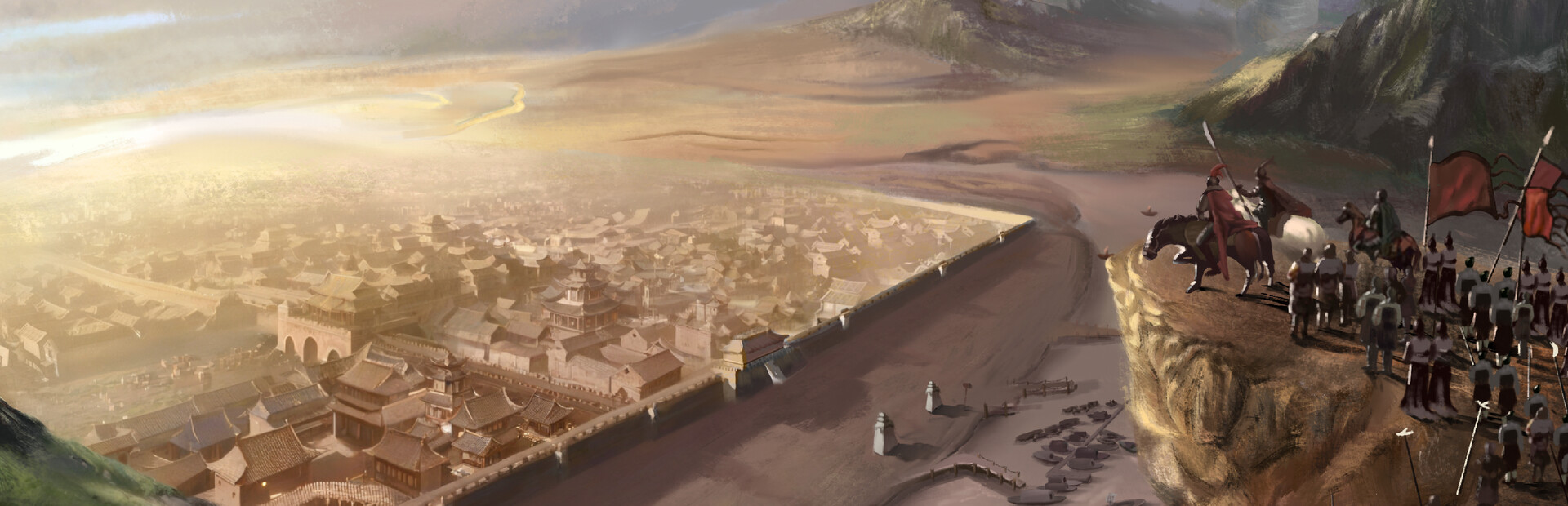
I've spent enough hours with grand-strategy and historical sims to know when a small developer has genuinely threaded the needle between depth and approachability, and Legend of Heroes: Three Kingdoms does that more often than its rough Early Access edges would suggest. The core identity is a sandbox RPG set in China's Three Kingdoms period, but the design decision that makes it stand out is the role choice at the start: lord, general, or mercenary. Each path imposes different win conditions and resource constraints. Playing as a lord means micromanaging city governors and issuing internal policies. Playing as a general flips that into a merit-and-reputation grind, accumulating enough influence to expand your legion's territory. The mercenary path is the most freeform, letting you sign contracts with rival factions and play both sides of a war. That three-track structure gives this game a replay skeleton that most strategy-RPG hybrids at this price tier simply lack. The combat system is the other genuinely interesting design choice. There are three distinct battle modes, and they are mechanically separate enough to feel like different games sharing a world. Legion warfare runs on a real-time strategy engine where you capture buildings and annihilate enemy troop formations - think light RTS with positional stakes. Martial arts duels and verbal debates both use a turn-based card system, and your effectiveness in all three is governed by three stat tracks called the military soul, martial soul, and intellectual soul. Investing in soul points and equipping special soul skills is where the build theorycrafting lives. If you are the kind of player who opens a second monitor to track skill synergies, there is a legitimate optimization loop here. The social layer adds a relationship-building sim on top of all that. Generals have individual preferences, and gifting, joint missions, and combat cooperation all push affinity upward. High enough affinity unlocks co-op quest opportunities, exclusive training, and eventually marriage mechanics that pull a companion into your power group as a permanent ally. It is not as deep as a Crusader Kings dynasty system, but it feeds directly into combat power in a way that makes social investment feel strategic rather than decorative. The roster covers over 100 historical figures from the period, and the game lets you rewrite famous battles - playing Cao Cao through the Battle of Guandu from a first-person general perspective or pulling a historically doomed officer back from the edge of defeat. Now for the honest caveats, because there are several. The official language support is Simplified Chinese only. Community translation patches exist and some players run third-party auto-translation tools, but if you do not read Chinese and are unwilling to troubleshoot locale settings, you will hit a wall fast. Player-reported feedback also flags AI decision-making in battles as inconsistent, and the economic balance in city management still has rough edges that the developers acknowledge. Visually, character model quality is below what Koei ships, though each general does have a unique 3D model with equipment that renders in-world. The mod ecosystem is already active - the Steam Workshop launched during Early Access and the developer has been patching at an aggressive pace, sometimes daily, which is both a sign of commitment and a source of instability for modders. The trajectory is clearly positive, with major content updates like Northern Expedition event chains arriving months after launch, and the developer has publicly committed to expanding English, Japanese, and Korean localization. For strategy fans comfortable with Early Access risk and willing to use a community translation patch, this is a surprisingly dense historical sandbox that punches above its weight class. The three-soul progression system, the multi-identity role structure, and the genuinely distinct battle modes add up to something that rewards patience. Wait for localization if language is a dealbreaker. Otherwise, the foundation is solid enough to justify getting in now while the price is still at its Early Access floor.

Strategy & simulation
Tags
System Requirements
Minimum
- OS
- Windows10
- Memory
- 12 GB RAM
- DirectX
- Version 11
- Storage
- 10 GB available space
- Graphics
- NVIDIA GTX960 4G
- Processor
- Intel Core i5
Recommended
- OS
- Windows10
- Memory
- 16 GB RAM
- DirectX
- Version 11
- Storage
- 10 GB available space
- Graphics
- NVIDIA RTX2060 6G
- Processor
- Intel Core i7
Keep exploring
Community Discussion
Be the first to comment on Legend of Heroes: Three Kingdoms.
Reviews & Ratings
No ratings available
Game Info
- Developer
- Free Wing
- Publisher
- Free Wing
- Release Date
- Mar 25, 2025