LEAVES - The Journey
Part art installation, part lateral-thinking puzzle box: if Samorost made you feel something wordless, this handcrafted oddity from ZAR 21 probably will too.
GamerScout Verdict
Best for Samorost-lovers who want a quiet, handcrafted puzzle fix and can forgive a few minor technical rough edges.
Compare Prices(8 stores)
Every store in this table quotes us in euros, so the EUR figure is the price the seller actually set, not our arithmetic — which is why EUR is also the currency we rank in. We only list an offer here when the store gives us its price in euros, so nothing in this table is a number we invented.
Pick USD, PLN, GBP, CAD or AUD in the header and we convert from EUR at the European Central Bank reference rate — converted amounts are prefixed with ~. Your bank or the store may apply a different rate at checkout. We never hide offers based on where you are: everyone sees this whole table.
We may earn a commission when you buy games through links on this page — at no extra cost to you. It never affects our rankings or verdicts.
Price History
Screenshots & Media
About LEAVES - The Journey
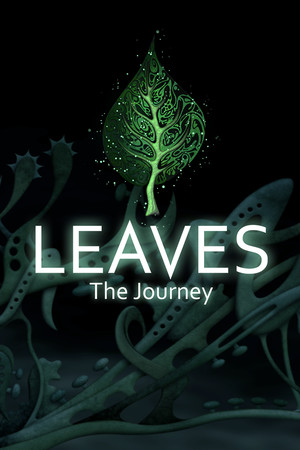
My first few minutes with LEAVES - The Journey felt less like booting up a game and more like opening a stranger's sketchbook and finding an entire universe inside it. ZAR 21 built this world, Mononino, out of what look like real sculptures, hand-cut textures, and photographs collaged together into scenes that shouldn't cohere but somehow do. Every screen is its own little diorama, and there's a genuinely rare quality here: the art style feels accidental in the best possible sense, stitched from tactile materials rather than rendered pixels. That rawness gives it a personality that most indie puzzle games spend years chasing and never quite reach. The structure is simple and the game is honest about that: you are tracking down 30 lost leaves scattered across four distinct worlds, collecting items, reading visual cues, and unlocking the next screen. There's no dialogue, no narrator, no hand-holding tutorial. The magnifier you pick up early becomes your closest companion, letting you spot hidden inhabitants and decode environmental clues. Puzzle variety is genuine - jigsaw rotations, hexagonal tile-matching, symbol-comparison challenges, memory-style mini-games - and the difficulty sits in a sweet spot that rewards observation without demanding a walkthrough every ten minutes. Players in the community consistently note that the challenge feels fair, though a handful of the more abstract puzzles will make you sit back and stare for a while, which is exactly as intended. A map system helps reduce the leaf-hunting to a manageable area, which is a small but thoughtful quality-of-life touch. The soundtrack deserves its own paragraph. Gary Marlowe and Daniel Hoffknecht composed something that belongs in the same conversation as the Samorost scores: understated, slightly uncanny, and deeply atmospheric. It does the heavy lifting that dialogue and narrative would normally carry. When the game works, it works because sound and image are operating in lockstep, and you feel the mood of each world rather than just moving through it. A few practical caveats. The game runs around three to four hours on a first playthrough, which is short even for this genre. Some players have hit puzzle-recognition bugs - particularly a tile puzzle that requires you to manually rotate every piece even if it's already correctly oriented - and the lack of a vsync option is a long-standing technical annoyance that has left some GPUs spinning harder than they should on a 2D scene. macOS compatibility is also limited, with versions above Catalina unsupported. None of these are dealbreakers, but they're worth knowing before you sit down. If you've ever loved Samorost, Machinarium, or Rhem and wished there were more games that trusted atmosphere over exposition, LEAVES - The Journey is the kind of quiet, handcrafted thing that deserves to be found. It knows exactly how long it wants to be, and it ends when it should. That alone puts it ahead of half the genre.

Indie & narrative
Tags
System Requirements
Minimum
- OS
- Windows XP SP2 or better
- Memory
- 1 GB RAM
- DirectX
- Version 9.0c
- Storage
- 500 MB available space
- Graphics
- DX9c compatible
- Processor
- 2Ghz Pentium T4200
Keep exploring
Community Discussion
Be the first to comment on LEAVES - The Journey.
Reviews & Ratings
No ratings available
Game Info
- Developer
- ZAR 21
- Publisher
- Daedalic Entertainment
- Release Date
- Mar 7, 2017