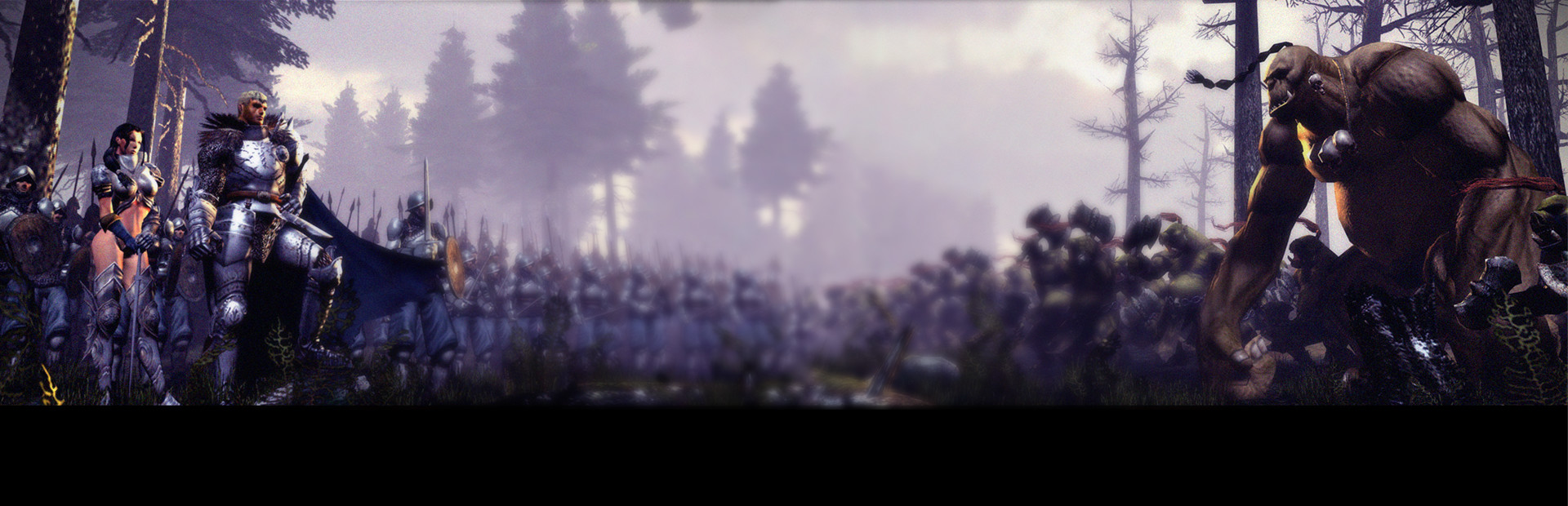

Kingdom Under Fire: The Crusaders
A 2004 Xbox cult classic finally on PC, blending real-time army command with Dynasty Warriors-style brawling, but its port quality will test your patience before its battles test your tactics.
GamerScout Verdict
Best for tactics players who can stomach 2004 visuals and Xbox-baked controls in exchange for a genre hybrid that nothing has quite replaced.
Compare Prices(6 stores)
Every store in this table quotes us in euros, so the EUR figure is the price the seller actually set, not our arithmetic — which is why EUR is also the currency we rank in. We only list an offer here when the store gives us its price in euros, so nothing in this table is a number we invented.
Pick USD, PLN, GBP, CAD or AUD in the header and we convert from EUR at the European Central Bank reference rate — converted amounts are prefixed with ~. Your bank or the store may apply a different rate at checkout. We never hide offers based on where you are: everyone sees this whole table.
We may earn a commission when you buy games through links on this page — at no extra cost to you. It never affects our rankings or verdicts.
Price History
Screenshots & Media
About Kingdom Under Fire: The Crusaders
I went into Kingdom Under Fire: The Crusaders expecting a rough museum piece. What I found was a genre hybrid that still has no real successor in 2024, which is both its strongest selling point and a quiet indictment of how little the industry has tried to replicate it. The core loop asks you to manage multiple battalions in real time using a minimap and strategic orders, then physically drop into the frontline as your hero character the moment your unit locks swords with the enemy. That context switch, from overhead commander to third-person brawler, happens repeatedly inside a single mission and never stops feeling purposeful. Four campaigns across two factions, Human Alliance and Dark Legion, each built around a distinct hero, sword-captain Gerald, dual-scimitar dark elf Lucretia, half-vampire Regnier with his fire-igniting blade, and the paladin Kendal, give the structure enough replayability to justify a second run. The faction asymmetry is real: human cavalry charges and artillery sieges play differently from the Dark Legion's airborne units and orc-heavy infantry walls, and learning those differences is where the strategic meat lives. The unit roster is broad enough to reward planning. Infantry locks down chokepoints, archers cover air targets and ballistas handle what archers can't, cavalry disrupts rear formations, sappers lay traps and torch terrain, and support units like giant scorpions and dragons enter the picture in later missions to completely flip your resource priorities. Spells layer on top of all of this, letting any unit eventually call down meteors or deploy healing fields. Missions stretch long, sometimes well past thirty minutes, and the upgrade economy between sorties means poor spending early creates compounding pressure deep into a campaign. That is exactly the kind of decision weight I find satisfying. If you skip the upgrade screen, the late game will educate you. Now for the honest accounting on the PC port, because a Metacritic score of 60 does not come from nowhere. This is not a remaster. The visuals are 2004 Xbox assets displayed at widescreen resolution, blocky and brown in a way that is charming for about three hours before it becomes background noise. More critically, the tutorial still shows Xbox button prompts. A keyboard overlay exists but it does not pause the game, which means consulting it mid-battle is its own tactical hazard. Mouse and keyboard navigation on the overworld map has gaps, and a controller is the clearly intended input method for this version. Bugs exist, though player reports suggest they are inconsistent rather than game-breaking. Steam user sentiment sits at 91% positive across over a thousand reviews, which tells you the fanbase found workarounds and forgave the port's roughness in exchange for finally having the game on modern hardware. For strategy players specifically: this is not grand strategy. There is no fog-of-war diplomacy, no resource extraction macro loop, no tech tree in the Starcraft sense. The RTS layer is closer to real-time tactics, with a fixed roster of units you manage and upgrade between missions rather than build from scratch. Think of it as sitting between Myth: The Fallen Lords and Dynasty Warriors with a longer upgrade tail. The tutorial covers basics but the depth of timing, when to personally brawl versus when to hang back and issue orders, is self-taught. That gap is a design choice worth respecting, not a flaw. Anyone willing to lose one campaign to learning the system will arrive at the second in a much stronger position.

Strategy & simulation
Tags
System Requirements
Minimum
- OS
- Windows 7 32bit
- Memory
- 4 GB RAM
- DirectX
- Version 9.0
- Storage
- 2 GB available space
- Graphics
- NVIDIA® GeForce® GT 420 or ATI™ Radeon™ HD 6850 or Intel® HD Graphics 4000 or better with 2 GB VRAM
- Processor
- Intel Core 2 Duo or AMD Athlon 64x2 5600+
Keep exploring
Community Discussion
Be the first to comment on Kingdom Under Fire: The Crusaders.
Reviews & Ratings
Game Info
- Developer
- Blueside
- Publisher
- Blueside
- Release Date
- Feb 28, 2020