Kholat
Wrap yourself in a blizzard that never fully lets up and accept that the mountain will not hold your hand - Kholat earns its dread through atmosphere alone, and that is both its gift and its limit.
GamerScout Verdict
Best for patience-rich players who want a mood over a story and can tolerate a map that will never show you where you are.
Compare Prices(10 stores)
Every store in this table quotes us in euros, so the EUR figure is the price the seller actually set, not our arithmetic — which is why EUR is also the currency we rank in. We only list an offer here when the store gives us its price in euros, so nothing in this table is a number we invented.
Pick USD, PLN, GBP, CAD or AUD in the header and we convert from EUR at the European Central Bank reference rate — converted amounts are prefixed with ~. Your bank or the store may apply a different rate at checkout. We never hide offers based on where you are: everyone sees this whole table.
We may earn a commission when you buy games through links on this page — at no extra cost to you. It never affects our rankings or verdicts.
Price History
Screenshots & Media
About Kholat
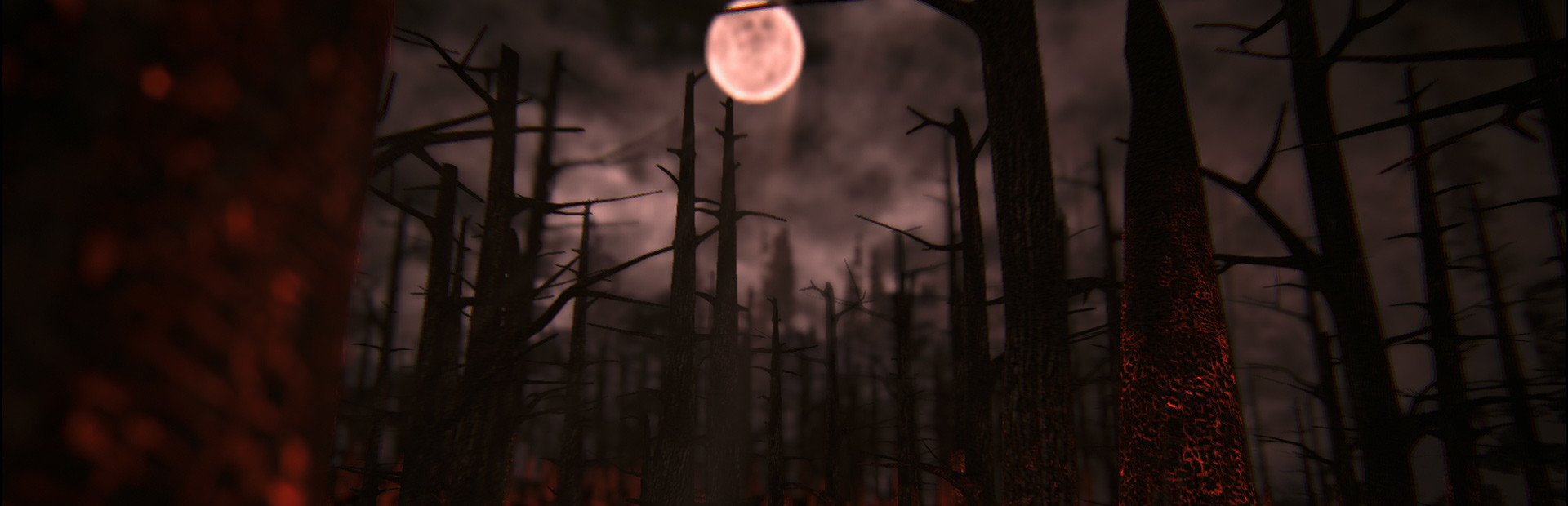
My first hour with Kholat was genuinely unsettling in a way that most horror games never manage. No combat prompt, no objective marker, no "you are here" pin on the map. Just a frozen Russian mountainside at night, a compass written in Cyrillic, a flashlight with a finite battery, and coordinates scrawled on stone. The game drops you into an open-world recreation of the Ural Mountains and asks you to navigate to a series of geographic coordinates using only that paper map and compass - a mechanic that, against all odds, creates a kind of slow-burn immersion that waypoint-driven games cannot replicate. Reading the landscape, triangulating from landmarks, realising you have been walking in entirely the wrong direction for twenty minutes - that is the texture of Kholat, and for a certain kind of player it is deeply absorbing. The source material is one of those genuinely strange pieces of history that writes its own horror. In 1959, nine experienced hikers died under unexplained circumstances on the mountain now called Kholat Syakhl - "Dead Mountain" in Mansi. Their tent was cut open from the inside. IMGN.PRO layers a paranormal conspiracy theory over the real incident, involving a Soviet research unit called the RRUNP, a phenomenon known as Anomaly 7, and orange gaseous entities that roam the mountain and kill on contact. Sean Bean narrates the whole thing in a voice so measured and bleak it sounds like a funeral broadcast. The sound design underneath him - howling wind, rhythmic snow crunch, the distant flicker of a tower - is where the game genuinely excels. The composer Mary Elizabeth McGlynn, known from the Silent Hill series, contributes a score that turns the empty white landscape into something close to sacred. Here is where honesty demands some accounting. Kholat wants to tell a story, but the story does not really land. Journal fragments are sparse and vague, the supporting characters blur into each other, and the final act reaches for a grand reveal that arrives more as a shrug than a shock. The supernatural entities - semi-transparent, glowing, haunting - are terrifying the first time one materialises from the fog, but their threat loses tension quickly. The sprint mechanic, which exhausts you in seconds and blurs your vision, is meant to enforce fragility. In practice it mostly generates frustration when you are simply trying to cross a ridge. Save points are tied to campsites and found notes, which keeps deaths from being catastrophic, but the load times on some platforms have drawn consistent criticism. The map, which genuinely does not track your current position, is a smart design choice that some players will admire and others will abandon the game over - it is worth knowing which type you are before sitting down. What IMGN.PRO got unmistakably right is the world itself. From the highest peak you can look back and see every valley you crossed to get there. The abandoned church, the cosmodrome, the altar of torch-like totems - these set pieces have a quiet, handcrafted specificity that rewards wandering. Kholat is built for players who will walk slowly, listen, and let a mood settle over them the way cold does. It is not a game that builds to a satisfying mechanical resolution. It is closer to an installation: austere, atmospheric, occasionally beautiful, and a little too comfortable leaving its meanings opaque. Players who loved Dear Esther or The Vanishing of Ethan Carter and want those feelings roughed up by genuine disorientation will find something worth the few hours it asks. Players who need narrative payoff or responsive horror pacing will leave feeling the cold without the warmth the atmosphere occasionally promises.

Indie & narrative
Tags
System Requirements
Minimum
- OS
- Windows 7 32 bit SP1
- Memory
- 4 GB RAM
- DirectX
- Version 10
- Network
- Broadband Internet connection
- Storage
- 5 GB available space
- Graphics
- GeForce GTX 470
- Processor
- Intel Core i3
Keep exploring
Community Discussion
Be the first to comment on Kholat.
Reviews & Ratings
Game Info
- Developer
- IMGN.PRO
- Publisher
- IMGN.PRO
- Release Date
- Jun 9, 2015