Compare Katana ZERO prices across trusted key stores and find the best deal. Developed by Askiisoft. Published by Devolver Digital. Released on 4/18/2019. Available on PC, Mac, Xbox. Genres: Action, Indie. Metacritic score: 83/100.

Four hours of neo-noir pixel art that will haunt you longer than most 40-hour games. The Chronos drug makes your death screen a plot device. That alone earns the price.

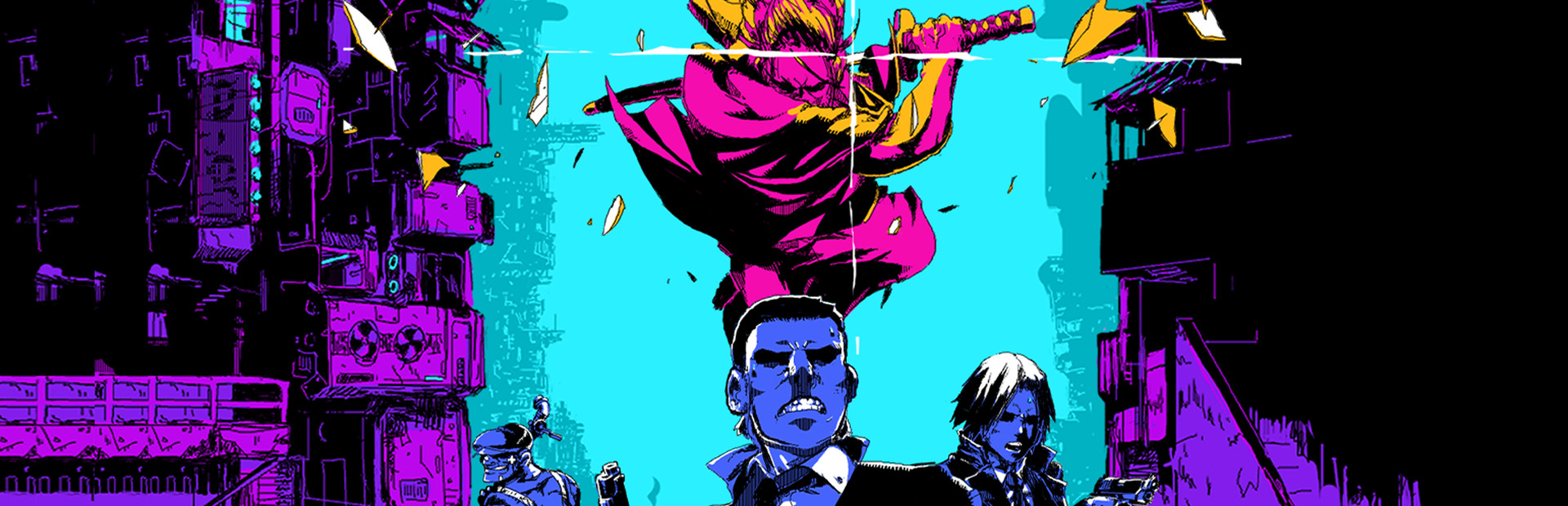
I finished Katana ZERO in one sitting and then sat quietly for about ten minutes, which is not something I do after short action games. What Askiisoft built here is one of those rare cases where the mechanical loop and the narrative are not just thematically linked but literally the same thing. Every time Zero dies and the screen rewinds like a rewinding VHS tape, you are not watching a game-over state. The story frames each failed attempt as Zero using Chronos, a time-altering drug pumped into him by a psychiatrist who is also his handler, to preview possible futures and discard the ones that kill him. Your deaths are canonical. That is the kind of craft that takes years of deliberate design, and solo developer Justin Stander spent six of them on it. On the action side, the game is a 2D side-scrolling instant-death slasher across roughly 11 missions, each broken into room-sized puzzles. Zero has a katana, a dodge roll with a brief invincibility window, a limited slow-motion meter called Chronos, the ability to deflect bullets back at shooters with a timed sword swing, and whatever throwable objects the environment provides: potted plants, smoke bombs, Molotov cocktails, all one-use. Enemies and Zero both die in a single hit. The result is less a hack-and-slash and more a speed-run puzzle game dressed in blood and neon. You plan, you die, the tape rewinds, you adjust. When a room finally clicks and the post-clear replay shows your run in real time with none of the slow-motion visible, you feel genuinely superhuman. That replay trick is pure craft. Stander even synced the synthwave score so that activating slow-motion physically drags the music down in pitch, then lets it snap back. The two composers, Bill Kiley and LudoWic, used vintage synthesizers and drum machines to build it, and you feel that warmth in every track. Between missions, Zero visits his psychiatrist, receives his drug dose and his next target dossier, and you guide conversations via a dialogue tree that includes a timed interrupt option: an aggressive button press that cuts whoever is speaking off mid-sentence. These scenes are where the noir mystery unspools, touching on military drug experiments, war crimes, memory erasure, and a conspiracy involving the Cromag War. The story is intentionally fragmented and ends on deliberately unresolved threads. Some critics found this frustrating, and the criticism is fair. You will reach credits feeling like you caught two-thirds of a film. A promised free DLC expansion has been in development for years and has grown substantially in scope, but has not shipped as of this writing. If open endings bother you, file that away. If you are the type who enjoys assembling a puzzle without the box art, the worldbuilding here rewards patience and inquisitiveness in conversation choices. The weaknesses are real but minor. A handful of stealth sections do not mesh cleanly with the everything-dies-in-one-hit tempo the rest of the game builds. Some players find the dialogue pacing slow on a second run, though an unlockable Speedrun Mode with a Hard difficulty variant addresses exactly that. The playable runtime sits around three to five hours depending on how much you talk. Some people will find that short for the price point. I find it exactly right. The game knows when to end, which is a discipline most games do not have. Kai, Scout Team

Katana ZERO

Katana ZERO

Apr 18, 2019AskiisoftDevolver Digital
GamerScout Says

Four hours of neo-noir pixel art that will haunt you longer than most 40-hour games. The Chronos drug makes your death screen a plot device. That alone earns the price.

PCMacXbox
Steam Deck VerifiedProtonDB Platinum
Best Price Available
€0.00
at N/A
Historical low: €5.18

Compare Prices(0 stores)

Loading prices...

We may earn a commission when you buy games through links on this page — at no extra cost to you. It never affects our rankings or verdicts.

Price History

Historical low
€5.1823 Jun 2026
Keyshops
€4.91€5.19€5.48€5.765 Jun12 Jun19 Jun25 Jun2 Jul
Tracking prices since 5 Jun 2026
Create alert

Screenshots & Media

About Katana ZERO

I finished Katana ZERO in one sitting and then sat quietly for about ten minutes, which is not something I do after short action games. What Askiisoft built here is one of those rare cases where the mechanical loop and the narrative are not just thematically linked but literally the same thing. Every time Zero dies and the screen rewinds like a rewinding VHS tape, you are not watching a game-over state. The story frames each failed attempt as Zero using Chronos, a time-altering drug pumped into him by a psychiatrist who is also his handler, to preview possible futures and discard the ones that kill him. Your deaths are canonical. That is the kind of craft that takes years of deliberate design, and solo developer Justin Stander spent six of them on it. On the action side, the game is a 2D side-scrolling instant-death slasher across roughly 11 missions, each broken into room-sized puzzles. Zero has a katana, a dodge roll with a brief invincibility window, a limited slow-motion meter called Chronos, the ability to deflect bullets back at shooters with a timed sword swing, and whatever throwable objects the environment provides: potted plants, smoke bombs, Molotov cocktails, all one-use. Enemies and Zero both die in a single hit. The result is less a hack-and-slash and more a speed-run puzzle game dressed in blood and neon. You plan, you die, the tape rewinds, you adjust. When a room finally clicks and the post-clear replay shows your run in real time with none of the slow-motion visible, you feel genuinely superhuman. That replay trick is pure craft. Stander even synced the synthwave score so that activating slow-motion physically drags the music down in pitch, then lets it snap back. The two composers, Bill Kiley and LudoWic, used vintage synthesizers and drum machines to build it, and you feel that warmth in every track. Between missions, Zero visits his psychiatrist, receives his drug dose and his next target dossier, and you guide conversations via a dialogue tree that includes a timed interrupt option: an aggressive button press that cuts whoever is speaking off mid-sentence. These scenes are where the noir mystery unspools, touching on military drug experiments, war crimes, memory erasure, and a conspiracy involving the Cromag War. The story is intentionally fragmented and ends on deliberately unresolved threads. Some critics found this frustrating, and the criticism is fair. You will reach credits feeling like you caught two-thirds of a film. A promised free DLC expansion has been in development for years and has grown substantially in scope, but has not shipped as of this writing. If open endings bother you, file that away. If you are the type who enjoys assembling a puzzle without the box art, the worldbuilding here rewards patience and inquisitiveness in conversation choices. The weaknesses are real but minor. A handful of stealth sections do not mesh cleanly with the everything-dies-in-one-hit tempo the rest of the game builds. Some players find the dialogue pacing slow on a second run, though an unlockable Speedrun Mode with a Hard difficulty variant addresses exactly that. The playable runtime sits around three to five hours depending on how much you talk. Some people will find that short for the price point. I find it exactly right. The game knows when to end, which is a discipline most games do not have.

Kai
Kai · Scout Team

Indie & narrative

Tags

singleplayerachievementscontroller-supportcloud-savesNeo-NoirInstant-Death CombatNarrative-DrivenSynthwave SoundtrackSpeedrun ModeBullet DeflectionTime ManipulationDialogue Interrupt SystemCyberpunk Pixel ArtSingle-Sitting Game

System Requirements

Minimum

Processor
Intel Pentium E2180 (2 * 2000) or equivalent
Memory
1 GB RAM
Graphics
GeForce 7600 GT (256 MB)
DirectX
Version 10
Storage
200 MB available space

Recommended

Processor
Intel Core i3-3240 (2 * 3400) or equivalent
Memory
2 GB RAM
Graphics
GeForce 8800 GTS (512 MB)
Storage
200 MB available space

Keep exploring

Community Discussion

Be the first to comment on Katana ZERO.

Reviews & Ratings

Metacritic
83
Steam
98%(74,954)

Game Info

Developer
Askiisoft
Publisher
Devolver Digital
Release Date
Apr 18, 2019

Game Modes

singleplayer

Languages

Subtitles (10)
EnglishFrenchGermanSpanish - SpainJapaneseKorean+4 more

Features

AchievementsController SupportCloud Saves

Price Alert

Get notified when the price drops below your target!

Create Alert

No card? Pay another way

Top up your Steam Wallet or buy crypto with any card — instant delivery, no bank account needed.

Buy smarter: helpful guides

Looking for more? See games like Katana ZERO →

Frequently asked questions about Katana ZERO

How much does Katana ZERO cost?

Katana ZERO pricing changes often and varies by store, edition and region. The live price table on this page compares the cheapest in-stock offers from trusted key stores like Eneba and Kinguin, so you always see the current lowest price before you buy.

Where can I buy Katana ZERO cheapest?

Compare Katana ZERO prices across every verified store in the price table on this page. We list the cheapest in-stock key and store offers, updated regularly, so you always see the best current deal before you buy.

What platforms is Katana ZERO available on?

Katana ZERO is available on PC, Mac, Xbox.

When was Katana ZERO released?

Katana ZERO was released on 18 April 2019.

Who developed Katana ZERO?

Katana ZERO was developed by Askiisoft and published by Devolver Digital.

Is Katana ZERO worth buying?

Katana ZERO holds a Metacritic score of 83/100, making it one of the standout Action titles. See the full reviews, ratings and how-long-to-beat times on this page to decide.