Compare Karateka prices across 50+ stores and find the best deal. Developed by Liquid Entertainment. Published by Dotemu. Released on 12/3/2012. Available on PC. Genres: Action, Indie, Strategy.

A 30-minute rhythm brawler with three endings and a legendary pedigree - respectable as a curio, brutally honest about how little it asks of you.

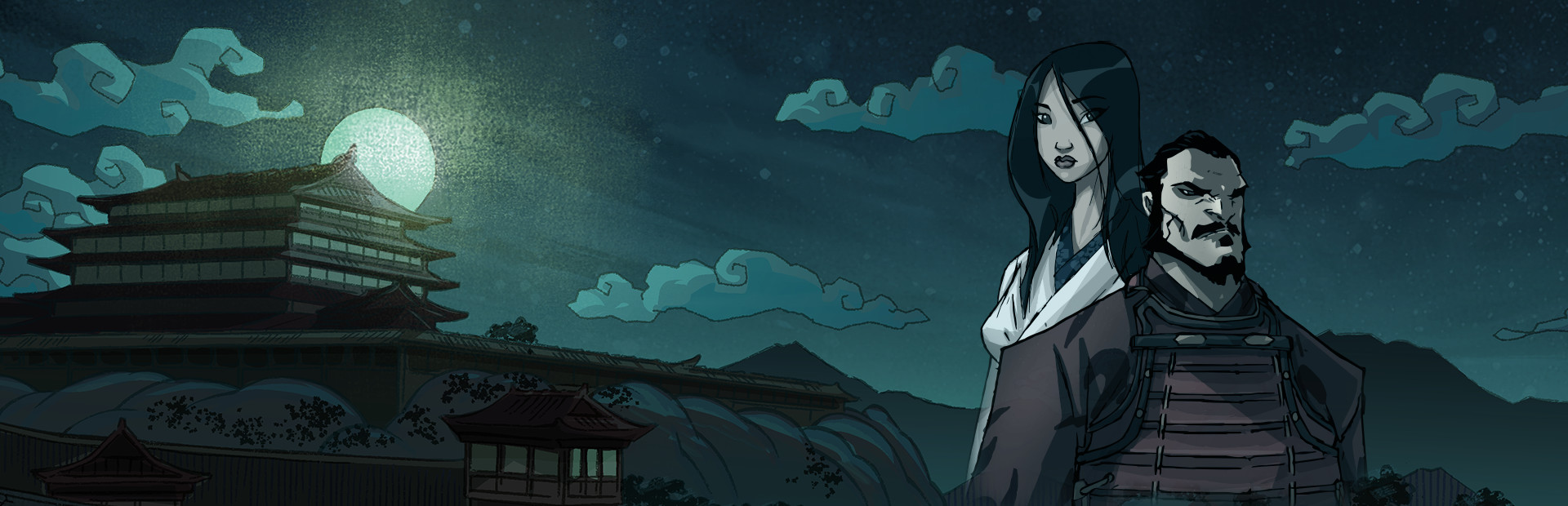
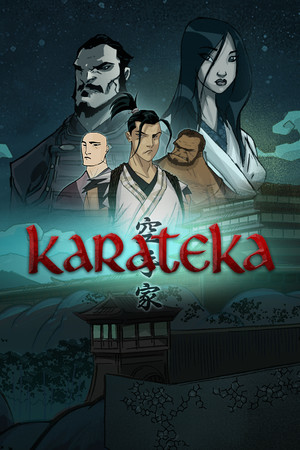
I respect what Jordan Mechner set out to do here, and I also respect your time enough to be straight with you: this is a complete game you can finish before your coffee gets cold. The 2012 remake of Karateka is a linear, rhythm-based combat experience built around one core loop - watch an enemy telegraph their attack, time your block, then counter with normal or heavy strikes. Land enough clean counters to fill your chi meter and you unlock a stun attack that shortens fights considerably. That is the entire mechanical vocabulary. There are no build choices, no unlockable movesets, no branching upgrade paths. As a strategy guy I normally put a game like this down the moment the decision space closes off. But here the simplicity is a conscious design stance, not laziness, and it is worth understanding on its own terms before you dismiss it. The one genuinely clever structural idea is how the game handles failure. Rather than a game-over screen, losing as the True Love - Mariko's fragile but narratively ideal rescuer - passes the quest to the Monk, a sturdier fighter who can absorb far more punishment. If the Monk falls, the hulking Brute takes over. Each suitor who reaches Akuma and defeats him unlocks a different ending, and the real achievement challenge is completing the whole run as the True Love without taking a single hit. That is a smart, low-friction way to layer difficulty into a very short game, and the three-ending structure gives a second or third playthrough a clear purpose. The combat audio cues deserve a mention too: composer Christopher Tin (yes, the Baba Yetu guy) built a real-time score where musical phrasing signals incoming attack patterns - three plucked notes mean three incoming blows, a sweeping string phrase telegraphs a power attack. It is one of the better uses of adaptive music in a small game from this era. Where the game earns its criticism is depth and duration. The entire run clocks in at roughly 30 to 35 minutes. All three protagonists share the same control scheme and moveset; the True Love just has less health. Enemy variety is thin. Akuma's hawk, which swoops in periodically along the mountain path, is the most disruptive encounter in the game and it is not exactly a puzzle. Critics at the time split between appreciating the production values - the cel-shaded art direction styled after Ukiyo-e prints is genuinely attractive - and feeling shortchanged by how little game surrounds those visuals. Steam users sit at 77% positive across roughly 200 reviews, which is an honest number for a title this narrow in scope. There is no mod ecosystem, no difficulty scaling beyond the self-imposed True Love no-damage run, and no multiplayer hook of any kind. The honest purchase calculus here is this: if you have any fondness for early arcade design philosophy, or you want a low-commitment window into where Prince of Persia's DNA came from, Karateka delivers exactly what it promises inside a very small box. Newcomers to the 1984 source material do not need any prior knowledge - the game is fully self-contained and the three-suitor fail-safe means you will see the credits even on a first blind run. Just do not come in expecting systemic depth, replayability beyond chasing that perfect True Love run, or anything resembling a modern action game. It is a preserved and polished artifact first, a game second. Diego, Scout Team

Karateka
ActionIndieStrategy

Karateka

Dec 3, 2012Liquid EntertainmentDotemu
GamerScout Says

A 30-minute rhythm brawler with three endings and a legendary pedigree - respectable as a curio, brutally honest about how little it asks of you.

PC
Best Price Available
0.00
at N/A
Historical low: $1.1

Compare Prices(0 stores)

Loading prices...

We may earn a commission when you buy games through links on this page — at no extra cost to you. It never affects our rankings or verdicts.

Screenshots & Media

Screenshot

About Karateka

I respect what Jordan Mechner set out to do here, and I also respect your time enough to be straight with you: this is a complete game you can finish before your coffee gets cold. The 2012 remake of Karateka is a linear, rhythm-based combat experience built around one core loop - watch an enemy telegraph their attack, time your block, then counter with normal or heavy strikes. Land enough clean counters to fill your chi meter and you unlock a stun attack that shortens fights considerably. That is the entire mechanical vocabulary. There are no build choices, no unlockable movesets, no branching upgrade paths. As a strategy guy I normally put a game like this down the moment the decision space closes off. But here the simplicity is a conscious design stance, not laziness, and it is worth understanding on its own terms before you dismiss it. The one genuinely clever structural idea is how the game handles failure. Rather than a game-over screen, losing as the True Love - Mariko's fragile but narratively ideal rescuer - passes the quest to the Monk, a sturdier fighter who can absorb far more punishment. If the Monk falls, the hulking Brute takes over. Each suitor who reaches Akuma and defeats him unlocks a different ending, and the real achievement challenge is completing the whole run as the True Love without taking a single hit. That is a smart, low-friction way to layer difficulty into a very short game, and the three-ending structure gives a second or third playthrough a clear purpose. The combat audio cues deserve a mention too: composer Christopher Tin (yes, the Baba Yetu guy) built a real-time score where musical phrasing signals incoming attack patterns - three plucked notes mean three incoming blows, a sweeping string phrase telegraphs a power attack. It is one of the better uses of adaptive music in a small game from this era. Where the game earns its criticism is depth and duration. The entire run clocks in at roughly 30 to 35 minutes. All three protagonists share the same control scheme and moveset; the True Love just has less health. Enemy variety is thin. Akuma's hawk, which swoops in periodically along the mountain path, is the most disruptive encounter in the game and it is not exactly a puzzle. Critics at the time split between appreciating the production values - the cel-shaded art direction styled after Ukiyo-e prints is genuinely attractive - and feeling shortchanged by how little game surrounds those visuals. Steam users sit at 77% positive across roughly 200 reviews, which is an honest number for a title this narrow in scope. There is no mod ecosystem, no difficulty scaling beyond the self-imposed True Love no-damage run, and no multiplayer hook of any kind. The honest purchase calculus here is this: if you have any fondness for early arcade design philosophy, or you want a low-commitment window into where Prince of Persia's DNA came from, Karateka delivers exactly what it promises inside a very small box. Newcomers to the 1984 source material do not need any prior knowledge - the game is fully self-contained and the three-suitor fail-safe means you will see the credits even on a first blind run. Just do not come in expecting systemic depth, replayability beyond chasing that perfect True Love run, or anything resembling a modern action game. It is a preserved and polished artifact first, a game second. Diego, Scout Team

Tags

singleplayertier:sub-5Rhythm CombatThree EndingsFail-State ProgressionAdaptive SoundtrackNo-Damage ChallengeRetro RemakeLinear BrawlerJordan Mechner

Steam Deck & Linux

Steam Deck UnsupportedProtonDB Silver

Valve rates this game Steam Deck Unsupported. Playable on Linux with some workarounds. Based on 15 ProtonDB community reports.

System Requirements

Minimum

OS
Win XP, Win 7, Vista, Win 8
Sound
44kHz stereo
Memory
1000 MB RAM
Graphics
ATI X1800 or better
DirectX®
9.0c
Processor
1.5GHz dual-core
Additional
Runs on Unreal Engine 3
Hard Drive
1000 MB HD space

Recommended

OS
Win 7
Memory
2000 MB RAM
Graphics
ATI X1800 or better
DirectX®
9.0c
Additional
Runs on Unreal Engine 3
Hard Drive
1500 MB HD space

Community Discussion

Be the first to comment on Karateka.

Reviews & Ratings

No ratings available

Game Info

Developer
Liquid Entertainment
Publisher
Dotemu
Release Date
Dec 3, 2012

Price Alert

Get notified when the price drops below your target!

Create Alert

Price History

2026-06-101.10(lowest)

Buy smarter: helpful guides

Looking for more? See games like Karateka

Frequently asked questions about Karateka

How much does Karateka cost?

Karateka pricing changes often and varies by store, edition and region. The live price table on this page compares the cheapest in-stock key and store offers across 50+ verified shops, so you always see the current lowest price before you buy.

Where can I buy Karateka cheapest?

Compare Karateka prices across every verified store in the price table on this page. We list the cheapest in-stock key and store offers, updated regularly, so you always see the best current deal before you buy.

What platforms is Karateka available on?

Karateka is available on PC.

When was Karateka released?

Karateka was released on 3 December 2012.

Who developed Karateka?

Karateka was developed by Liquid Entertainment and published by Dotemu.