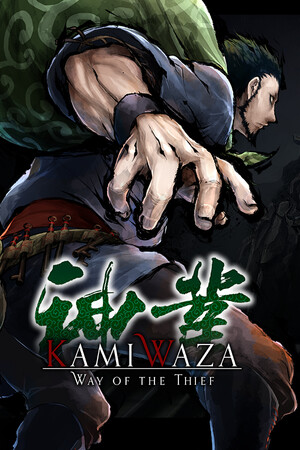
Kamiwaza: Way of the Thief
Acquire's long-lost PS2 action-stealth oddity finally hits the West, and its gloriously chaotic sack-swinging, wanted-poster-stealing loop is unlike anything else in the genre right now.
GamerScout Verdict
Worth it for Tenchu-era devotees and systemic-sandbox fans willing to power through a poor tutorial and dated visuals.
Compare Prices(7 stores)
Every store in this table quotes us in euros, so the EUR figure is the price the seller actually set, not our arithmetic — which is why EUR is also the currency we rank in. We only list an offer here when the store gives us its price in euros, so nothing in this table is a number we invented.
Pick USD, PLN, GBP, CAD or AUD in the header and we convert from EUR at the European Central Bank reference rate — converted amounts are prefixed with ~. Your bank or the store may apply a different rate at checkout. We never hide offers based on where you are: everyone sees this whole table.
We may earn a commission when you buy games through links on this page — at no extra cost to you. It never affects our rankings or verdicts.
Price History
Screenshots & Media
About Kamiwaza: Way of the Thief
I went in expecting a budget-bin remaster and came out genuinely charmed by one of the weirdest stealth games ever made. Kamiwaza: Way of the Thief is a 2006 Japan-exclusive PS2 title from Acquire, the studio behind Tenchu and Way of the Samurai, finally localized for PC in 2022. The studio's fingerprints are all over it: a compact Edo-period sandbox, branching story paths, and a systems-heavy design that front-loads confusion before rewarding patience. Ebizo, your retired thief protagonist, is pulled back into the underworld to fund medicine for his dying adopted daughter, Suzuna. There is a real-time clock ticking, her condition deteriorates day by day, and between heists you are taking jobs from the Thieves' Bathhouse guild, managing your notoriety around town, and deciding whether to sell your loot or drop it in the People's Box for the locals. Four different endings hinge on those choices, and your first run is essentially a practice run, by design. The core loop is fast and loose in ways that wrong-foot anyone who expects Thief or Splinter Cell. Getting spotted does not end a run. Instead, Ebizo can perform a "just stealth" cartwheel that, timed correctly as a guard's cone of vision clips you, clears detection and sends Ebizo into a glittering bonus state where the next pickpocket or grab succeeds instantly and banks you skill points. Chaining those near-miss moments is genuinely exciting. Stealing itself works by repeatedly punching objects until their health bar depletes and they fly into your sack. Yes, really. That sack then grows comically large as you loot rooms, drawing suspicion from passing NPCs, and it doubles as a weapon you can boot into guards to knock them out. You can also steal wanted posters nailed around town to gradually reset the increasingly accurate sketch of your face that the yoriki distribute after each sighting. These interlocking quirks stack up into something that has no obvious modern comparison. The rough edges are real and worth knowing about. Visually this is a PS2 game ported through Unreal Engine with modest touch-ups: blocky character models, stiff animation, environments that look darker and flatter than the original in some spots. The game is persistently bad at explaining itself. The mask system, the sack-emptying flow, the notoriety mechanics, none of it is clearly tutorialized, and early hours can feel vague and punishing for the wrong reasons. Mission objectives use ambiguous descriptions, so you will occasionally button-mash your way through half a district hunting a "wooden decorative stand" before a pop-up tells you it was in the room you started in. The mission structure also repeats areas frequently, and the go-fetch rhythm does start to flatten after several hours. Critics landed in a wide range, from enthusiastic to dismissive, with an OpenCritic average around 61, while actual Steam players have been considerably warmer. Who is this for? Players who grew up with Tenchu, Shinobido, or early Way of the Samurai games will recognize the design DNA immediately and will probably adore it. Yakuza fans who like their melodrama wrapped around systemic playground mechanics should give it a serious look. If you need tight production values, a generous tutorial, or a stealth game that respects the crouch-and-wait school of thought, this will frustrate you. If you can read the room, accept that your first run ends badly by the game's own design, and treat the whole thing as a mechanical puzzle to be cracked over multiple playthroughs, the charm is genuine and the loop is hard to put down.

Catch-all
Tags
System Requirements
Minimum
- OS
- Windows 8.1/10/11
- Memory
- 8 GB RAM
- DirectX
- Version 11
- Storage
- 2 GB available space
- Graphics
- NVIDIA GeForce GTX 750
- Processor
- Intel Core i7-4770
Recommended
- OS
- Windows 8.1/10/11
- Memory
- 8 GB RAM
- DirectX
- Version 11
- Storage
- 2 GB available space
- Graphics
- NVIDIA GeForce GTX 970
- Processor
- Intel Core i5-6600K
Keep exploring
Community Discussion
Be the first to comment on Kamiwaza: Way of the Thief.
Reviews & Ratings
No ratings available
Game Info
- Developer
- ACQUIRE Corp.
- Publisher
- NIS America, Inc.
- Release Date
- Oct 11, 2022